
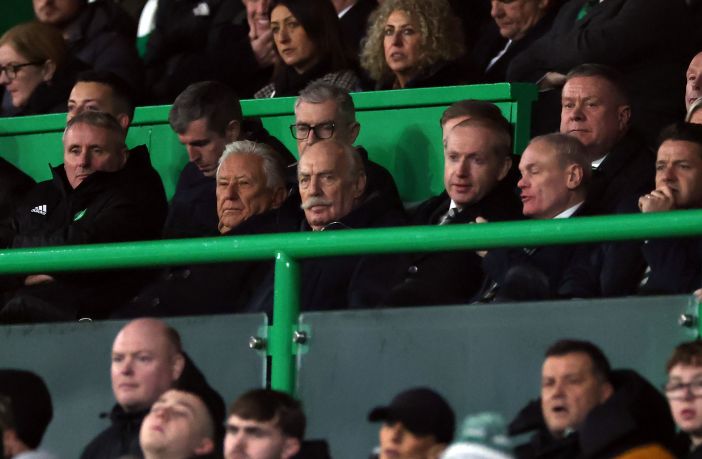
The dust has settled on one of the most extraordinary Annual General Meetings in Celtic’s modern history, however the fallout is only beginning…

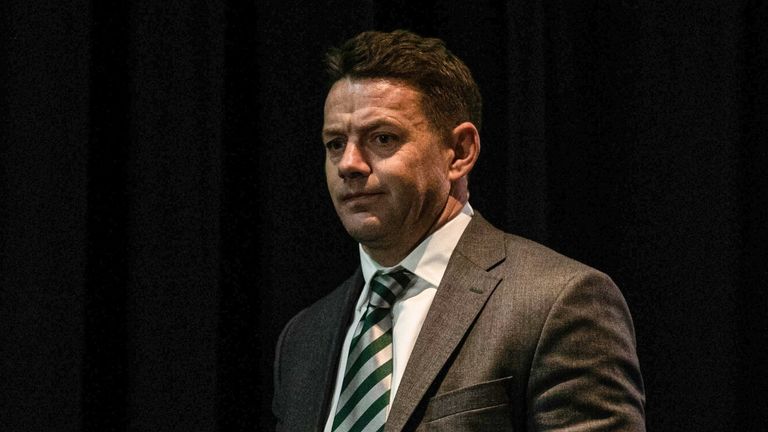
Ross Desmond at Celtic AGM. 21 November 2025.
Screenshot social media
What was supposed to be the club’s annual moment of accountability turned instead into a spectacle of tension, miscommunication, and deepening mistrust. What we witnessed was not a disagreement between a board and its fans, it was the public unveiling of a fundamental rupture in how Celtic views itself, how it is governed, and what it aspires to be.
The club now stands at a crossroads, and at that crossroads sits a pretty uncomfortable truth, the people running Celtic and the people supporting Celtic no longer appear to be talking about the same club. This is a long game. But it is also a turning point.

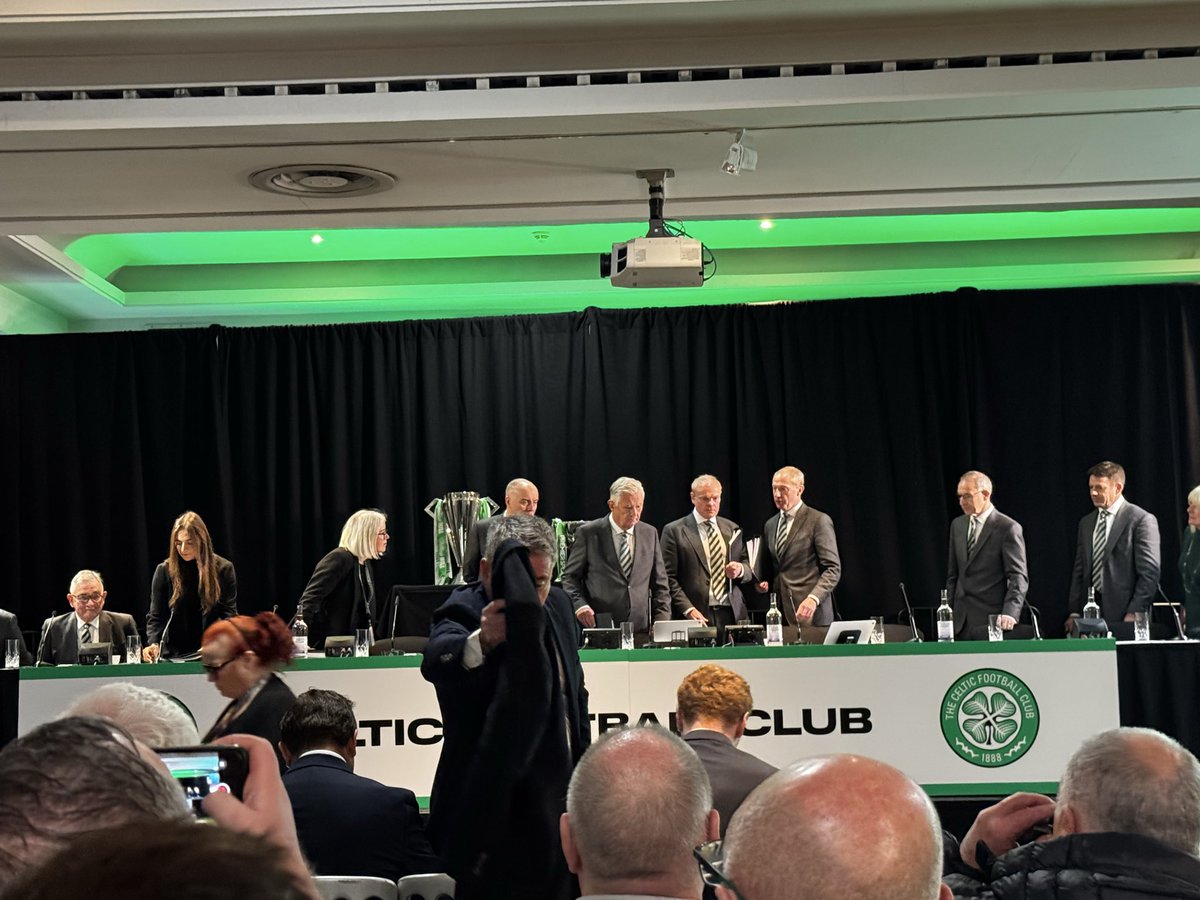
Celtic AGM 2025. Photo The Celtic Trust
AGMs are normally procedural, predictable, a day of mostly mild questions and routine votes. But this year, Celtic arrived knowing they were walking into a room full of frustrated shareholders and supporters who had spent months seeking answers to basic questions about strategy, governance, ambition, and communication.
These questions did not arrive overnight. They were posed publicly in early October by the Celtic Fans Collective -what is the club’s long-term football strategy, why were obvious weaknesses not addressed in the transfer market, what accountability exists for repeated recruitment failures, how will the football department be modernised to compete in Europe, and why does the club resist meaningful collaboration with supporters on matchday experience, ticketing and atmosphere.
These are not revolutionary demands, they are standard corporate governance questions asked of any serious sporting organisation. Yet five of the seven remain unanswered. And when the one day arrived in the year when those answers could be delivered in a structured forum, the AGM, the board did not deliver them. Not in their remarks, not in the video presentations, and not in the Q&A, which was avoided. Instead, we witnessed something else entirely.
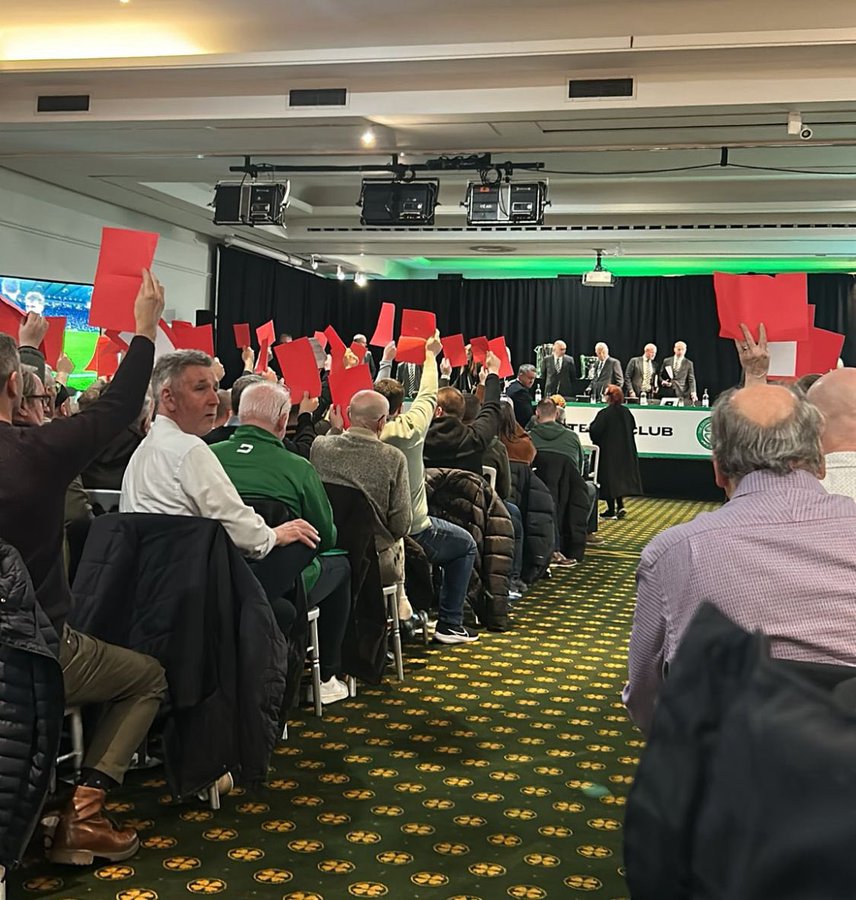

There will be some who insist the meeting was disrupted, that fans behaved poorly, that a small minority prevented a productive session. It is not unreasonable to acknowledge that the meeting was heated, loud, confrontational, and full of genuine frustration. But AGMs for underperforming PLCs often are. Boisterousness is not disruption, dissatisfaction is not sabotage and shareholders asking for answers is not disorder. The deeper issue was not the room’s volume, it was the board’s inability, or unwillingness, to manage it.
The signs were visible early. The CEO and CFO did not speak beyond their video presentations. A shareholder who asked to skip the video to allow more time for Q&A had her microphone cut. Her request, a procedural one, was neither relayed to the hall nor put to a vote. The meeting was abruptly adjourned for thirty minutes. When they returned, the videos were played anyway and the lost time was not restored. At that stage, it became clear to everyone in the room that the top table had no intention of facing prolonged questioning. When a board begins its AGM by minimising shareholder interaction and ends it by shutting the meeting down, it is difficult to argue that the issue was disruption. Many concluded the issue was avoidance.
The most remarkable moment of the day came not through debate or dialogue, but through a speech delivered on behalf of Dermot Desmond.

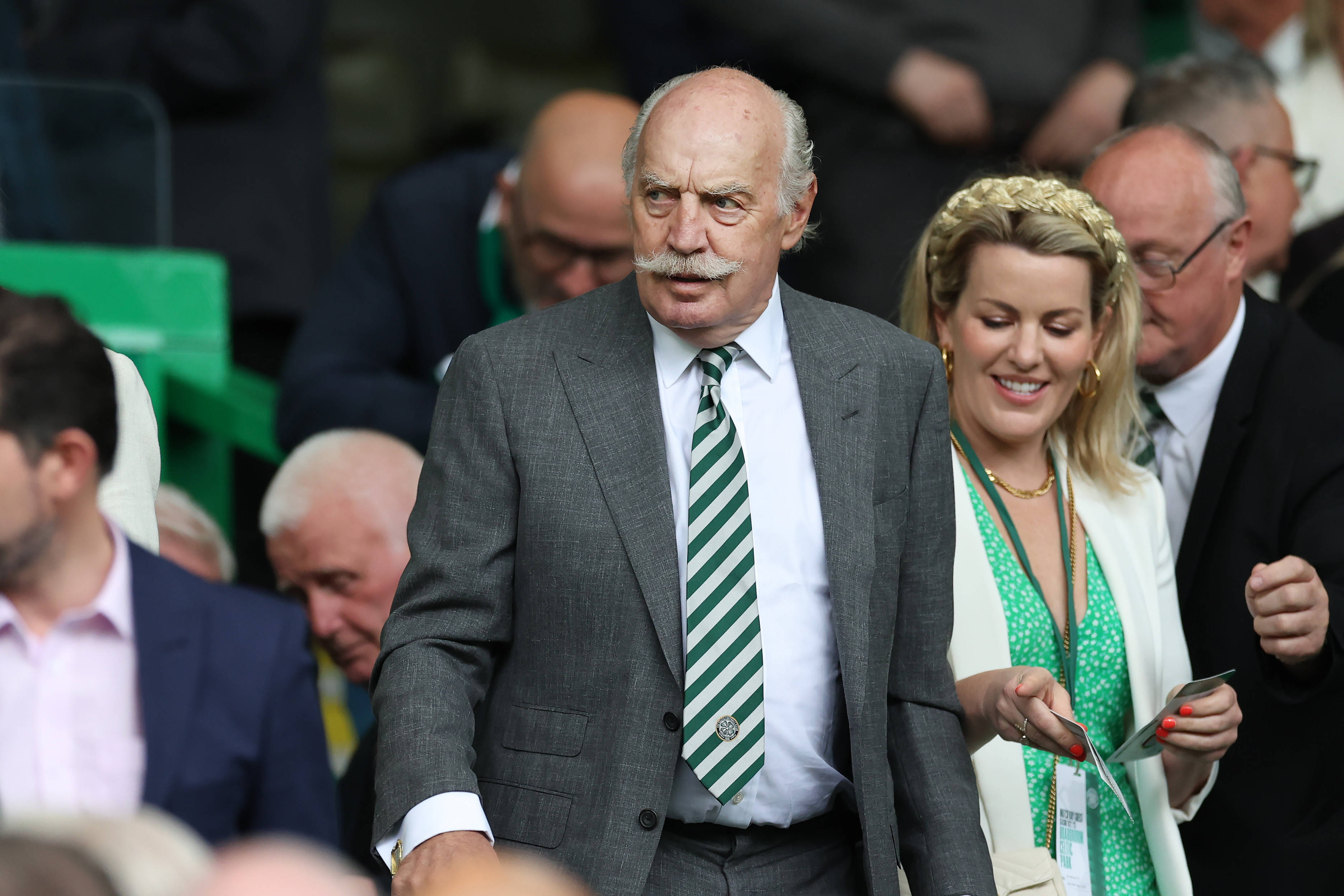
Dermot Desmond prior to the Celtic vs St Mirren Cinch Premiership match at Celtic Park on May 20, 2023 (Photo by Ian MacNicol/Getty Images)
It was accusatory, defensive, framed as clarity but landing as something closer to exasperation. And here is the tell, every accusation aimed at supporters reflected a deeper anxiety within the club. The speech claimed supporters “lie in wait” to stir toxicity, even as the frustration in the room was a direct response to what shareholders saw as years of poor decision-making and a lack of transparency.
It suggested critics were “anti-establishment,” a strange charge for a club whose identity is founded on resisting establishment power. It spoke of responsibility and prudence, yet avoided acknowledging what mistakes were actually made. It attempted to reframe the crisis as the result of one transfer window and restless fans, despite years of repeated early European exits, failed recruitment cycles, and avoidable operational errors.
And crucially, it presented Europe as a financial impossibility rather than a strategic challenge, pointing to global football inflation while ignoring the long list of smaller clubs who have overtaken Celtic on the continental stage.
This was not a statement of confident leadership, it was a statement that betrayed insecurity. It was not a rebuttal of criticism, it was a confirmation that criticism had been heard and rejected. In short, the accusations read like confessions.

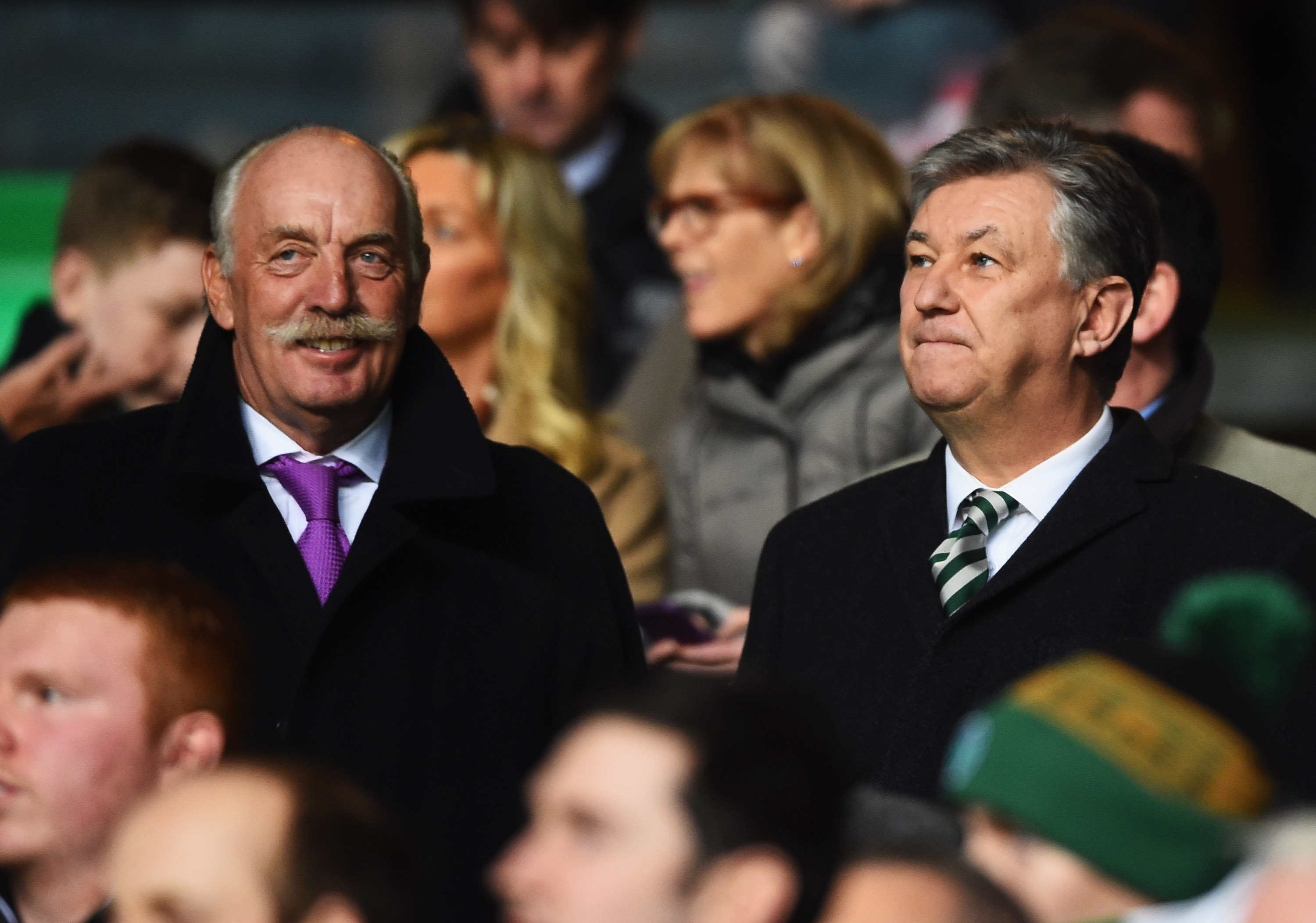
Dermot Desmond (L) and Chief Executive of Celtic Peter Lawwell look on prior to the UEFA Europa League Round of 32 first leg match between Celtic FC and FC Internazionale Milano at Celtic Park Stadium on February 19, 2015. (Photo by Laurence Griffiths/Getty Images)
Across all official communications, the video, the AGM speeches, and the subsequent statement, Celtic repeatedly emphasised that “mistakes have been made.” But which mistakes? What lessons were learned? What structural changes will be made? What is the plan to avoid these mistakes in future?
On all of this, the club chose silence. Celtic confirmed error in the abstract but refused specificity in the concrete. And without specificity, “we made mistakes” becomes an empty phrase, a rhetorical seatbelt with no buckle. It restrains nothing.
This is why supporters feel misled, not because they disagree with the idea of prudence, but because the club invokes prudence without articulating purpose. Not because they demand wild spending, but because the board keeps pretending that is the argument. The club has created a false binary choice, recklessness or stagnation. Supporters reject that framing entirely. What they seek is a strategy, not a shopping spree.
There is a mythology now forming around the discontent, that supporters are demanding every penny be put into transfers, or that fans want Celtic to chase an impossible dream. This is not true.

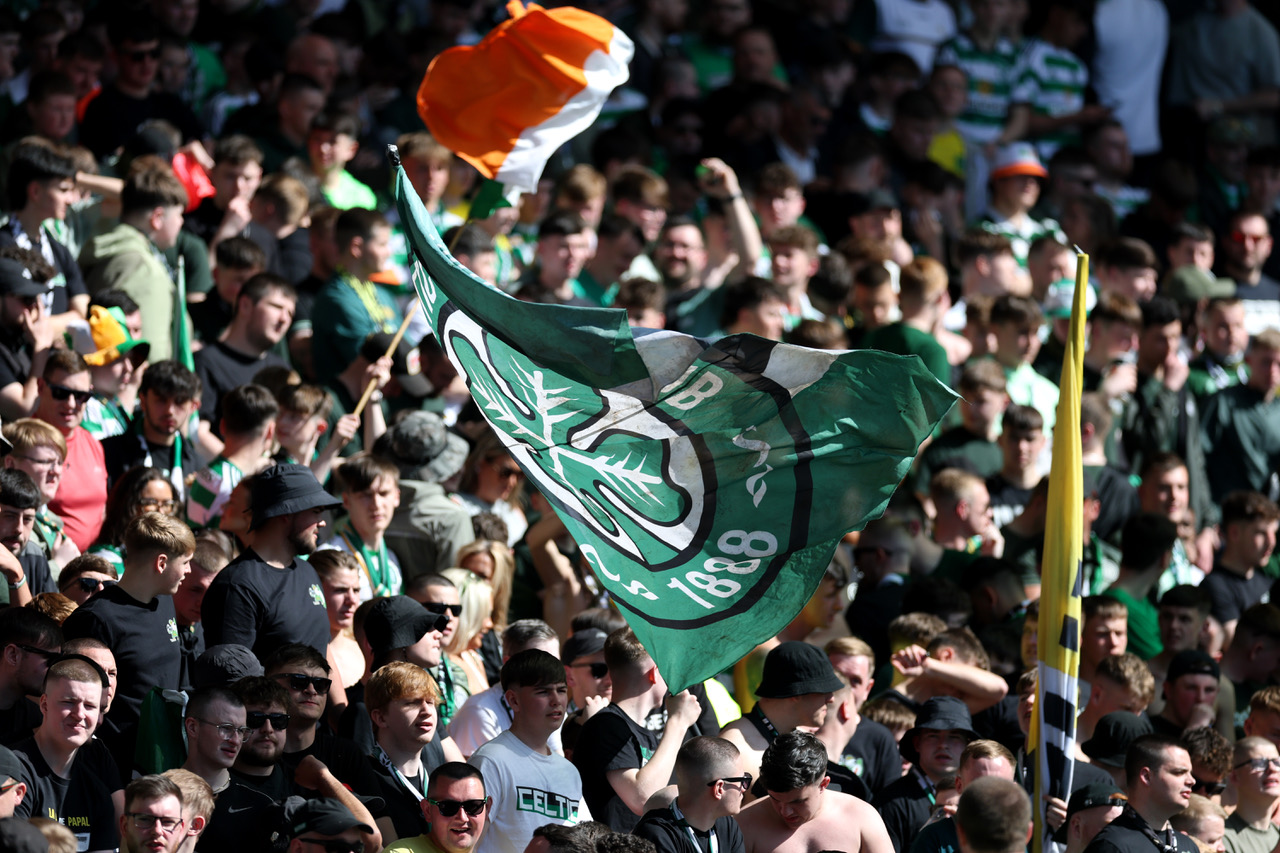
Celtic supporters shows their support at full-time following the team’s victory in the Scottish Gas Scottish Cup Semi Final match between St Johnstone and Celtic at Hampden Park on April 20, 2025. (Photo by Ian MacNicol/Getty Images)
Supporters have been clear, they want communication, they want to understand the long-term plan, they want recruitment to be part of a continuous football strategy, not a twice-a-year scramble, they want to know what Celtic aim to be in Europe, they want transparency around decision-making, and they want governance that reflects the size and stature of the club.
If the club wishes to prioritise stadium expansion or infrastructure, supporters overwhelmingly agree. If the club chooses to invest more in analytics or facilities than transfer fees, supporters will accept that. If the board believes the European landscape has shifted dramatically, fans will engage. But the club must say so. They must explain the reasoning. They must outline the vision. They must articulate the ambition. Right now, none of that is happening, and into that vacuum, mistrust grows.
Perhaps the most concerning element of the AGM was the sense that Celtic is no longer functioning under a balanced corporate structure. The influence of a single non-executive director, publicly underscored by the prominence of his statement and the absence of others, has begun to overshadow the executive team. This is not healthy governance, this is not transparency, this is not stability.
Celtic is a PLC, it should not drift toward the culture of a personal fiefdom. When Brendan Rodgers left, the public fallout was unmissable. When the Green Brigade were sanctioned, many saw it as divide-and-rule. Now, shareholders at an AGM have been framed in similar terms. Patterns matter, and the pattern here is unmistakable. When challenged, Celtic responds not with engagement but with defensiveness, not with dialogue but with deflection, not with strategy but with narrative control.


Celtic Fans Collective, Founded September 2025.
Tonight, the Celtic Fans Collective will meet. What emerges from that meeting will likely set the tone for the months ahead.
What is clear is the support now recognises this is a long game. Change will not happen through one angry meeting or one emotional speech. Change, if it is to occur, will come from organisation, unity, and strategic pressure.
A ticket boycott for instance, previously unthinkable, can no longer be dismissed. Because the club has now publicly stated that its ambition is to win domestically and that its measure of European success is simply qualifying. If European football is now an exercise in participation rather than progression, the natural question arises, why should supporters feel compelled to participate financially without reciprocal ambition? This is the existential question Celtic now faces, not from rivals, not from journalists, but from its own people.

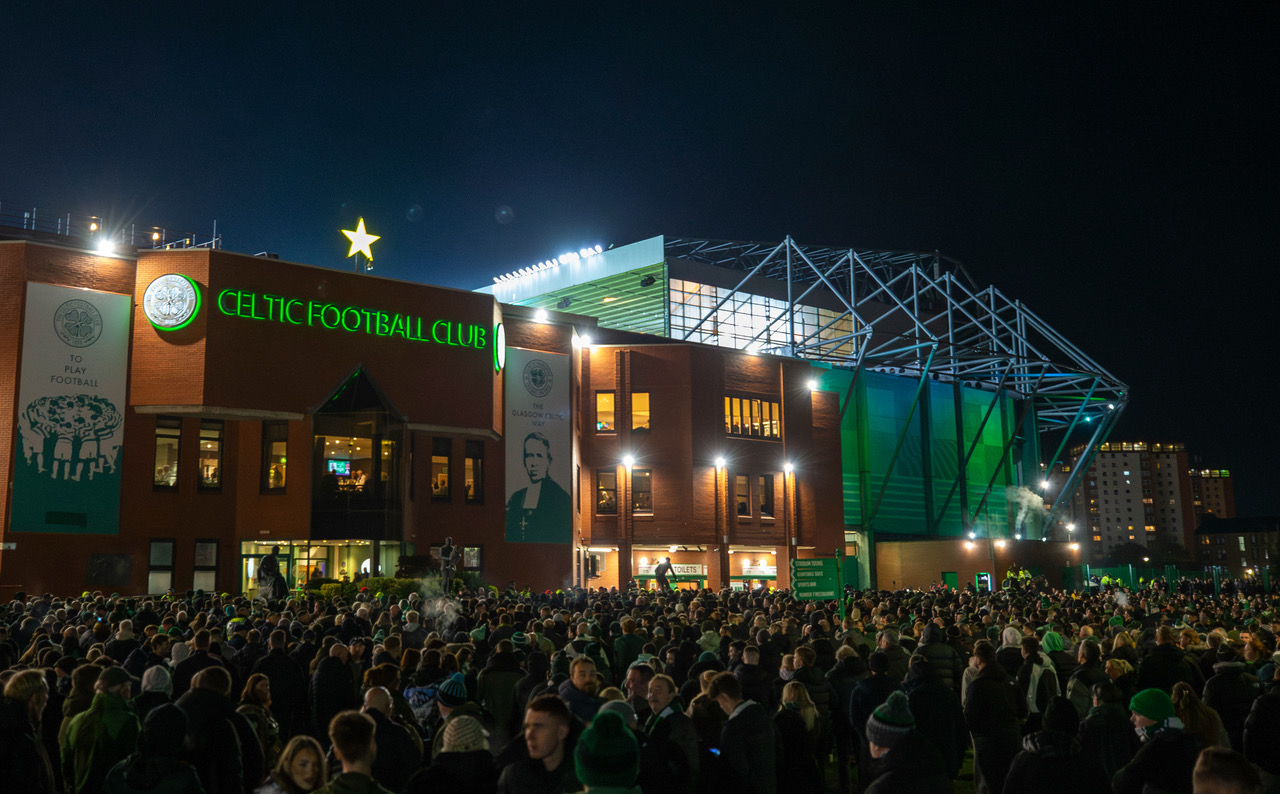
Celtic Fans Collective protest at Celtic Park ahead of the Celtic v Falkirk match. 29 October 2025. Photo Vagelis Georgariou (The Celtic Star)
Historically, Celtic has always believed itself to be something bigger, larger in imagination, larger in aspiration, larger in cultural significance. But the AGM revealed something startling, Celtic’s leadership now appears content to be a Scottish club with Scottish ambitions. Stay slightly ahead of theRangers, qualify for a European group, take no risks, make no leaps, avoid the swing in case we miss. Minimal ambition, maximum stability. It is a coherent model, but it is not Celtic’s model. It never has been. If that is the future, it must be stated plainly. If it is not, the strategy must be explained. Right now we have neither.
If one thing emerged clearly from the AGM, it is that Celtic is being shaped around the vision of one man, not a board, not an executive, not a collective stewardship. One person’s beliefs, one person’s risk appetite, one person’s idea of what Celtic is and what Celtic should be. And that vision, articulated through a defensive speech delivered by proxy, appears to reject ambition, reject scrutiny, and reject the concerns of the supporters. Supporters now face a choice, accept that vision, or fight for another.

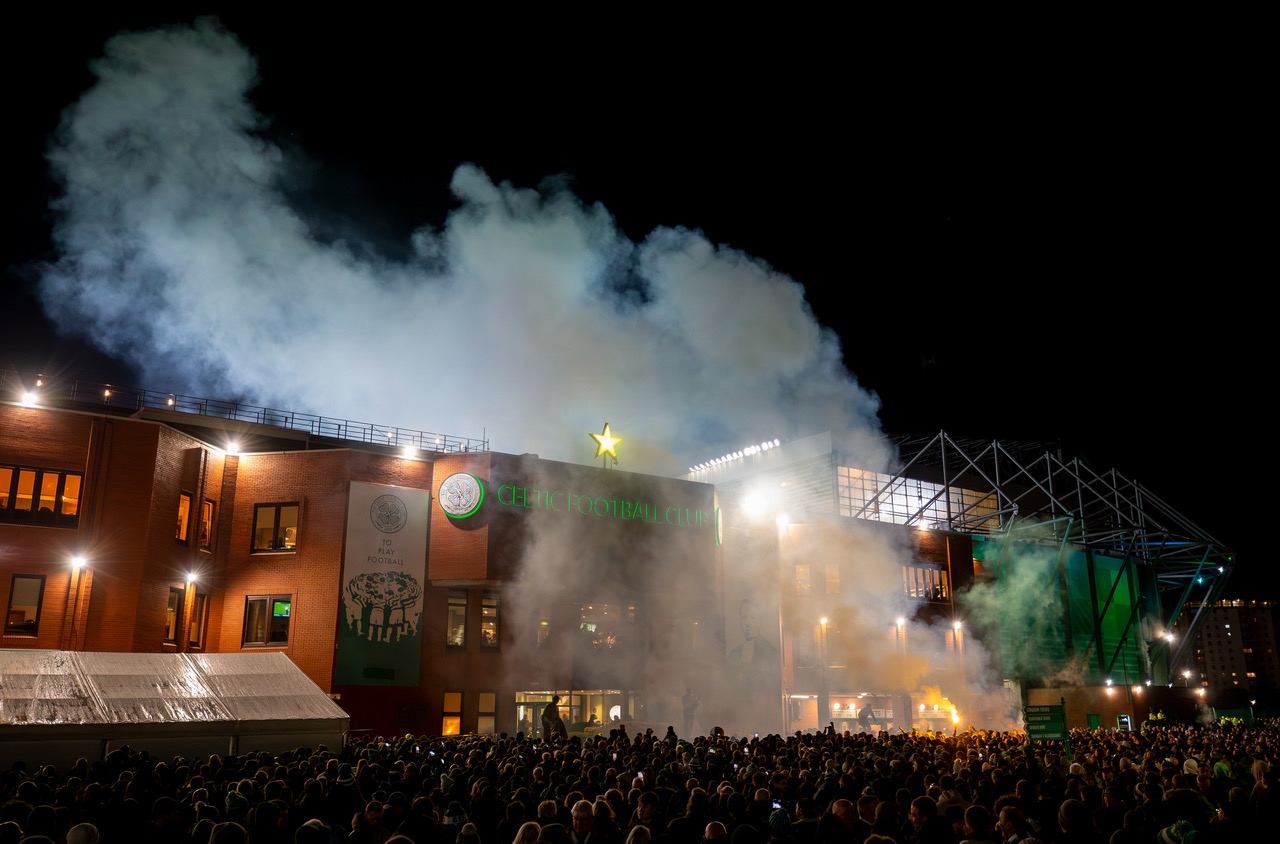
Celtic Fans Collective protest at Celtic Park ahead of the Celtic v Falkirk match. 29 October 2025. Photo Vagelis Georgariou (The Celtic Star)
What happens next will define Celtic for years, because a club of Celtic’s size, history, and identity cannot thrive on participation alone. It cannot be a global institution with local ambition, and it cannot sustain itself on a governance model that resists accountability.
Whatever comes from tonight’s meeting, whatever actions follow, whatever long-term strategy the support pursues, the essential truth has already been revealed, Celtic supporters know now, without ambiguity, that change will not come from the top down. It must come from the bottom up.
The AGM showed us the future the board sees. The next months will reveal the future the supporters are willing to accept.
Niall J




Last orders for Celtic in the Eighties by David Potter

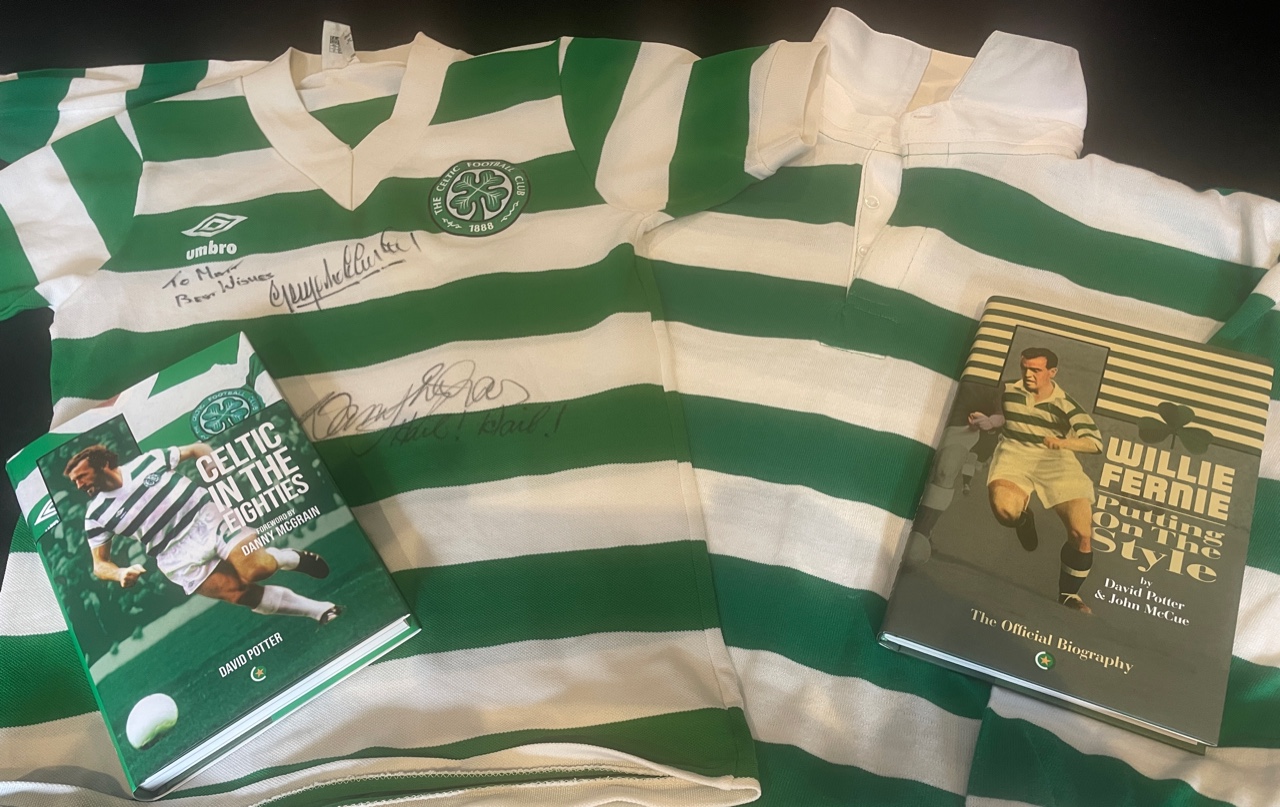
Celtic in the Eighties and Willie Fernie – Putting on the Style both by David Potter. Photo The Celtic Star
Last remaining copies of Celtic in the Eighties – get your copy now before it’s too late! Here’s what you get…
- David Potter’s beautifully produced hardback book, the Celtic Historian final work before his passing. Your copy will also be personally signed by Celtic legend Danny McGrain!
- You’ll also receive a complimentary copy of another brilliant David Potter book – Willie Fernie – Putting on the Style.
Order Celtic in the Eighties from Celtic Star Books and we’ll automatically add Putting on the Style. Please note postage will only be charged on one book so there is no cost to you at all for the Willie Fernie biography.
These two books combined will make a brilliant Christmas present!



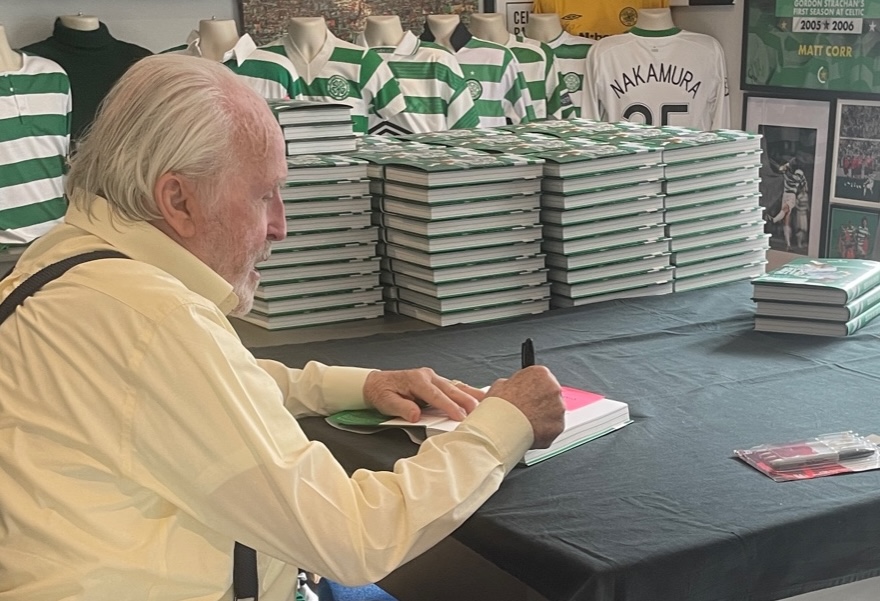
Danny McGrain signing copies of Celtic in the Eighties by David Potter. Photo: Celtic Star Books

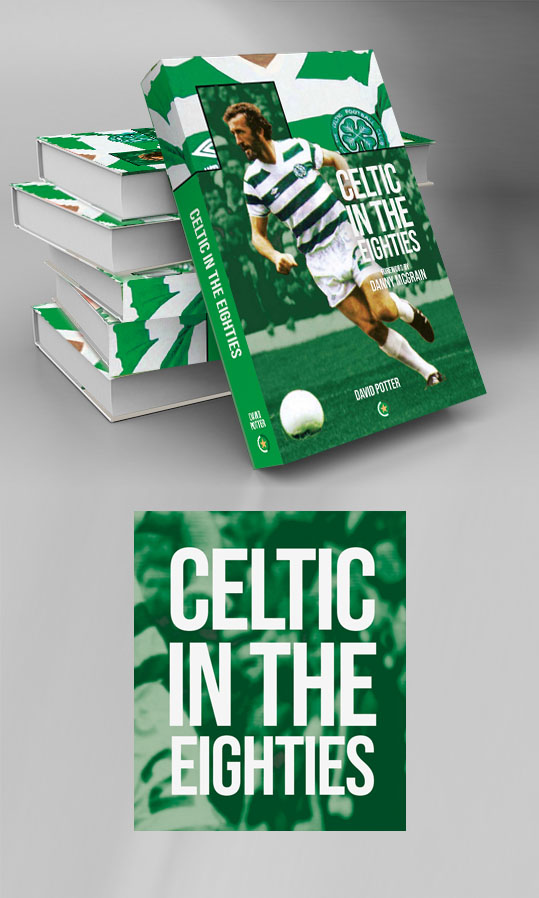
Celtic in the Eighties by David Potter. Out now on Celtic Star Books. Order at celticstarbooks.com


Willie Fernie – Putting on the Style. Available at celticstarbooks.com
