The SFA have done something almost unprecedented – released the audio, shown their workings, and backed their referee – and it’s vindicated everything Celtic supporters said from the moment the whistle blew.
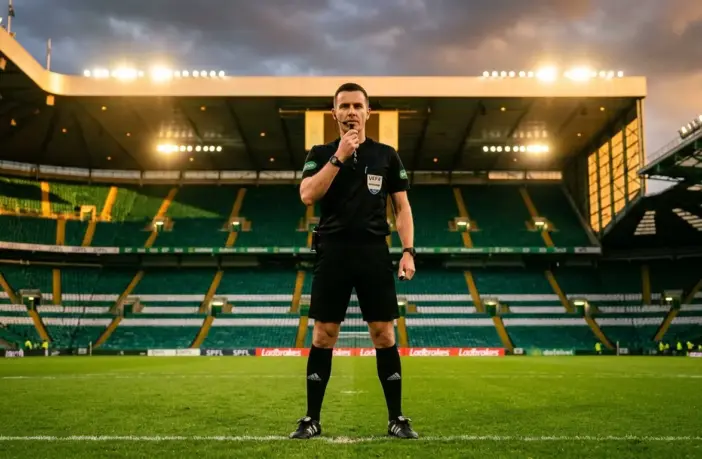
The Scottish Football Association have released video and audio evidence from the final moments of Saturday’s title-clinching Celtic 3-1 Hearts and confirmed that referee Don Robertson took the “correct action in ending the game.” The governing body’s public backing of Robertson comes after a week of manufactured noise from Tynecastle and beyond – and the material they’ve put into the public domain settles the central question emphatically.
What the Audio Actually Shows
The footage confirms Robertson communicated clearly and repeatedly with the Hearts bench in the immediate aftermath of Callum Osmand’s goal – which made it 3-1 and triggered the pitch incursion – asking whether Derek McInnes was content to end the match. McInnes, concerned for his players’ safety with Celtic supporters streaming onto the pitch, indicated he wanted them off. Robertson acted on that request and signalled the game finished, not abandoned.
The SFA’s statement was unequivocal: “We fully support the decisive action taken by Don Robertson and his team to end the game. In the context of what unfolded – which is verified by the footage and the Match Incident Report submitted to the Scottish FA – the match official clearly communicated that the match was ended and not abandoned.” The clock data reportedly shows the match had already passed the minimum eight minutes of added time when Robertson confirmed it was over – so the ’30 seconds remaining’ framing that Hearts and sections of the media ran with doesn’t hold up either.
That distinction between ‘ended’ and ‘abandoned’ matters enormously. An abandoned match opens up all sorts of questions about results and replays. Robertson closing the game through proper procedure – with the consent of the Hearts management – shuts those doors completely.
The Incident That Started This
When Osmand’s late goal went in at Celtic Park on 22 May, a section of the Celtic support came onto the pitch. Robertson, with fans on the field and the Hearts manager requesting his players be removed from the situation, brought proceedings to a close. The title was Celtic’s. The controversy, apparently, was just beginning.
Hearts issued a statement claiming a “troubling precedent has been set whereby a pitch invasion can effectively determine the duration of a match,” and shareholder Tony Bloom went further, alleging Celtic supporters had assaulted Tynecastle players. Martin O’Neill called the criticism “nonsense” and pointed out the assault allegations have “not been proved.” What’s particularly striking – and has barely been acknowledged in the coverage – is that Hearts representatives attended a meeting with the SFA on the Monday before going public with their statement. They were shown the clock data, the audio, and the incident report. They went public anyway.
All of this came against a backdrop already inflamed by the penalty controversy at Motherwell in the penultimate round, after which referee John Beaton’s personal details were leaked online and Police Scotland placed him under surveillance. A 19-year-old has since been charged with a data protection offence. It has been, to put it mildly, a grim few weeks for officiating in this country.
Trust, Transparency and What Comes Next
The Scottish Senior Football Referees’ Association didn’t hold back in their own statement, condemning “irresponsible commentary from some managers, clubs and sections of the media” for fuelling a toxic environment – and warning they “will reserve all options open to us” if behaviour doesn’t improve. Language that pointed, from a body that cautious, suggests we are closer to collective action than anyone wants to publicly admit.
For Celtic supporters, the audio release is as close to a full vindication as you’re going to get from an SFA that has not historically been accused of going out of its way to help us. Robertson did his job, McInnes asked for the match to end, the clock had already passed the minimum – and Hearts went out and briefed the media in the opposite direction anyway. That is the real story here, and the SFA’s transparency has made it impossible to ignore.
The debate about whether releasing this kind of material should become standard practice isn’t going away – and frankly, if it keeps producing moments like this, we’re all for it.
Mon The Hoops.