
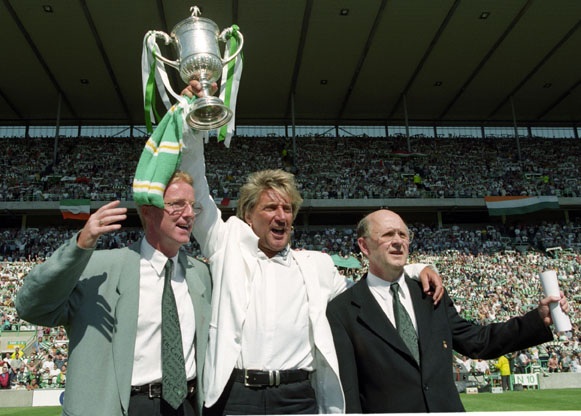
The Bhoys today welcome Newcastle United to Celtic Park on Saturday. They did the same thing 30 years ago, as part of the reopening of Celtic…

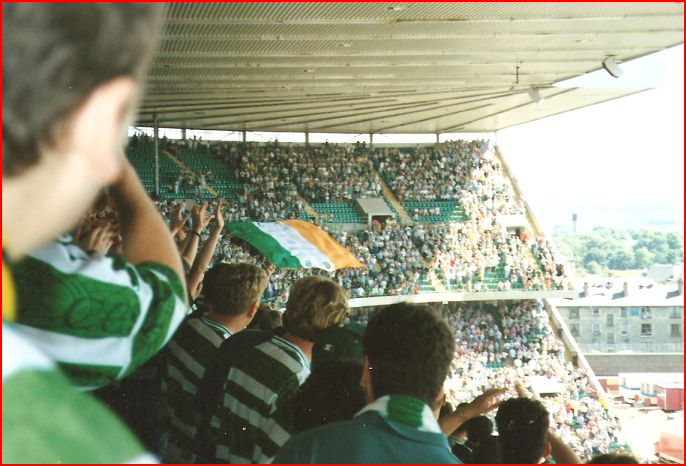
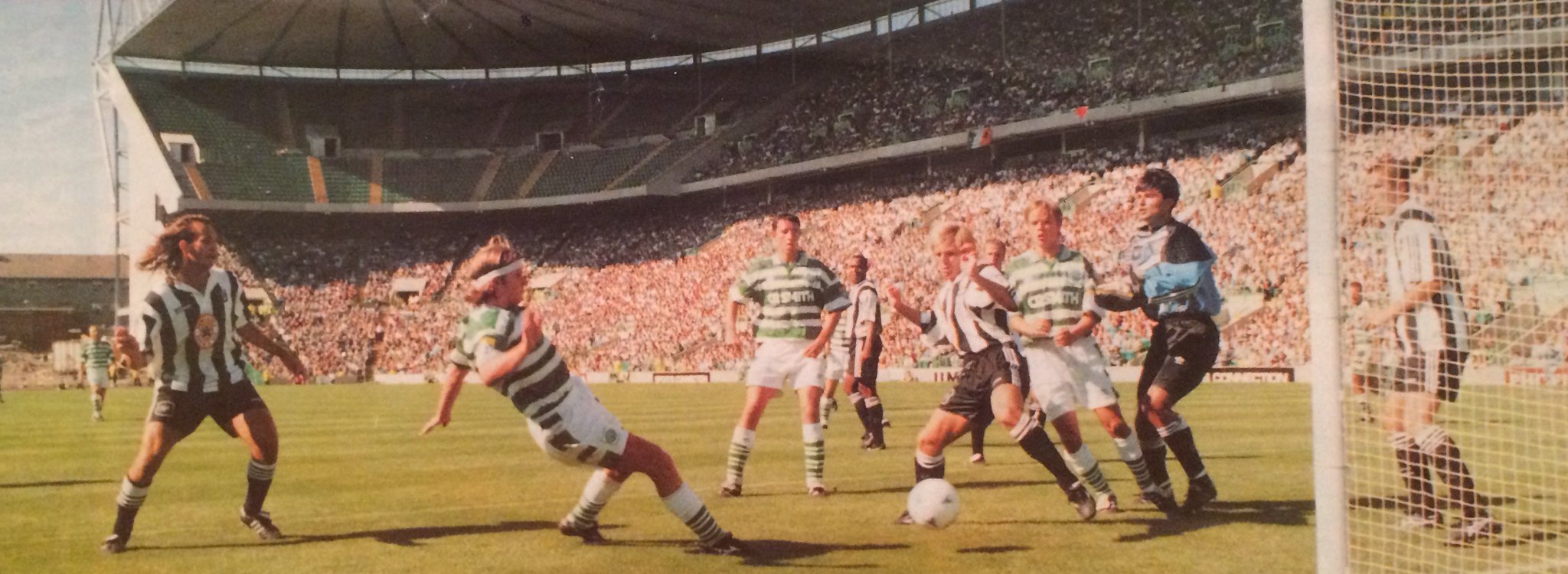
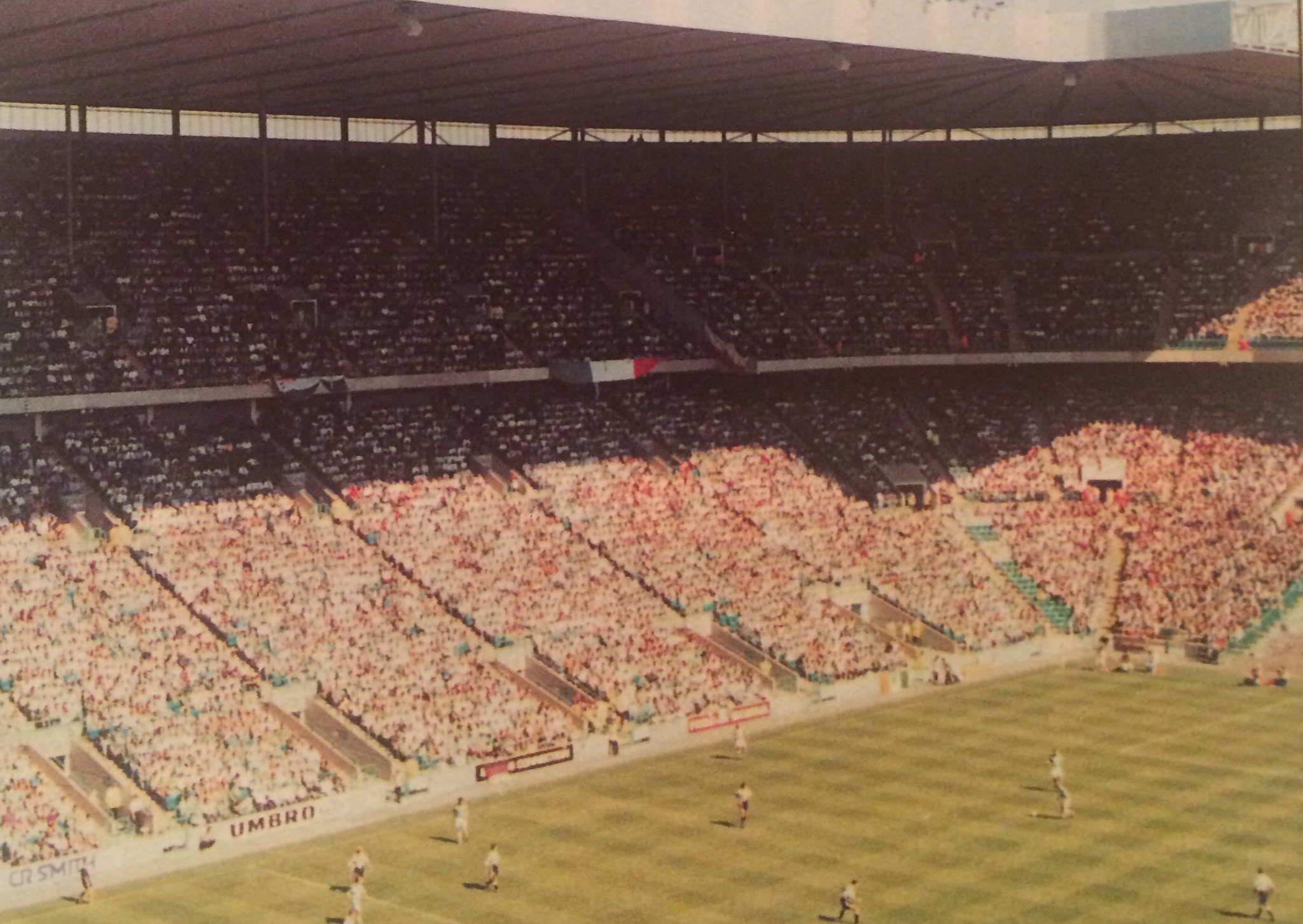
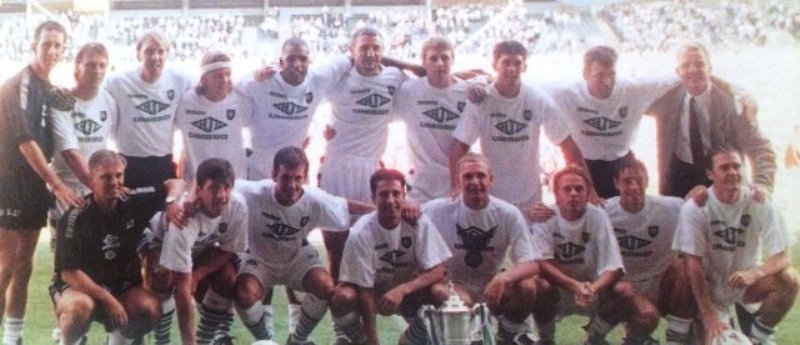
Re-opening of Celtic Park, Celtic v Newcastle, 8 August 1995. Photo The Celtic Wiki
In the summer of 1995, the Celts returned to Celtic Park after a year in the wilderness at Hampden Park.
Whilst they were away, the east end ground had been transformed, creating the modern venue that attracts tens of thousands of supporters every second week. For Celtic fans, this was a homecoming. Although the Bhoys have played in many venues, Celtic Park is always the most important.
This is the story of the two Celtic Parks.

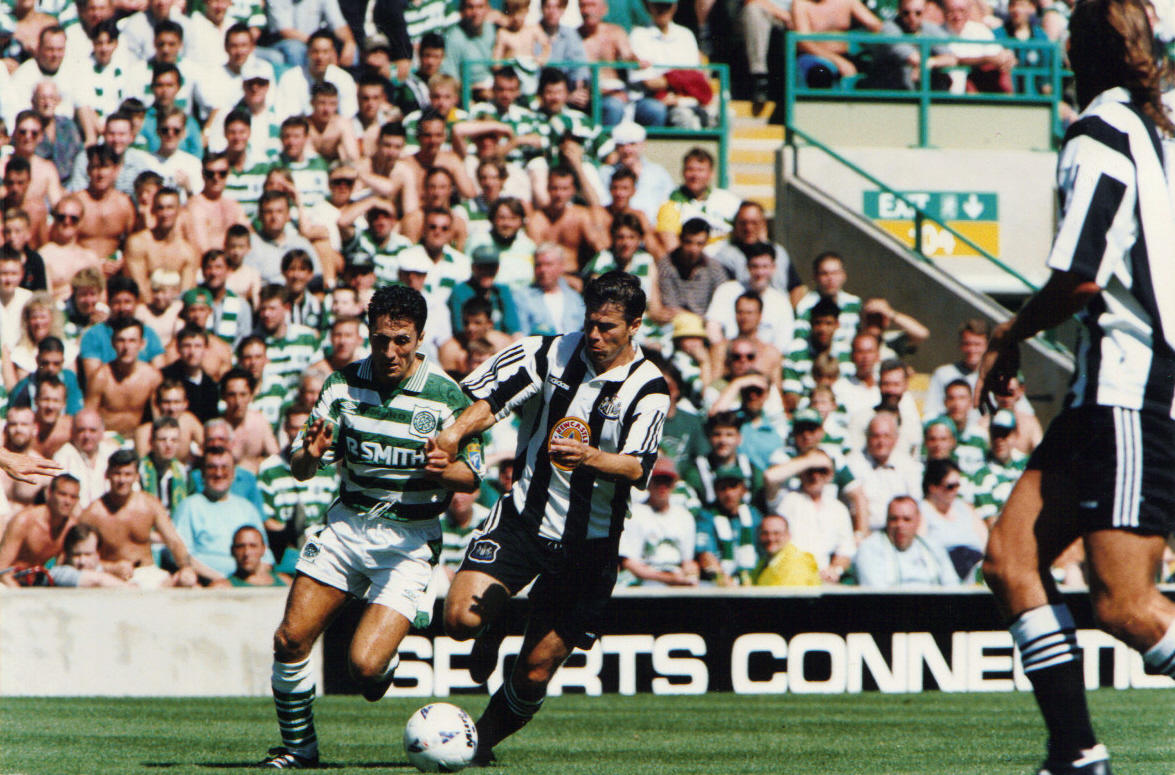
Re-opening of Celtic Park, Celtic v Newcastle, 8 August 1995. Photo The Celtic Wiki
After Celtic’s formation in November 1887, they needed somewhere to play. Within a week of this foundation, land had been rented next to the Eastern Necropolis – sometimes called Janefield cemetery – very close to the modern day stadium.
This would become the first Celtic Park, and the Bhoys’ home for four years. It saw some notable Celtic moments, including the club’s first game and also first defeat of Rangers in a cup final, in the 1892 Charity Cup.
In fact, for many years the final season at the first Celtic Park was celebrated as the best in the club’s early history; the Bhoys won a ‘Holy Trinity’ of trophies, namely the Scottish Cup, Glasgow Cup and Charity Cup.

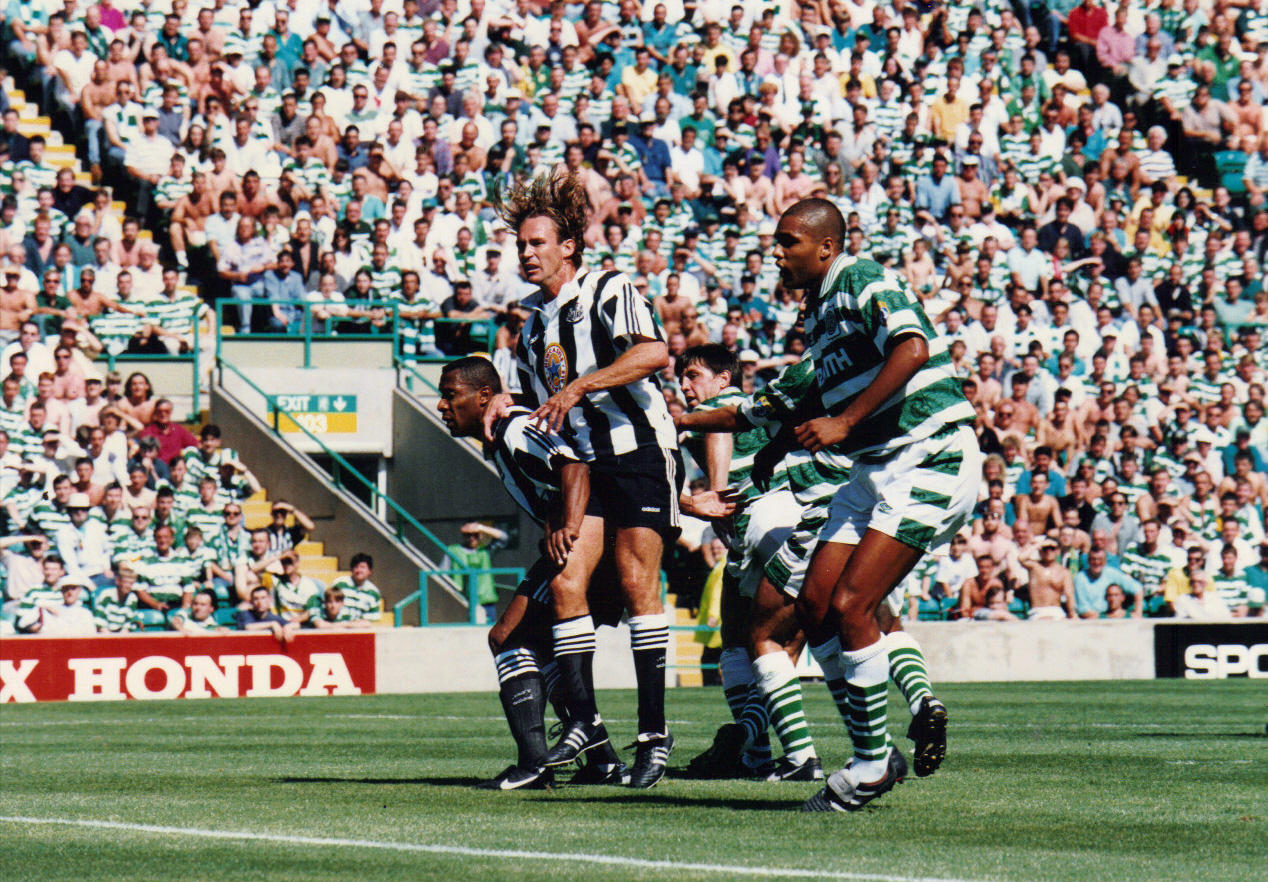
Re-opening of Celtic Park, Celtic v Newcastle, 8 August 1995. Photo The Celtic Wiki
Although this was Celtic Park, in fact the Celts did not play in the first game there. Instead, Hibernian and Cowlairs played an opening match in May 1888, and then later that month Celtic took their home bow, beating Rangers 5-2 in a friendly.
To say the least, this original Celtic Park looked very different from the modern day ground. There was basic uncovered terracing around three-quarters of the ground, and one stand that had a pavilion, dressing rooms and offices.

Re-opening of Celtic Park, Celtic v Newcastle, 8 August 1995. Photo The Celtic Wiki
Still, by the standards of the time, this was very impressive. And had Celtic remained there in the longer term, it is likely that other changes would have been made. However, chased by the greed of a landlord, Celtic moved to another site.
It had been proposed to increase Celtic’s rent ninefold, going from £50 per year to £450. Instead, the Bhoys refused to pay and searched elsewhere for land. At one point, moves were considered to the southside or Springburn area, but these plans were rejected.
1892 was the end of Celtic’s time at the original ground. For a number of years afterwards, football continued to be played on the pitch, which became known as Roselea Park. Since then, the land has been flats, then an Irn Bru factory and is once again covered by flats and houses.

Re-opening of Celtic Park, Celtic v Newcastle, 8 August 1995. Photo The Celtic Wiki
Back in the 1890s, a decision was made on a new venue for Celtic Park. Rather than going far away, the site would be a literal stone’s throw from the original ground. This meant moving from next to the eastern wall of Janefield cemetery to instead beside its southern boundary.
This new Celtic Park needed lots of work to get it up to standard. Volunteer labour from the local Irish community was supported by professional builders, including moving more than 100,000 cartloads of earth. Soon a fine new ground emerged, one that was praised by journalists as one of the best venues in Europe.

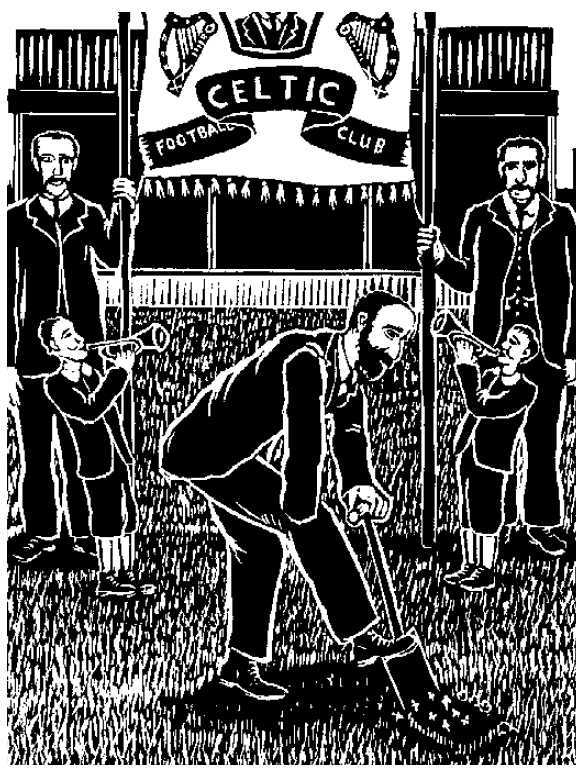
Michael Davitt lays the first sod of shamrock smothered turf at Celtic Park. Image The Celtic Wiki
Before it was officially opened, club patron and Irish politican Michael Davitt laid a sod of Irish shamrocks on the pitch. However, someone then dug this up and stole them!
On 13 August 1892, an athletics event was held which officially opened the new Celtic Park. Athletics and other sports events were regularly organised by the club in those days.
Football though is what matters most, and 20 August 1892 came the crucial first match. The Celts won a seven-goal thriller against Renton, edging the league match 4-3 thanks to a late winner. There was even the added excitement of two players being sent-off, one for each team.

Re-opening of Celtic Park, Celtic v Newcastle, 8 August 1995. Photo The Celtic Wiki
As well as open air terracing around the pitch, this new ground had two buildings on its north side, a grandstand and also a pavilion. In the years following its opening, other changes were made to Celtic Park, including the installation of a press box and then turnstiles too. In 1893, there was even a failed attempt to install electric lights.

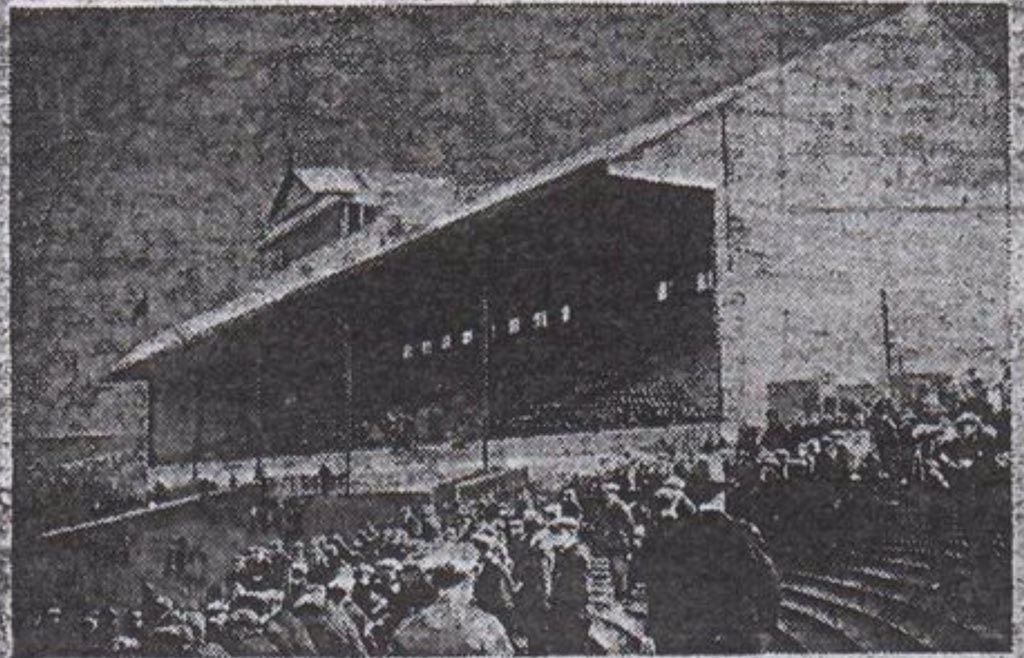
The Grant Stand at Celtic Park. Photo The Celtic Wiki

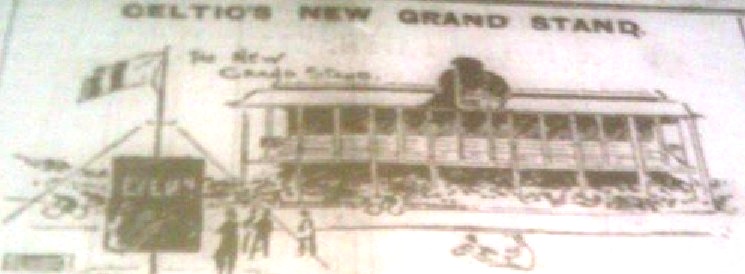
The Grant Stand at Celtic Park. Photo The Celtic Wiki
The first modification that substantially changed the look of this ground took place in the late-1890s. Opening in 1899, another stand was built at Celtic Park, known as the Grant Stand, after James Grant, the Celtic director who paid for the structure. This could hold 2000 fans and was located on the site of the modern day main stand.
Celtic Park often faced many problems. In 1894, a major storm ripped the roof off the main stand, and in 1904, the north side stand and pavilion were damaged in a huge fire. Then in 1929, another major fire at Celtic Park devastated parts of the ground. This eventually led to a new main stand being built.
This latter fire had a notable impact on the ability to research and study Celtic’s early history. Many official club documents, photographs and materials were destroyed, taking away some important sources of the Celtic story.
Across the decades, other alterations were made to the ground. In 1959, floodlights were used for the first time. Roofing changed too, with covers eventually being installed over the east and west terracing, and a new roof added to the north terracing, better known as the Jungle. 1971 saw a new main stand built too.

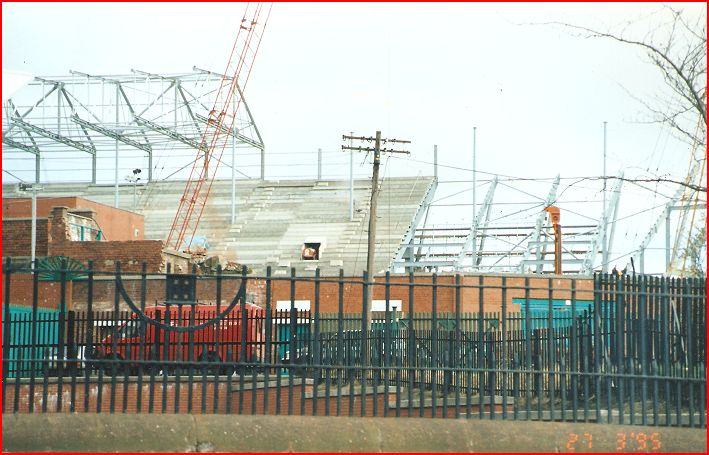
Re-opening of Celtic Park, Celtic v Newcastle, 8 August 1995. Photo The Celtic Wiki
Celtic Park is most famous as a footballing venue, however at various times other events have taken place. This includes different sporting events such as cycling, athletics and shinty. It was even witness to military parades and demonstrations during the First World War! There have also been various concerts and even religious events too, including a Billy Graham evangelical service. And in more recent times, the new stadium hosted the opening of the Commonwealth Games.
By the late-1980s, Celtic Park looked much as it would before Fergus McCann’s changes. The reality was that although many fans had great memories, it was increasingly past its time. In particular, following the Hillsborough tragedy in 1989, big changes were required to meet with the standards of an all-seater stadium.
Celtic’s old Board considered various options, including installing seating at the current ground, and also building a new stadium at Cambuslang. None of these were serious possibilities, and in 1994 it ceased to be their problem following a takeover of the club.
Under Fergus McCann’s new leadership, action was taken to fix Celtic Park. The scale of the required job meant that the Bhoys could not continue to play in Glasgow’s east end whilst this was done. Instead, for the 1994-95 season, Celtic flitted to Hampden Park, and the bulldozers moved in to Celtic Park.
In simple terms, barring the main stand, the entire venue was razed to the ground. In its place, a truly massive North Stand was added, one that towered over the old Jungle, which had previously stood in place. Holding around 27,000 people, this was a very visible sign of Celtic’s rebirth. One Celtic song describes this as “a phoenix rising, a house of steel.”
In August 1995, the Bhoys were back in Paradise, with Newcastle United being invited to officially open the new north stand, doing so in a 1-1 draw.
However, as much as progress had been made, Celtic Park was far from complete. It still needed stands behind each of the goals, which was the next step in the redevelopment.

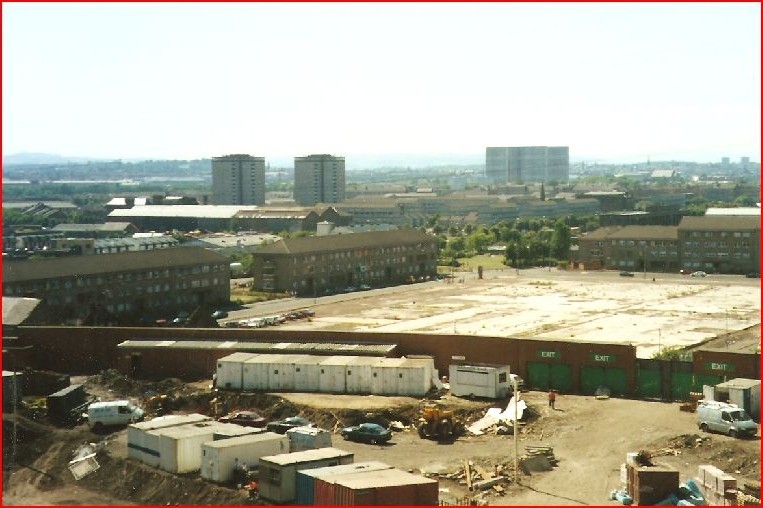
Re-opening of Celtic Park, Celtic v Newcastle, 8 August 1995. Photo The Celtic Wiki
Firstly, the east stand was built. In the past this was often referred to as the ‘Rangers end’. This connected the north stand to the east side of the south stand, and also added an extra 13,000 to the ground’s capacity. It opened in 1996, and was later renamed as the Lisbon Lions stand, in honour of Celtic’s greatest ever team.
Three-quarters of Celtic Park was now complete, leaving just the west stand to be built. In the past, this had been known as the ‘Celtic end’ and even before the building work took place, fans could watch the games from there. A temporary stand was erected on match days, and its presence is perhaps most associated with a 2-0 win over Rangers in 1998 which took the Bhoys to the title.
However, the very name ‘temporary stand’ shows that this was not the final piece in Fergus McCann’s stadium jigsaw. Instead, another huge stand – the mirror opposite of the east stand – was added by 1998, completing the ground. This final stand – the Jock Stein stand, which also holds 13,000 fans – was officially opened in August 1998 when Liverpool came as visitors.
By this point, the stadium looked largely as is the case nowadays, albeit there have been small changes in the intervening years. The seats are often moved to advertise new sponsors, and the outside of the ground has begun to be used to promote the club’s history with giant images attached. In addition, the presence of so-called ‘disco lights’ has added to the ground’s matchday image.
However, apart from Celtic Park itself, the biggest reform since the 1990s has been to the area around the ground, which is simply unrecognisable from earlier eras. Most of the flats near Celtic Park have been demolished, in some cases replaced with new houses, the huge Emirates sports arena as well as a major road too.
In addition, the old London Road Primary School was knocked down. Some supporters do regret the loss of the old school building, considering its look to have been part of Celtic’s history.
However, the outcome of this has been the construction of the ‘Celtic Way’ leading up to the main stand, giving a visually impressive look as fans approach the stadium. This includes the addition of statues commemorating significant Celtic figures, such as club founder Brother Walfrid and captain Billy McNeill, in his iconic European Cup-winning pose.
Of all the decisions that Fergus McCann took when rebuilding Celtic Park, arguably the most significant of these concerns its overall capacity. Rangers’ Ibrox holds around 50,000, and it would have been cheaper had McCann simply matched this. However, the decision to have a 60,000 capacity stadium has given Celtic a notable financial advantage over the Ibrox clubs. This has helped Celtic dominate Scottish football in the 21st century.
Celtic Park is of course also known as ‘Paradise’. This is said to come from an 1890s comment when the Bhoys moved from their original ground to the second one, with one witness claiming that it was like going from “from graveyard to Paradise.”
In the numerous decades since that day, the ground has been witness to many iconic moments not simply in Celtic history, but also that of Scottish, European and world football too. It very much supports that old adage that “there’s no place like home.”
Matthew Marr