ARTICLE TWO OF EIGHT FROM NIALL J ON WHAT THE MINUTES FROM THE MONDAY NIGHT MEETING TELLS US AS CELTIC SUPPORTERS…


Celtic v BSC Young Boys, view of Paradise from the sky. Photo Vagelis Georgariou
At Monday’s meeting between Celtic executives and fan representatives, the topic of accountability dominated much of the discussion. It was, in many ways, the question at the heart of the evening. Who is actually responsible when Celtic repeat the same failings, year after year, in the transfer market?
When supporters pressed for clarity on this point, CEO Michael Nicholson was clear, at least in principle. The executive and footballing teams, he said, are accountable to the Celtic plc Board.
That, in theory, is how governance works. But in practice, it’s a circular process, executives accountable to a board that they themselves largely influence, reviewed through “internal” processes that are never made public, and measured by criteria that only the Club defines.

Accountability, in this sense, becomes not a mechanism of scrutiny but a formality, like a closed loop of self-assessment that produces no meaningful change.
Nicholson repeated that confidentiality is essential in football operations, particularly around transfers. Fans didn’t disagree. Nobody expects line-by-line disclosure of negotiations.
What they do expect, however, is transparency of process, an understanding of how lessons are learned, who takes responsibility when objectives are missed, and what steps are being taken to ensure the same errors aren’t repeated.
Yet once again, the answer offered was familiar, there would be a review, and the Club would “think about how best it can communicate.”

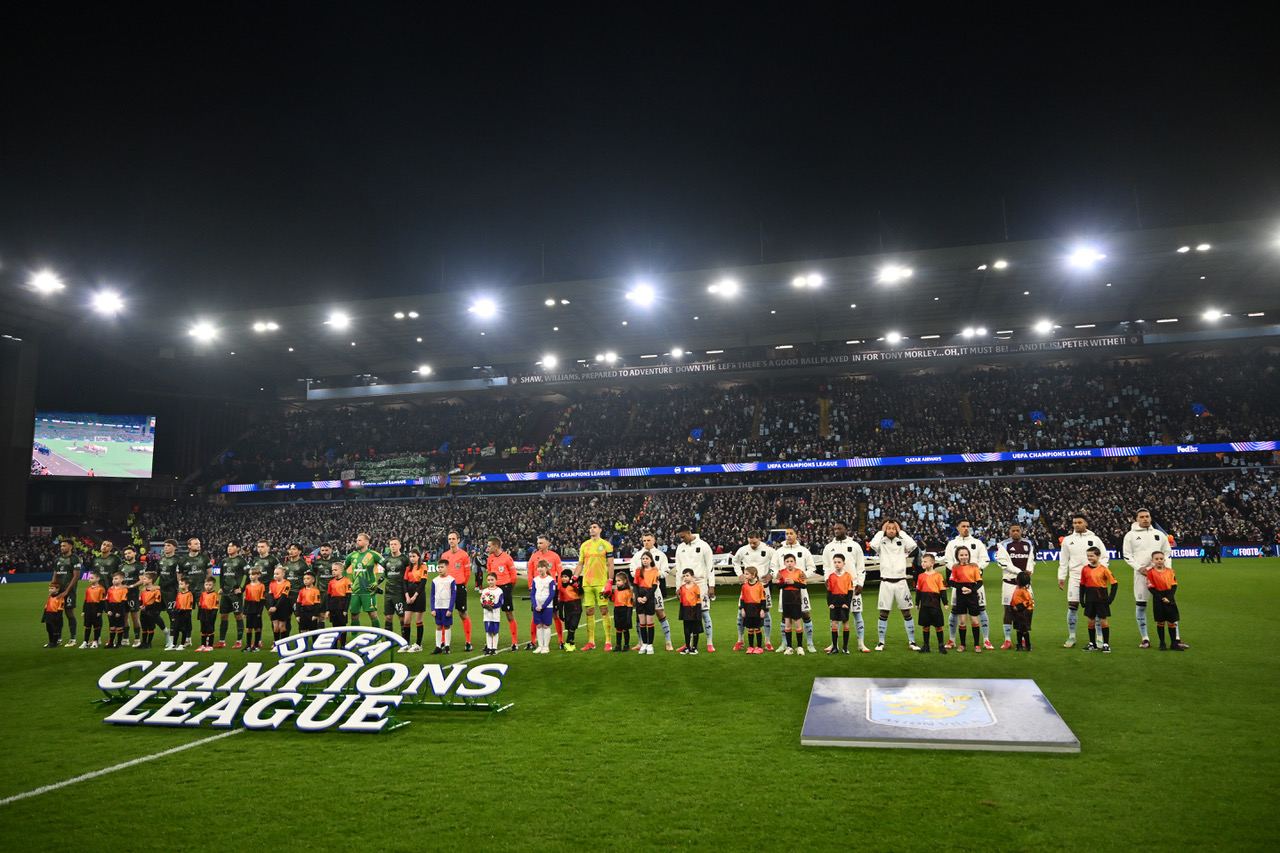
View inside the stadium prior to the UEFA Champions League match between Aston Villa and Celtic at Villa Park on January 29, 2025. (Photo by Julian Finney/Getty Images)
That phrase, “we’ll look at this and come back to you”, has become a running theme of Celtic’s engagement with supporters. It is a polite way of ending the conversation without committing to anything. Fans at the meeting were quick to point out that this pattern is part of the problem. It’s not simply a communications issue, it’s a credibility issue. There is no accountability if the people who are supposed to be held accountable are the same ones conducting the review.
When the conversation shifted to the summer transfer window, the frustration deepened. Supporters asked why, once again, Celtic had failed to invest in key positions despite clear weaknesses in the squad and the manager’s public pleas for reinforcements.


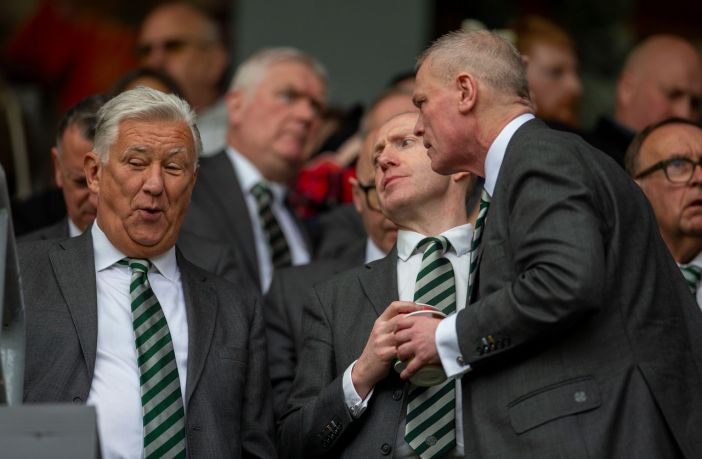
Peter Lawwell, Michael Nicholson and Chris McKay watch on during the Scottish Gas Scottish Cup Quarter-Final match between Celtic and Hibernian at Celtic Park on March 09, 2025. (Photo by Ian MacNicol/Getty Images)
Nicholson and Chief Financial Officer Chris McKay pointed to a familiar list of obstacles, player intent, club negotiations, taxation, market dynamics. These are, of course, realities of modern football. But they are also eerily familiar, almost word-for-word from the Club’s official statement last month. It’s as if the same paragraphs are dusted off and reissued every time things go wrong.
The real concern among supporters isn’t that these challenges exist, everyone understands that transfers are complex. The concern is that Celtic seem perpetually unprepared to overcome them.


Celtic fans celebrate during the UEFA Champions League match between Aston Villa and Celtic at Villa Park on January 29, 2025. (Photo by Julian Finney/Getty Images)
Supporters don’t expect the club to sign every target, but they do expect the people responsible for recruitment to anticipate these variables and navigate them successfully. Every club faces market complexity, the best ones are proactive, not paralysed by it. When Celtic list challenges as excuses, it raises a bigger question, do the people in place actually have the expertise and agility required to meet them?
If these obstacles are truly insurmountable, as the rhetoric sometimes implies, then the environment will never change, and neither will Celtic’s results. Indeed, it in all likelihood, it will only get more complex. The support doesn’t need another list of reasons why the job is difficult. They need to hear about the solutions being implemented to ensure the same mistakes aren’t made again.

Celtic fans show their stupidity and selfishness by lighting flares during the UEFA Champions League match between Aston Villa and Celtic at Villa Park on January 29, 2025. (Photo by Julian Finney/Getty Images)
The minutes of the meeting make it clear that frustration was communicated. Representatives described the club’s transfer approach as “scattergun” and poorly aligned with the manager’s needs. The lack of early signings before UEFA qualifiers was held up as a case study in chronic unpreparedness, a theme that has persisted across multiple managers, recruitment chiefs, and three chief executives. The pattern is institutional, not incidental.
And that raises a deeper concern. If the issue lies in football operations, in the identification and execution of deals, then why were none of the club’s football operations staff present at the meeting? Seven senior representatives attended, yet not one of them came from the department most central to supporters’ concerns.
Continues on the next page…
For a discussion framed around strategy, transfers, and accountability, the absence was conspicuous. It reinforced the impression of a club where football decisions are increasingly insulated from both supporters and scrutiny.


Some fans at the meeting suggested that the club’s summer transfer window, though busy in terms of numbers, failed to deliver balance or quality. Players were targeted, yes, but the end result was a squad still carrying obvious gaps. Even after the early Champions League exit, the late-window signings did little to address them. The manager continues to work with a team that feels incomplete, a recurring theme that undermines both competitiveness and credibility.
When challenged on the issue of board accountability, McKay explained that Celtic follows the QCA Corporate Governance Code, requiring all directors to stand for re-election annually at the AGM. Nicholson added that independence is assessed internally as part of an annual governance process.
Yet supporters questioned how meaningful those assessments can be when non-executive directors have served far beyond the maximum tenure recommended by the UK Corporate Governance Code, and when the former Chief Executive has been reappointed as Chairman. The optics of stability may appeal to the board, but to supporters it looks like entrenchment, a leadership structure resistant to renewal or external challenge.
By the end of the meeting, there seemed to be a sense of exasperation. Fans noted that the same explanations had been offered at previous forums, and the same assurances repeated. The Collective described it as another symptom of the disconnect between the club and its support. When season ticket prices rise during a cost-of-living crisis, while the club sits on significant cash reserves, it is hard to escape the impression that supporters are asked to underwrite poor decision-making, rather than share in accountability for it.

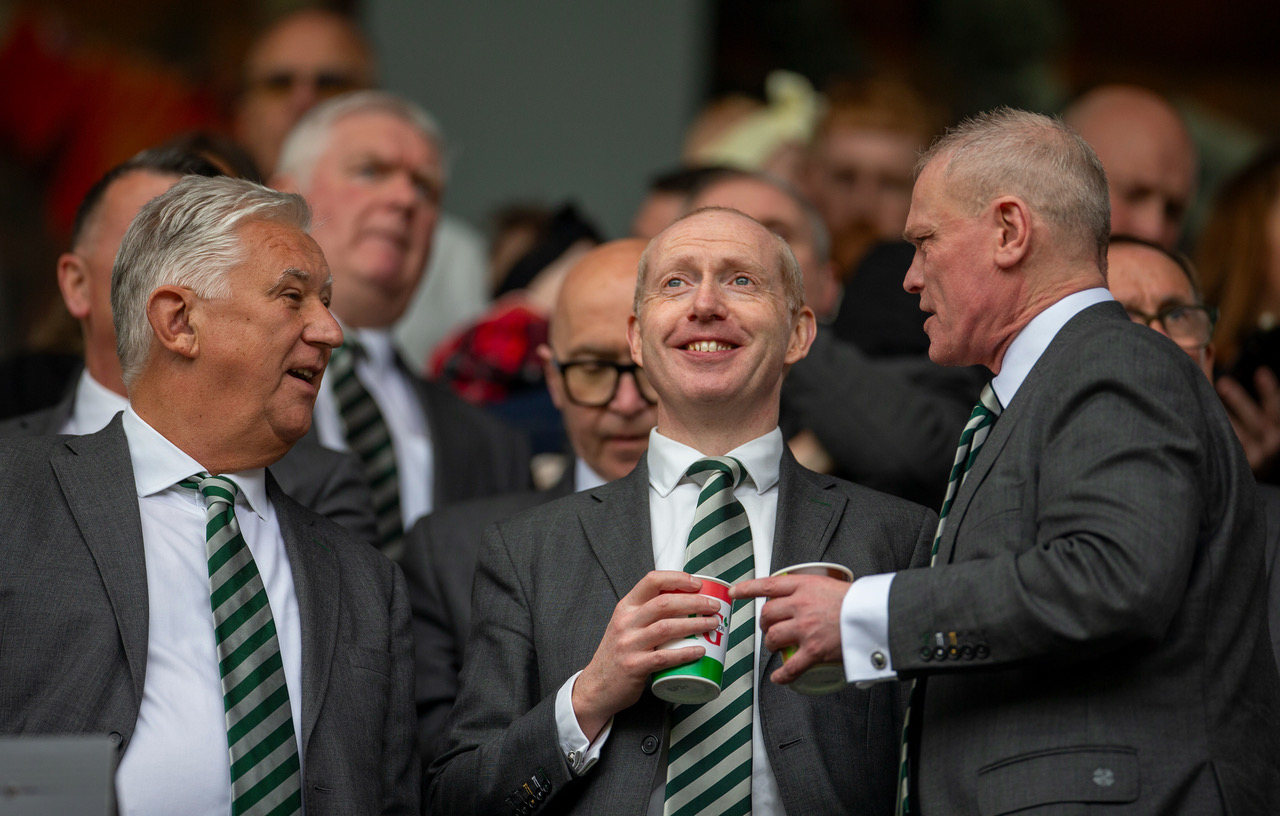
The Celtic Board. Celtic Champions 2025. Dundee United v Celtic, 26 April 2025. Photo Vagelis Georgariou (The Celtic Star).
Celtic’s leaders may talk of reviews, governance codes, and continuous improvement, but those words now land with diminishing effect. Accountability, to be real, must be visible. It must involve consequence, not just conversation. Until that happens, supporters will remain unconvinced that anything will truly change.
Because when a club makes the same mistakes over multiple seasons, with different managers but identical outcomes, the issue is not circumstance. It’s culture.
Niall J
READ PART ONE ON THE NEXT PAGE…
Monday Night Meeting – “World class in everything we do.” Really, Michael?
ARTICLE ONE OF EIGHT FROM NIALL J ON WHAT THE MINUTES FROM THE MONDAY NIGHT MEETING TELLS US AS CELTIC SUPPORTERS…


Celtic v BSC Young Boys, view of Paradise from the sky. Photo Vagelis Georgariou
When Celtic CEO Michael Nicholson opened Monday’s meeting with representatives from across the fan base, he reached for a familiar line. Celtic, he said, aims to be “world class in everything we do.”


Celtic v St Mirren – Peter Lawwell and Michael Nicholson in the stands during the cinch Premiership match at Celtic Park, Wednesday November 1, 2023. Photo Andrew Milligan
It’s a phrase that has become something of a slogan under Nicholson’s leadership, polished, aspirational, and reassuringly corporate. But for many supporters, it feels increasingly disingenuous. Because for all the talk of world-class ambition, the evidence on the pitch and behind the scenes tells a very different story.
Nicholson outlined what he described as the pillars of the club’s long-term strategy, a self-sustaining model built around academy development, player trading, and investment in infrastructure, particularly Lennoxtown and the recently redeveloped Barrowfield site. On the surface, these are sensible priorities. Every club of Celtic’s size has to operate within its means, and facilities like Lennoxtown should, in theory, be the backbone of sustained success. The problem is not in the theory, it’s in the execution.

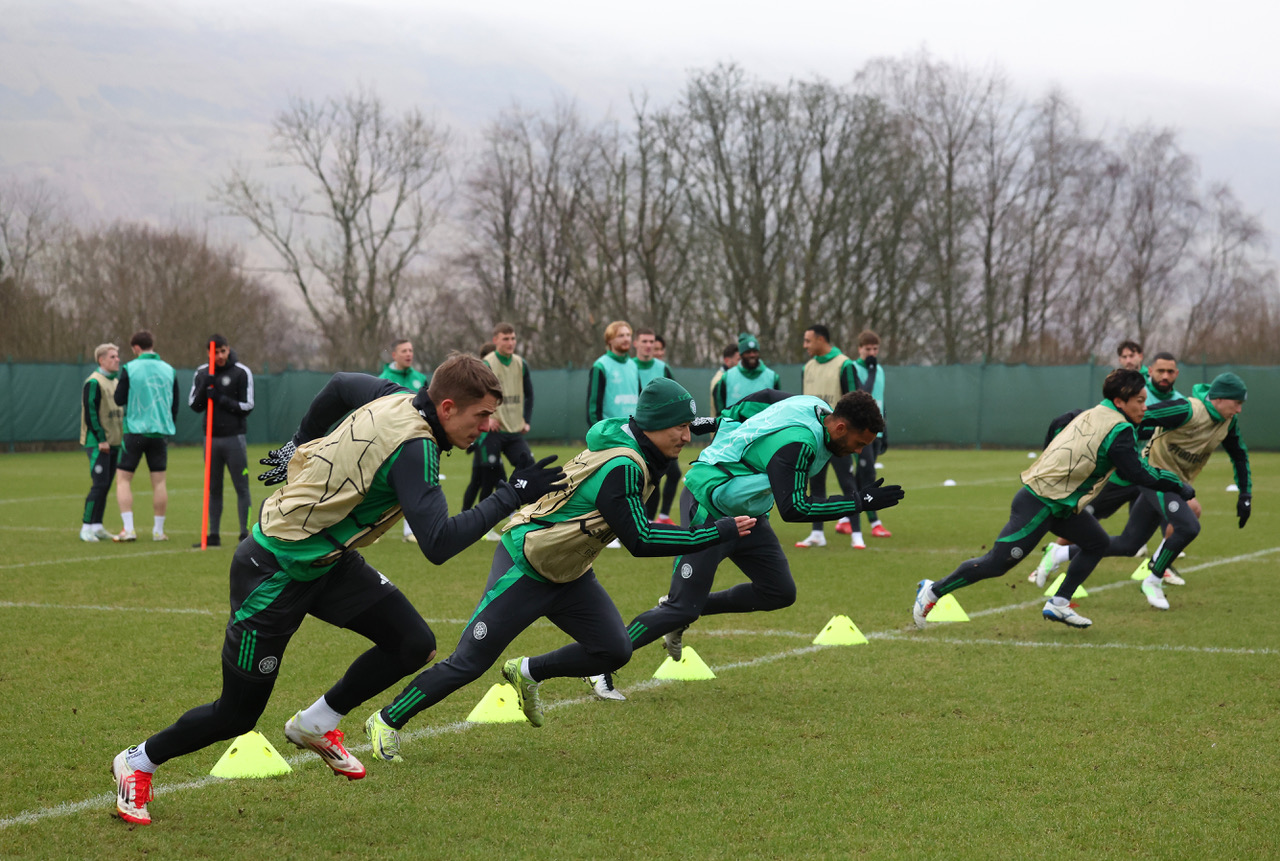
Celtic players during the UEFA Champions League Training at Lennoxtown Training on February 11, 2025. (Photo by Ian MacNicol/Getty Images)
The bricks and mortar of Lennoxtown and Barrowfield are often presented as proof of progress. Yet many within the support argue that these projects, while laudable, didn’t go far enough. The facilities themselves are only part of the equation, what matters is the people, the processes, and the performance culture within them. Celtic have invested in the buildings, but has the club built the human infrastructure required to make them truly elite?
The results suggest otherwise. The production line from the academy has all but dried up. If the goal is to develop players capable of competing at Champions League level, then Kieran Tierney, who made his debut in 2015, remains the last graduate to meet that standard. A decade without a comparable successor is not evidence of a thriving academy system. It’s a sign of stagnation.


Kieran Tierney of Celtic arrives at the stadium prior to the UEFA Champions League Play-offs Round First Leg match between Celtic and Kairat Almaty at Celtic Park on August 20, 2025. (Photo by Ian MacNicol/Getty Images)
The same applies to the so-called “player trading model.” The club often speaks of player trading as if it were a coherent strategy, when in truth it is little more than a by-product of occasional success. Trading implies structure, players developed or acquired at value, sold at the right time for maximum return, and replaced seamlessly by either an academy product or a pre-identified signing. That is what an actual player trading strategy looks like.


Photo Vagelis Georgariou
At Celtic, it feels far more opportunistic. Players are sold reactively rather than strategically, replacements are scrambled for late in the window, and the balance of the squad suffers as a result.
It’s hard to point to a single instance where Celtic have executed a sale and succession plan cleanly and deliberately. The repeated insistence that “the market is complex” has become a catch-all excuse rather than an explanation.
When pressed on this point, Nicholson and CFO Chris McKay said that transfers depend on multiple variables, player intent, negotiations, tax considerations, and the general unpredictability of the market. They also confirmed that an internal review of the summer 2025 transfer window is underway. But we’ve been here before.
In 2023, there was also a review. The results were never shared, and the same issues resurfaced. Without independence, transparency, or accountability, these reviews amount to little more than the club marking its own homework, and to a grading scale of its own design.
Supporters are not demanding miracles, we’re demanding competence, foresight, and honesty.


Celtic Fans Collective, Founded September 2025.
Perhaps the most striking disconnect between boardroom and fanbase lies in ambition. One fan representative at Monday’s meeting described Celtic’s current mentality as “Rangers plus one”. A phrase that captures the feeling that domestic dominance has become both the ceiling and the comfort zone. The club, in turn, pointed to league titles and Champions League participation as evidence that the model is working. But that word, “participation,” is telling.
Participation is not the same as competition. Celtic’s ambition, as articulated by the CEO, is to be present in the Champions League, not necessarily to make a meaningful impact within it. For a club of Celtic’s stature, one that sees itself as belonging on that stage, that is a damningly modest benchmark.

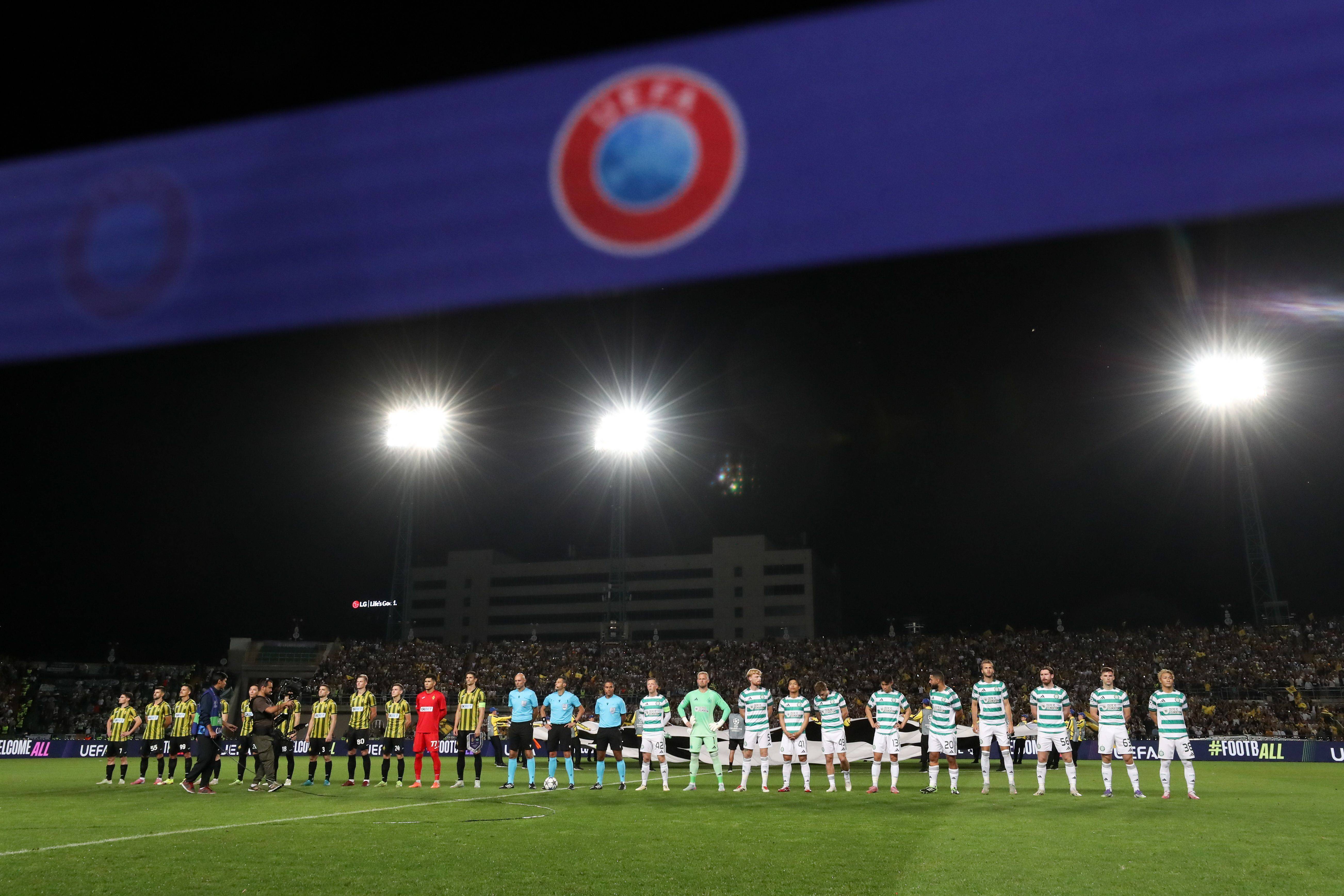
Celtic and Kairat Almaty line ups Kairat Almaty v Celtic, UEFA Champions League, Play-Off Round, Second Leg, Football, Almaty Central Stadium, Almaty, Kazakhstan – 26 August 2025. Photo Anikita Bassov Shutterstock
The record in Europe underscores the point. Five consecutive failures in Champions League qualifiers expose not bad luck but bad planning. And even in the seasons where Celtic have reached the group stage automatically, that has owed more to theRangers’ contributions to Scotland’s UEFA coefficient than Celtic’s own. If a club founded in 2012 is carrying the European weight that allows Celtic to qualify, that should be a cause for introspection, not complacency.
What supporters see, then, is not a grand strategic vision unfolding but a pattern of short-termism dressed up in strategic language. The club speaks of continuous improvement, but the outcomes are cyclical. Reviews are promised, findings are withheld, and the same structural weaknesses persist. Meanwhile, the distance between what the club says it wants to be and what it actually delivers grows wider with each passing season.
Celtic are, by almost any domestic measure, a successful club. We win trophies, we sell out stadiums, and we operate within our means. But none of that answers the central question, what does “world class” really mean to the people running Celtic Football Club? If it means doing just enough to stay ahead in Scotland, then perhaps the club can claim success. But if it means striving for genuine excellence, on the pitch, in recruitment, in player development, in governance, then Celtic remain a long way short.

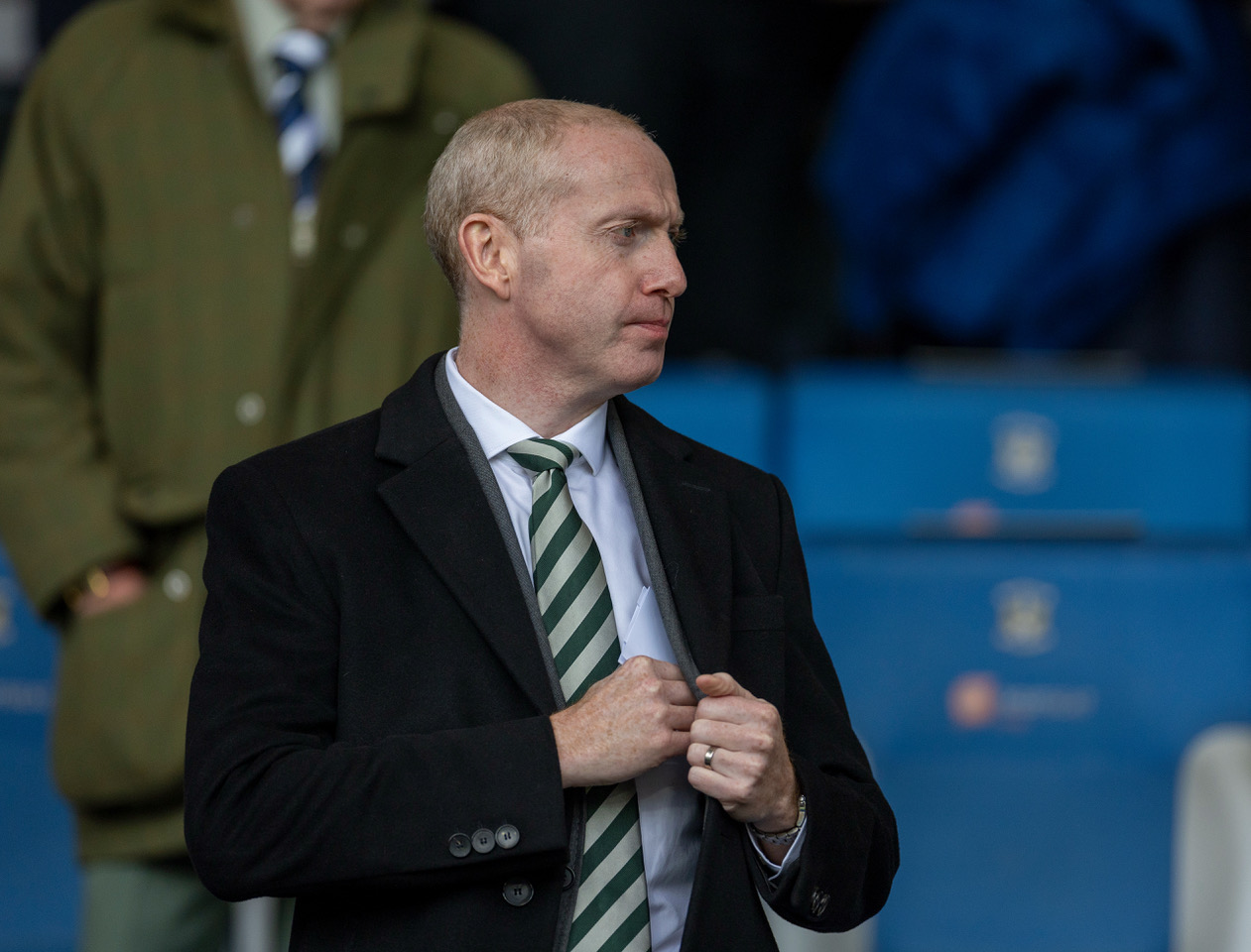
Celtic CEO Michael Nicholson at Rugby Park, Kilmarnock v Celtic, 14 September 2025. Photo Vagelis Georgariou (The Celtic Star)
As the meeting closed, Nicholson reiterated the desire to be “world class in everything we do.” It is a fine sentiment. The problem is that world-class organisations don’t just say it. They prove it. And right now, Celtic’s evidence base doesn’t come close to matching its rhetoric.
Niall J
Don’t miss the chance to purchase the late, great Celtic historian David Potter’s final book. All remaining copies have been signed by the legendary Celtic captain Danny McGrain , who also wrote the foreword for Celtic in the Eighties. And you’ll also receive a FREE copy of David Potter’s Willie Fernie biography – Putting on the Style, plus you’ll only be charged for postage on one book. Order from Celtic Star Books HERE.

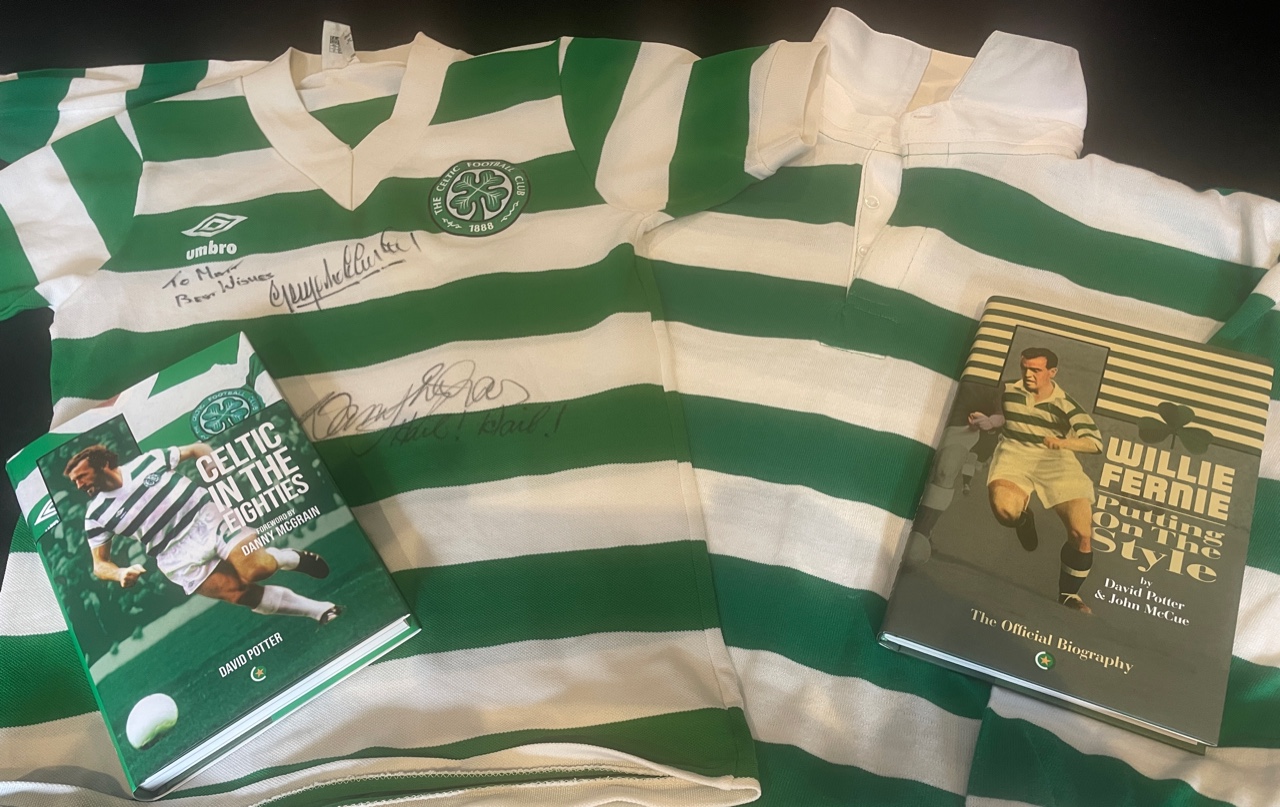
Celtic in the Eighties and Willie Fernie – Putting on the Style both by David Potter. Photo The Celtic Star

Danny McGrain has signed the remaining batch of David Potter’s outstanding final book Celtic in the Eighties so hurry to get your signed copy!
Ordering is simple, just place your order for Celtic in the Eighties at celticstarbooks.com/shop and we’ll do the rest, ensuring your copy is signed by Danny PLUS you’ll also receive a complimentary Willie Fernie book dispatched by the next working day, whilst stocks last.

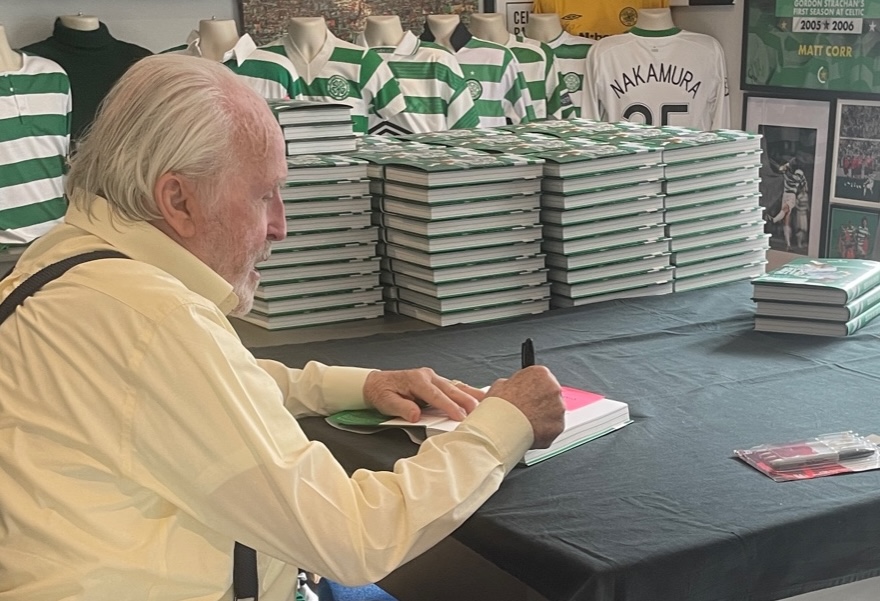
Danny McGrain signing copies of Celtic in the Eighties by David Potter. Photo: Celtic Star Books
Please note that stocks are now running very low indeed and the book will NOT be reprinted. Click on the image below to order. Also postage will only be charged on ONE book, not per item so if you are in Britain or the six counties you will pay £24.50 for both books – one side by Danny McGrain and that includes the postage costs for speedy delivery. As always the books are hardback and are of the highest quality.
CLICK ON THE IMAGE BELOW TO ORDER…


Celtic in the Eighties by David Potter. Out now on Celtic Star Books. Click on image above to order.