
Celtic Park is rarely as quiet as it was for the opening 12 minutes of Saturday’s goalless draw with Hibs…
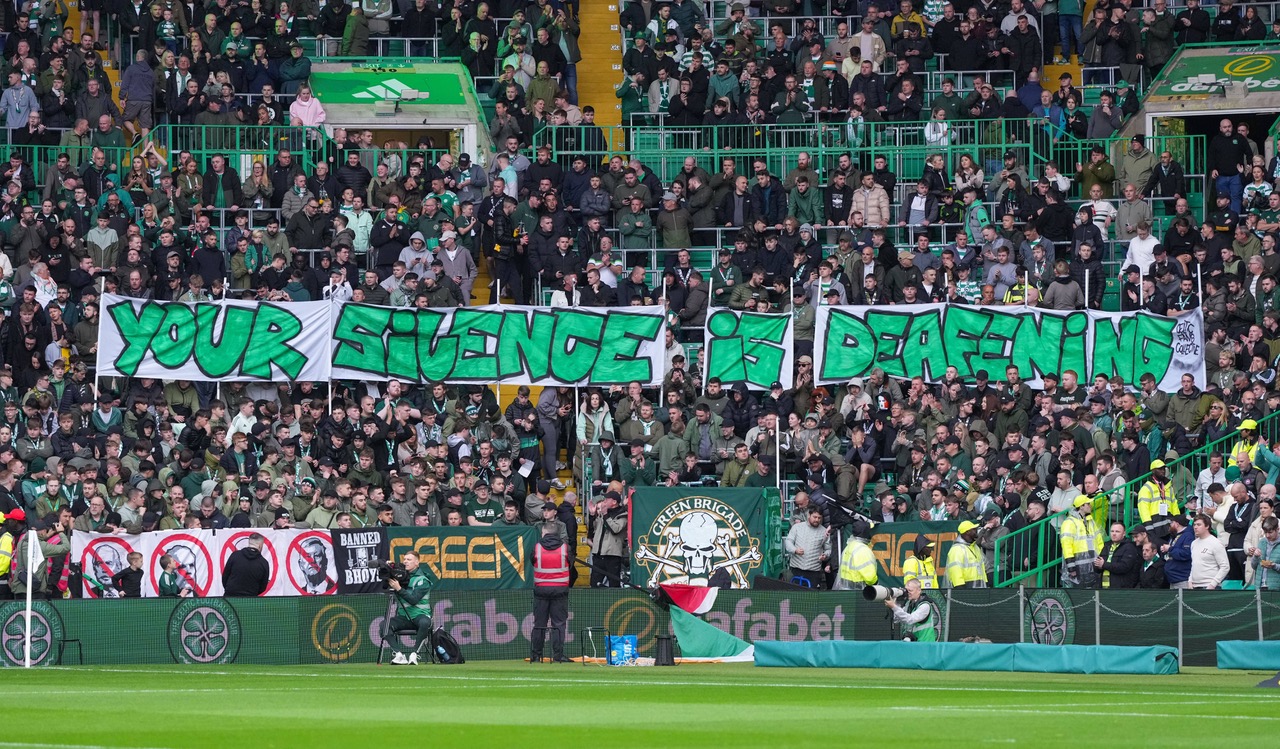
Your Silence is Deafening banner in the North Curve. Celtic v Hibernian, Scottish Premiership, Celtic Park, 27 September 2025. Photo Stuart Wallace IMAGO Shutterstock
Our club’s support is renowned for its volume as much as its passion, yet on this occasion a different sound emerged, the sound of silence. This was not apathy, although that would be understandable, but instead a deliberate, organised quiet intended to speak louder than any chant or song.
The new Celtic Fans Collective (CFC) is barely a month old, yet it already wields remarkable influence. In just two meetings, it has united more than 400 fan groups into a network capable of swift and coordinated action. That’s no mean feat.
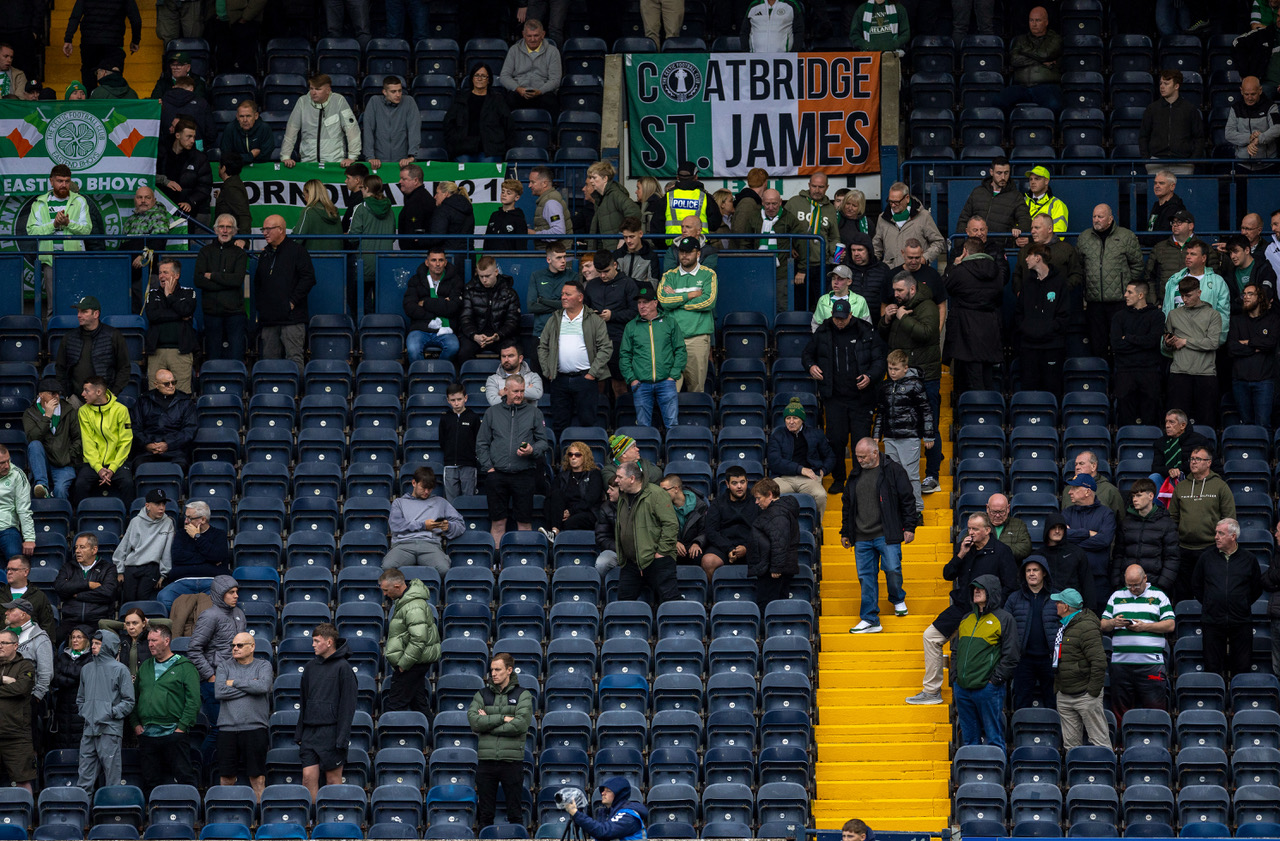
Celtic fan protest at Rugby Park Kilmarnock v Celtic, 14 September 2025. Photo Vagelis Georgariou (The Celtic Star)
Its first move was a 12-minute delayed entry at Rugby Park to signify the ‘missing 12th man,’ followed by banners and chants at a second protest accusing the board of mismanagement and highlighting repeated European qualification failures. Both demonstrations earned national headlines and aimed to push the club hierarchy toward meaningful dialogue.
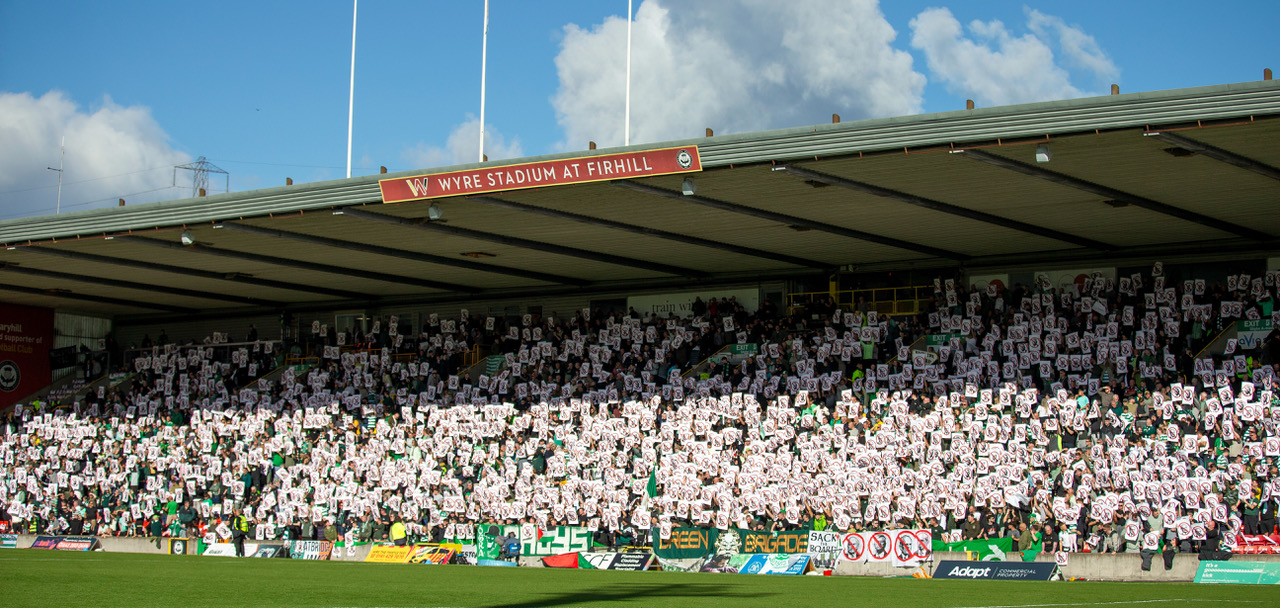
Partick Thistle v Celtic. Premier Sports League Cup. Sunday 21 September. Photo Vagelis Georgariou (The Celtic Star)
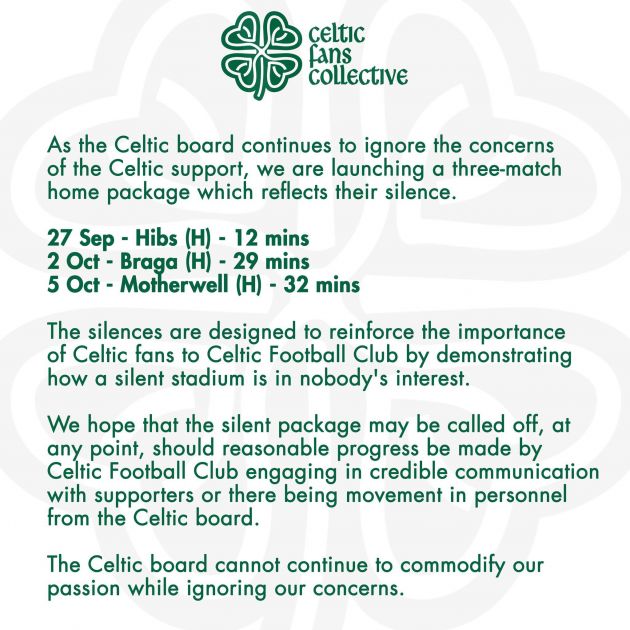
In the absence of such dialogue, the third act has been more striking still. Against Hibs, CFC called for 12 minutes of total silence inside Celtic Park. The plan is to escalate further, an extended silence is proposed for Thursday’s Europa League tie with Braga, with an even longer hush possible for the weekend visit of Motherwell.
The group has made clear that these actions will stop only if the Celtic board responds to the seven questions set out in an open letter on 3 September. These questions cover transfer policy, European strategy, governance, and accountability.
At their heart is a demand for transparency, covering who makes key decisions, why healthy finances have not translated into a stronger squad, and if repeated Champions League failures are down to a failing strategy, and whether the club even recognises those strategic missteps.

Celtic fan protest. Partick Thistle v Celtic. Premier Sports League Cup. Sunday 21 September. Photo Vagelis Georgariou (The Celtic Star)
To some, silence may seem a curious weapon for football fans. Some argue the team should be backed vocally from the first whistle, believing noise unsettles the board more than quiet reflection. Others simply want the players encouraged, not distracted. They are all arguments with merit.
Yet silence carries its own shock value. Celtic Park is synonymous the world over for noise, so its sudden absence is designed to be jarring. A stadium famed for deafening European nights falling eerily quiet draws cameras, sparks social-media debate and guarantees headlines. That contrast is the point.
Silence is also difficult to dismiss. Chants can be drowned out by the club’s PA or written off as a noisy minority. But when an entire stadium sits deliberately mute, after publicising the plan, it becomes difficult to ignore.
Your Silence is Deafening banner in the North Curve. Celtic v Hibernian, Scottish Premiership, Celtic Park, 27 September 2025. Photo Stuart Wallace IMAGO Shutterstock
The tactic also contains built-in escalation. Each silent period grows longer, signalling rising urgency. If the board remains mute, Celtic Fans Collective can extend the quiet further or pivot to new tactics entirely.
The deeper symbolism is also clear, the awkward hush in the stands mirrors the more troubling silence in the boardroom. The collective’s message is that the real void lies not in the stands but in the club’s leadership.
The rapid rise of the Celtic Fans Collective is itself revealing. Celtic supporters are famously diverse, yet more than 400 groups have united within weeks, evidence of deep dissatisfaction and the organisational power of modern fan networks. The group is structured for a long game, and for long-term influence, with sub-committees examining governance, commercial relationships and sponsorship deals, pressure points that reach far beyond ninety minutes on the pitch.
Celtic fans have forced change before, from the campaigns of the 1990s to protests over the mooted appointment of Bernard Higgins in 2021. This time silence is the chosen tool, proof that absence of sound can be as disruptive as any roar of disapproval.
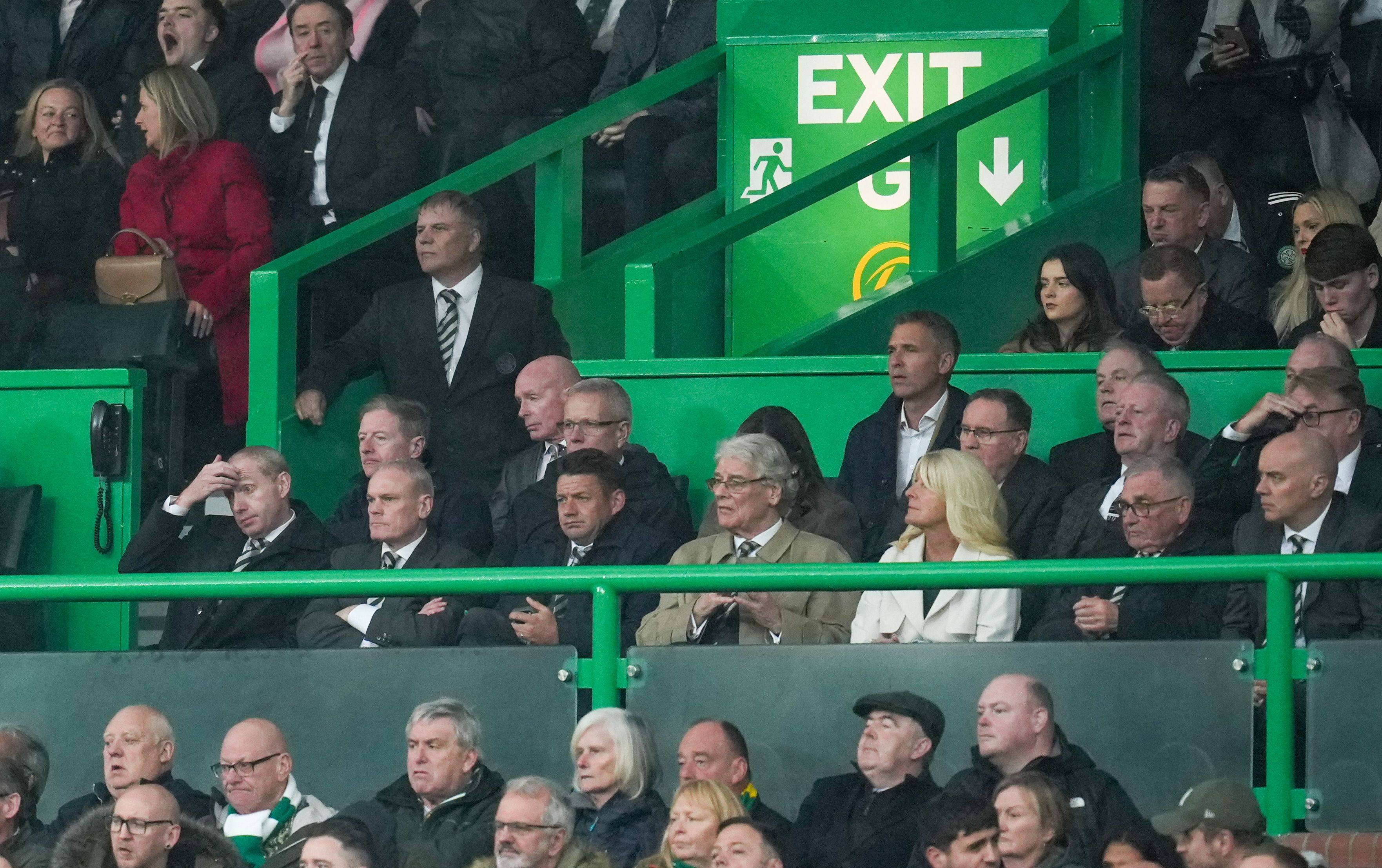
Celtic Chief Executive Michael Nicholson sits in the directors box with Celtic s Chief Financial Officer Christopher McKay to his right. Celtic v Hibernian, Scottish Premiership, Celtic Park, 27 September 2025. Photo: Stuart Wallace. IMAGO/Shutterstock
The strategy is of course not without risk. If too many supporters break the quiet, the visual impact fades. If results dip, critics may well blame the atmosphere. And if the board simply refuses to engage, some may question whether silence was enough. Protest movements rely on momentum, if the board calls the bluff, the Celtic Fans Collective must be ready with fresh tactics.

Celtic Chief Executive Michael Nicholson sits in the directors box with Celtic s Chief Financial Officer Christopher McKay to his right. Celtic v Hibernian, Scottish Premiership, Celtic Park, 27 September 2025. Photo Stuart Wallace IMAGO Shutterstock
For now however the ball is squarely in the board’s court. The seven questions posed are not radical demands, merely requests for clarity and respect. Opening dialogue would not weaken the board, it would show appreciation for the supporters whose money and passion fill the coffers and the stands.
If executives choose to remain silent, they should not be surprised when protests grow louder, and more diverse. The ‘Sound of Silence’ is only the beginning.
Niall J
Continues on the next page…


Admittedly there is no easy solution to the division that has been created within our club at present.
Still don’t believe that protest during match time is a solution either imo.
Stands to do more harm to our team than good imo.
This unrest has stemmed from a transfer window, not to our liking. So what message is actually getting sent to the additional players, who we are meant to be supporting now?
Easiest change within the requirement, is for a change of manager to be applied, which remains an option for the board.
Is that a change that we actually require at present?
Don’t believe that would be the right course of action for the board to take, to resolve a growing concern imo?
So going to matches is starting to turn into protesting against the board more so, than supporting the team?
Wouldn’t be my preferred choice for sure, especially when I wouldn’t give board members the time of day, in the first place.
So personally wouldn’t engage in showing that level of disrespect towards our manager and players, especially when there to be supporting them, regardless of the decisions taken upon the field of play for ourselves?
Maybe I’m losing the understanding of a role of a supporter?
As starting to think it involves only supporting decisions taken, without knowing the answers, that is down to personal preference.
Doubt I would have ever entertained the sport in the first instance, if that was a requirement back in the day, when supporting had a totally different meaning to what is on offer currently imo?