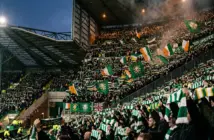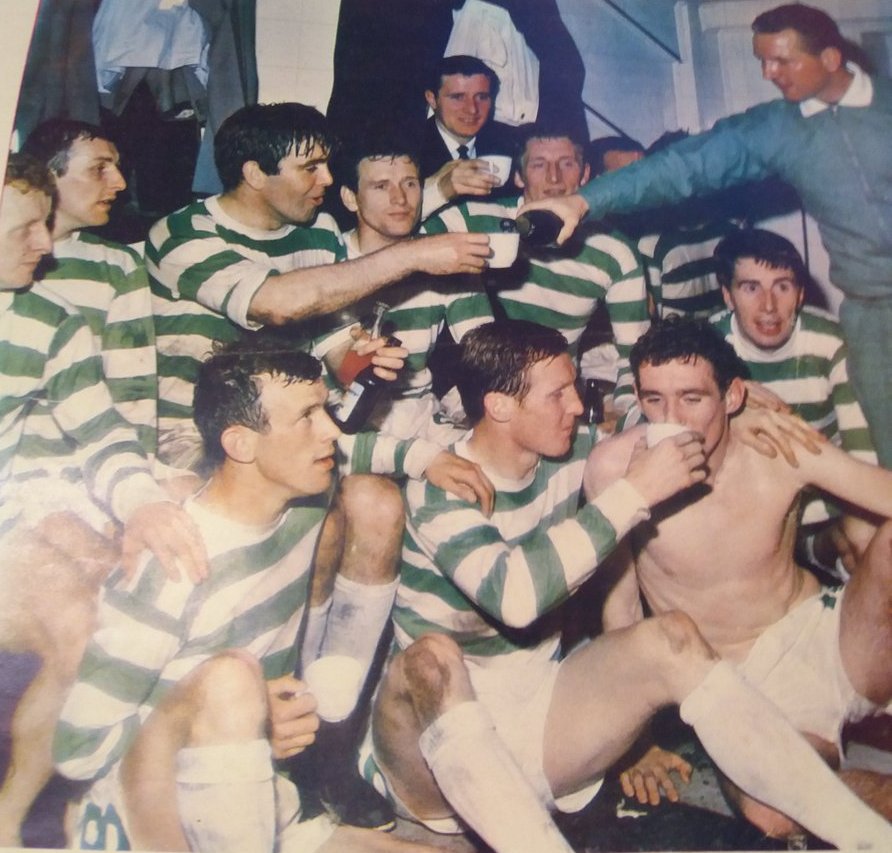
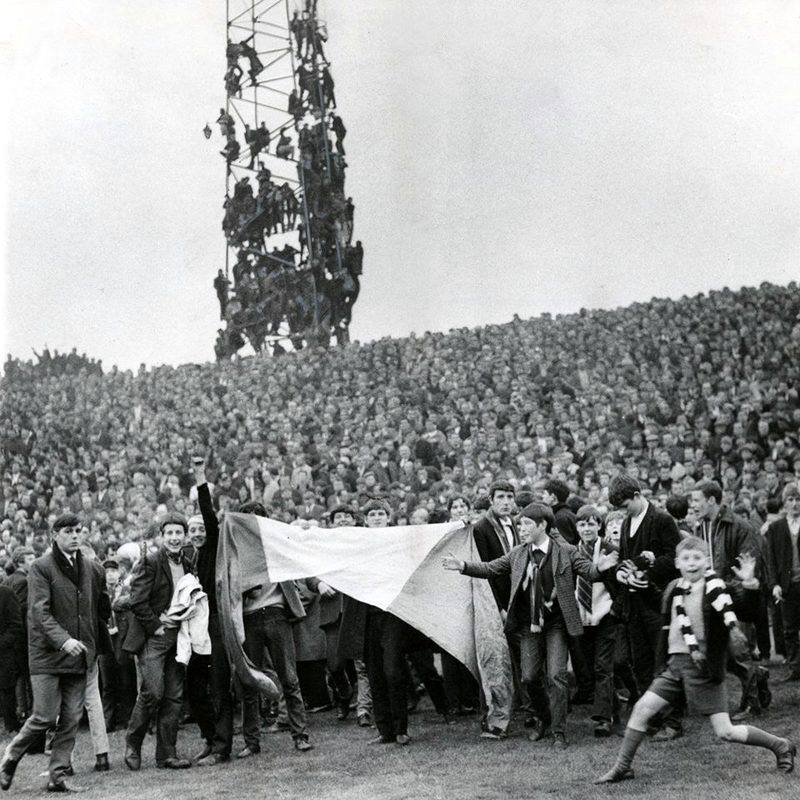
Celtic fans at East End Park in 1968 to see Celtic win the league. Photo The Celtic Wiki
Dunfermline v Celtic 1968
Two years later – in 1968 – Celtic went to Dunfermline on the last day. The Bhoys were level on points with Rangers, and had a +12 goal advantage. Rangers had finished their games, so couldn’t win more points.
However, history records the title being won versus the Fifers, rather than beforehand. In theory – very unlikely though it was – Celtic could have been hammered in this game. But only after beating Dunfermline – and avoiding a big defeat – do Celtic’s records state the club were champions.
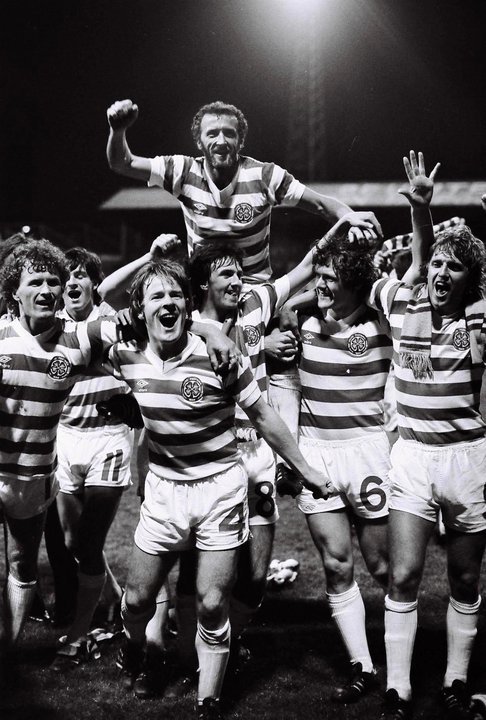
Celtic celebrations – The Bhoys celebrate the title win as Celtic beat Dundee United 3-2 at Tannadice on 22 April 1981. Photo The Celtic Wiki
There is a similar story in 1981
There is a similar story in 1981. On 18 April, Celtic claimed a 1-0 win at Ibrox, putting the Hoops six points and 13 goals clear of nearest challengers, Aberdeen. With only six points left to win – and a healthy goal advantage – this surely means Celtic were champions.
Except this wasn’t the case. Newspapers only said Celtic were certain to win, and manager Billy McNeill would not let players celebrate on Rangers’ pitch. Celtic history notes that the title was not won until a 3-2 victory at Tannadice four days later.
So why the inconsistency?
Celtic records have the Bhoys as champions some years only when it is mathematically impossible to lose, and others when defeat is unlikely but not certain. There are various possible reasons for this. Newspapers especially like the idea of being able to proclaim a team as champions during a game, rather than as a consequence of results in other games. Fans want to celebrate in the ground too.
However, none of this changes the fact that an unpredictable approach doesn’t make sense. In the study of history, consistency is always important, especially for accuracy when knowing the decisive game it happened.
None of this really matters in the grand scheme of things
Of course, none of this really matters in the grand scheme of things. From a footballing perspective, the only issue is whether or not Celtic are officially declared champions. This season, Celtic realistically cannot be caught – but they’re not yet Champions and won’t be until losing the table top spot becomes impossible.
So the same should go for games in 1971 (Ayr) and 1974 (Falkirk) credited as settling the title – these are not accurate. For 1971, it should be Clyde and Aberdeen in 1974.
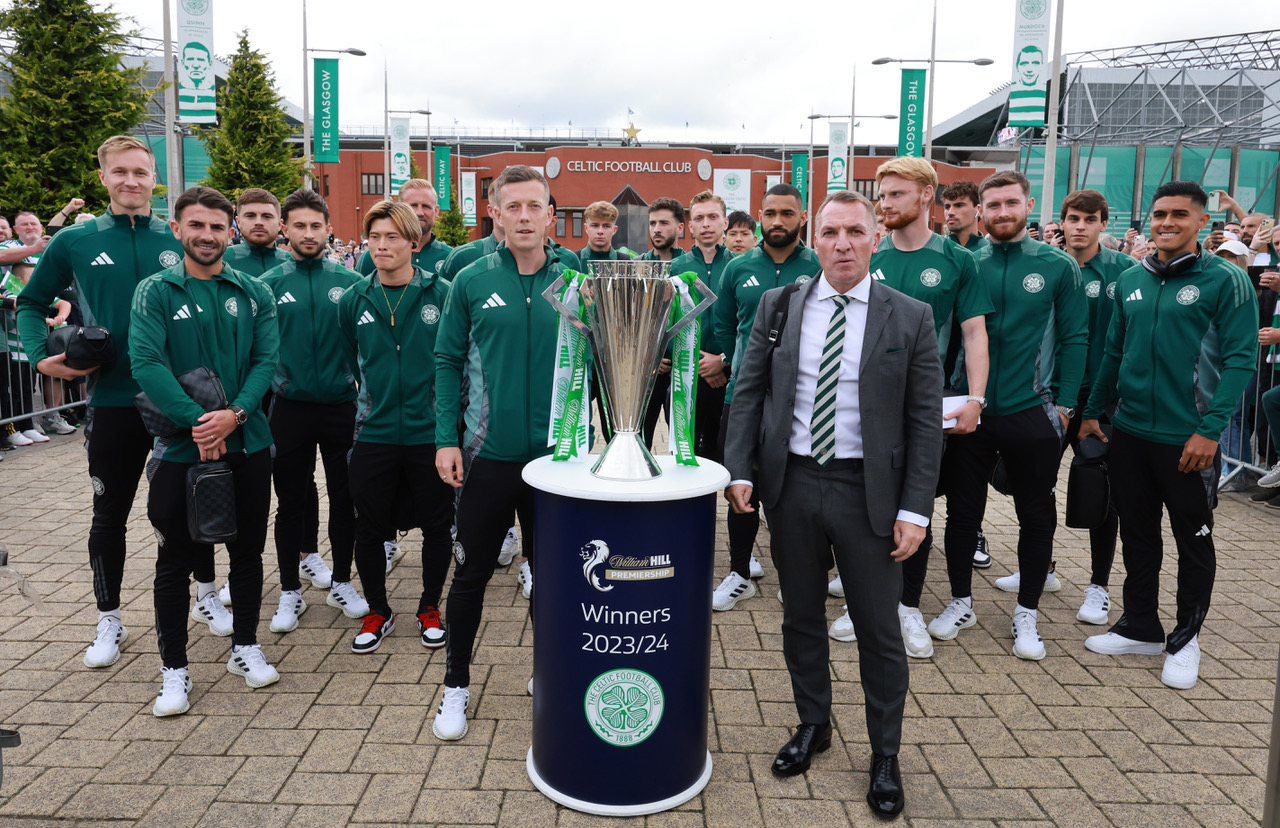
Brendan Rodgers Celtic manager and his players pose for a team picture with the SPFL Scottish League trophy before the cinch Premiership match between Celtic FC and Kilmarnock FC at Celtic Park on August 4, 2024. (Photo by Steve Welsh/Getty Images)
The Bhoys need a point versus Dundee United to seal the title
It’s actually simple. Celtic need a point versus Dundee United to seal the title. If that’s true now – and it is – then it should also apply to historic League titles. Although this might mess up some fans’ league-winning programme collections!
Matthew Marr
If you want to learn more about Celtic history, follow Hail Hail History on Twitter/X. You can also take part in a FREE Celtic history walking tour. Visit celticwalkingtours.wordpress.com for more information.
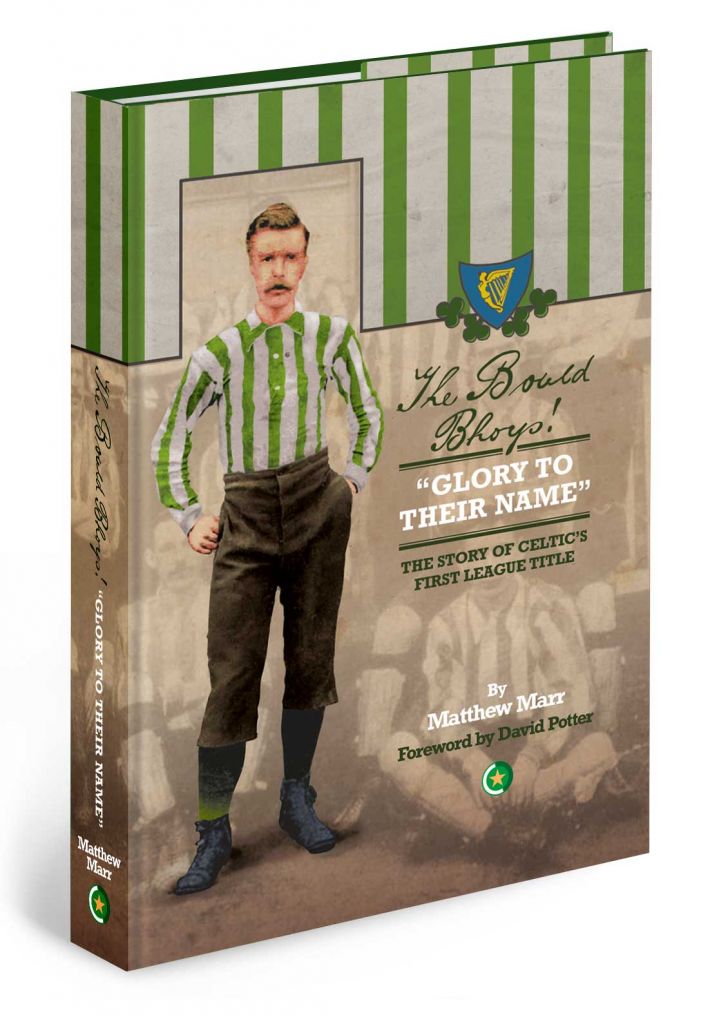
Click on cover to order a hardback copy
Matthew’s debut Celtic book titled ‘The Bould Bhoys – Glory to their name’ was published by Celtic Star Books last year and is available to order HERE. This brilliant book is also available on Amazon Kindle for just £3.49 and includes all photo sections that appear in the hardback edition.
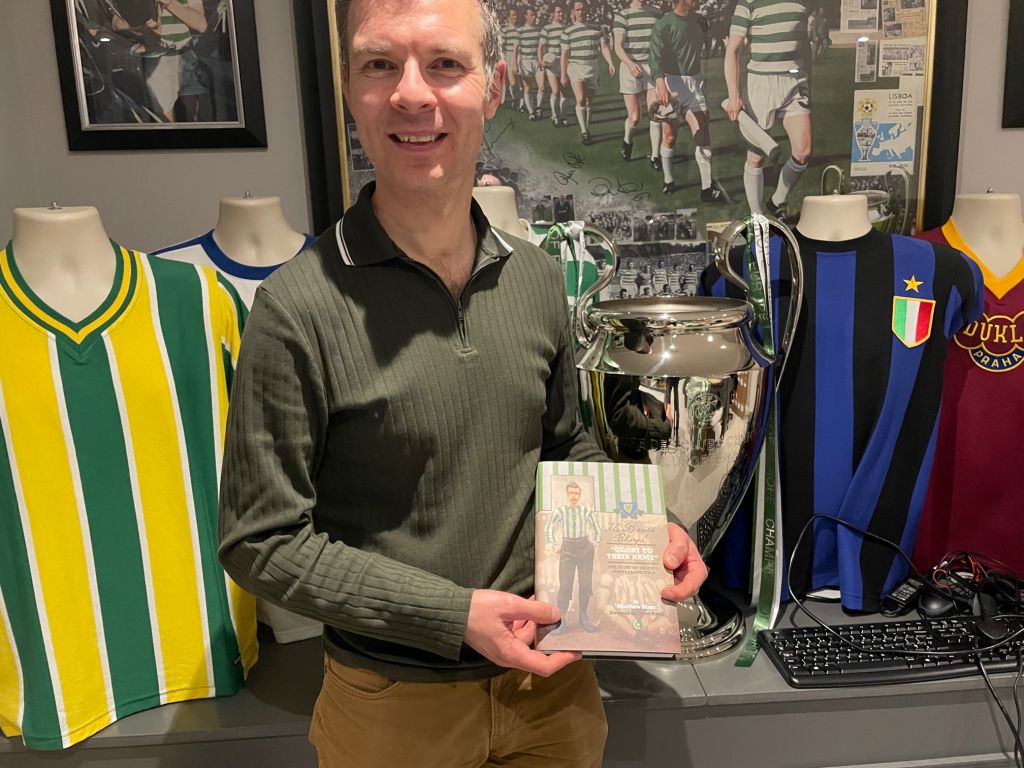
Matthew Marr with his debut Celtic book, Glory to their name, which tells the story of Celtic’s first ever title win. Photo The Celtic Star

Celtic in the Thirties by Celtic Historian Matt Corr is published in two volumes by Celtic Star Books.