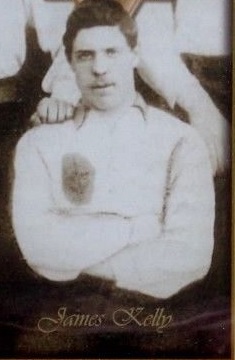
James Kelly
Irish clubs in Scotland were not a new phenomenon. As well as Hibernian in Edinburgh, Harp were a prominent side in Dundee, and there were also multiple other examples of teams called Erin, Emmett, Shamrock and similar found across the country.
If Celtic were to succeed, securing the signing of prominent players with Irish heritage would be an important action. Given James Kelly’s success and national reputation – he was a Scottish internationalist too – his presence would help attract other players to the Bhoys.
One issue concerning Kelly’s arrival at Celtic flags up a controversial matter in the early years of Scottish football. Until 1893, football rules prevented the payment of players, but most big clubs in Scotland simply made secret payments and broke these regulations.
Despite working as a joiner, Kelly was somehow able to afford a very expensive £650 fee to buy a pub. The likelihood is that Celtic were responsible for paying for this, using it as a means of enticing Kelly to come to and stay at the club.
As well as the financial inducement, Kelly had another important connection with early Celtic. In 1891, he married Margaret McErlean. Her father, Francis McErlean, was one of Celtic’s Founding Fathers and so his influence may have also attracted Kelly to Glasgow’s east end.
Whatever the key factor in bringing Kelly to Celtic, by May 1888 the club was ready to play its first game.
Encouraged by Kelly’s decision, many other prominent players agreed to represent the Celts. This includes his Renton teammate, forward Neil McCallum.
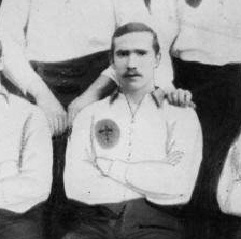
Neil McCallum – Celtic’s first goalscorer
The first Celtic Park was opened on 8 May 1888 in a match which did not feature Celtic. Cowlairs drew 0-0 with Hibernian in a ‘Grand Exhibition Match’. Three weeks later, James Kelly and the Celts played their first game, against the side that would become their biggest rivals, Rangers.
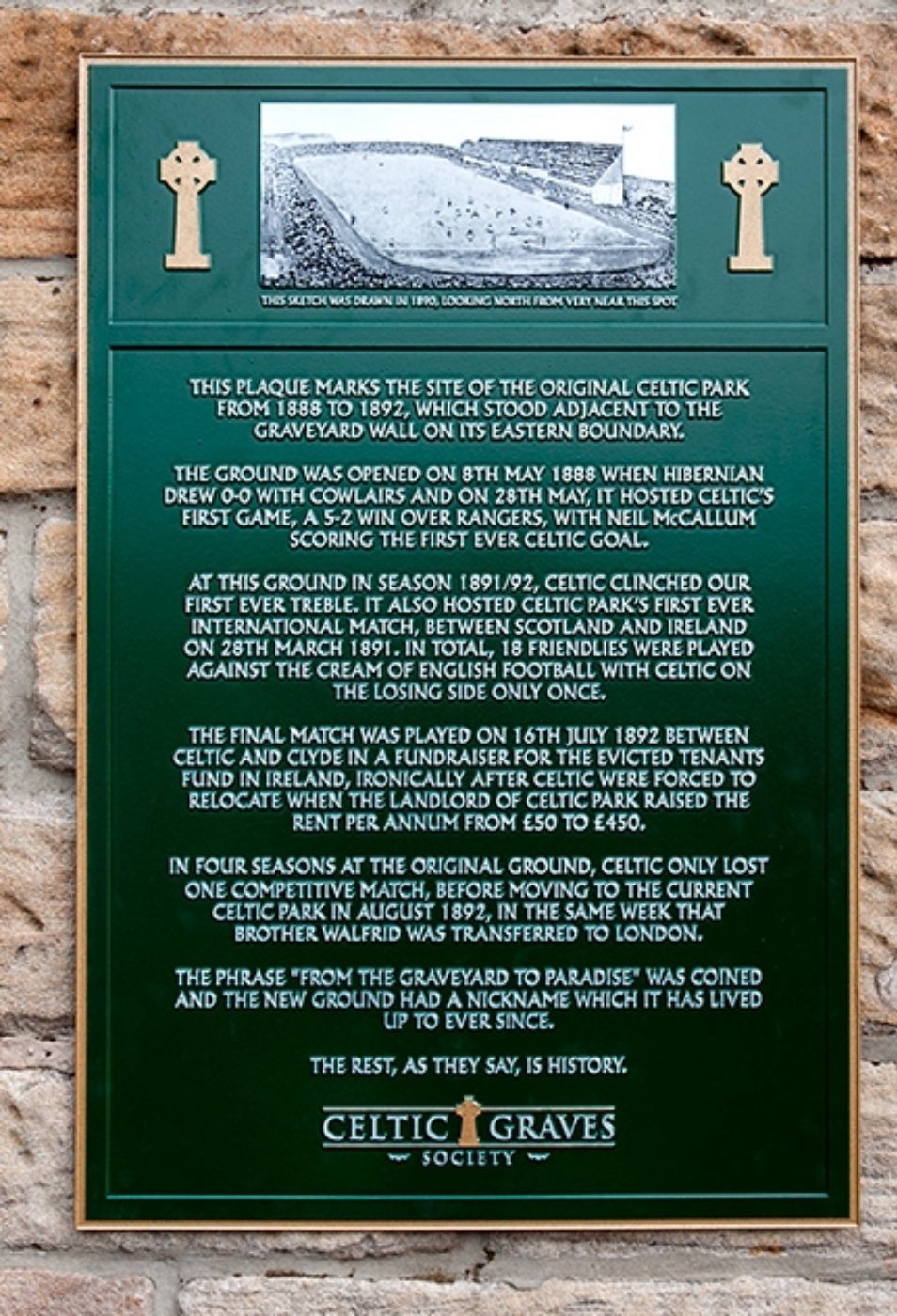
In a high-scoring fixture which the Bhoys won 5-2, Neil McCallum scored the Celts’ first ever goal. James Kelly was also the scoresheet and a hat-trick from Tom Maley completed the scoring. The Celts were off and running, and Kelly had clearly demonstrated his importance.
This issue would bring the Bhoys into conflict. Celtic hoped to have Kelly appear for them on a more regular basis, whilst Hibs wanted exactly the same thing. Renton also hoped to retain their talismanic figure. In the end – and surely connected to the payment issue mentioned earlier – it was the Glasgow Irish who won this battle.