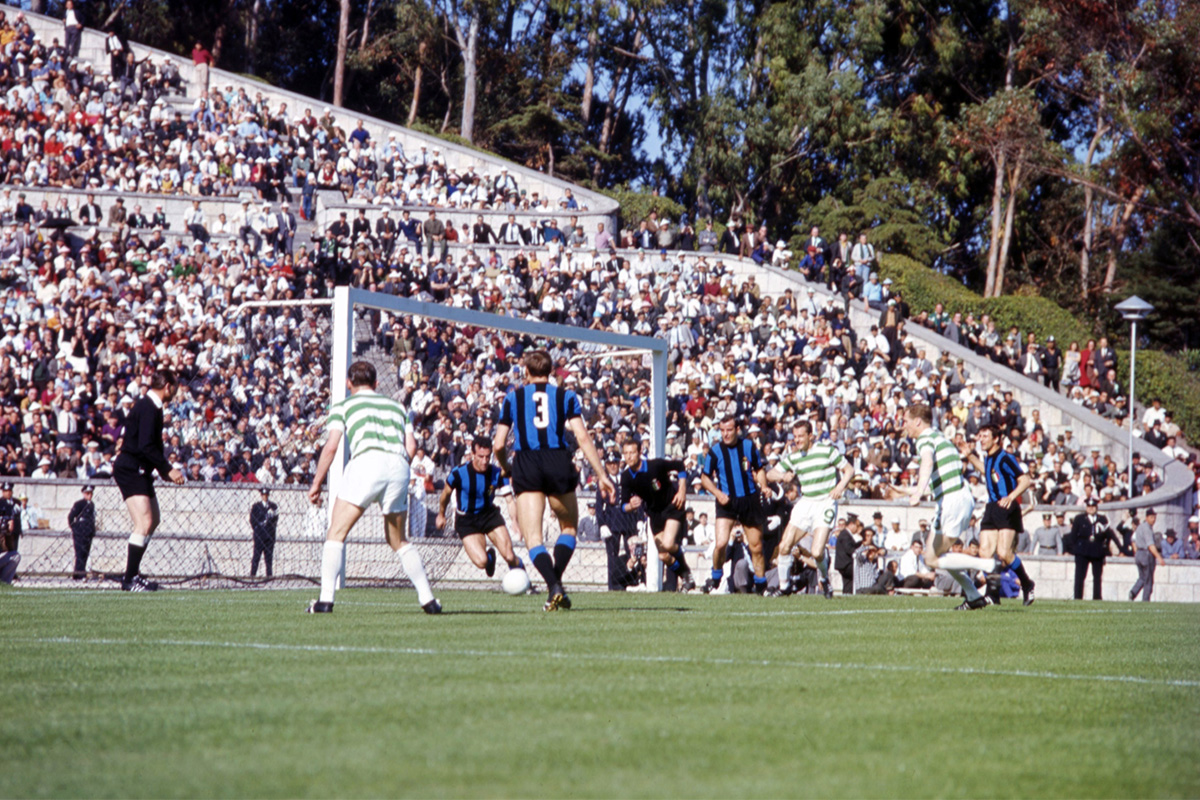
The youngest brother was Gerald, born in 1921. In a generally quiet family I found him the quietest of all. He had left home at 11 to go into a seminary and also gone to Cambridge University. Obviously an intellectual man but in my childhood and teenage years he appeared rather stern and aloof from our type of conversations. Imagine my surprise in later years to discover he had had a liking for fast cars and motorbikes and had been a footballer (goalkeeper) of some note.
He had played for Cambridge University including the big Varsity game versus Oxford University which in those days was often played at Wembley Stadium. Not only that but he had majored in Irish history. So I was left regretting the conversations we could have had.
In those days Celtic were probably still more connected with and associated with the Irish Catholic community
My father’s two sisters, Kitty and Eileen, were not particularly interested in football although Eileen’s husband was. Terry Brennan was quite a well- known character in the Glasgow licensing trade and was always a good contact for tickets. I don’t think Kitty knew too much about football but she could still talk about it if necessary when we visited on a Sunday. In those days Celtic were probably still more connected with and associated with the Irish Catholic community than they are now and Kitty’s main concern was not results – it was the behaviour of the fans. When Celtic Supporters caused trouble it did not just reflect badly on a football club but a whole community whether all of that community supported Celtic or not.
Apart from going to watch football my father also played a bit. I have no idea about his football playing activities although I seem to recall him saying something about being a right winger – Certainly apart from Jimmy McGrory his two football heroes were Stanley Matthews and (in later years) Jimmy Johnstone. However thanks to Adolf Hitler all of my father’s football watching and playing came to an end and like lots of others he also missed out on properly enjoying some of the best years of his life.
He was only 21 when war was declared and he was soon called up
He was only 21 when war was declared and he was soon called up. He joined the Cameronians. (I found out many years later that that regiment had originally been formed to fight against the Catholic faith). Like many he was reluctant to talk about his experiences but I did find out he had been a prisoner of war and had suffered terrible treatment and conditions. At one stage his family was told he was missing, presumed dead, before he was located in a POW camp.
Towards the end of the war when the Allies were approaching he managed to get out and was eventually picked up by an American patrol and shipped back to an American Military base in England. He was emaciated and in such a condition that when his father and brother came to see him they decided not to allow his mother and sisters to visit.
In 1948 he joined, along with my Grandfather, the Anti Partition League
However he had such great physical and more importantly mental and moral strength that he recovered. In 1948 he joined, along with my Grandfather, the Anti Partition League. I suppose there was a bit of irony in that. After years of being in the British Army he was now in an organisation whose aim was to get the British out of occupied Ireland.
By this time he had met my mother – Alice Ryan. I do not know too much about her family but apparently her father – a miner from Castlecomer, Co. Kilkenny – who had died before I was born, had been a staunch republican.
When she boarded she noticed her big cousin already seated
As far as Celtic were concerned there was a family connection although my mother never really appreciated it. Once when she was a young girl she got the 44 Bus at Carfin on her way into Glasgow to do some Saturday afternoon window shopping. When she boarded she noticed her big cousin already seated so she went up and sat beside him. They chatted away during the journey until Parkhead Cross where he got off.
“That was Jimmy Delaney” said the conductress
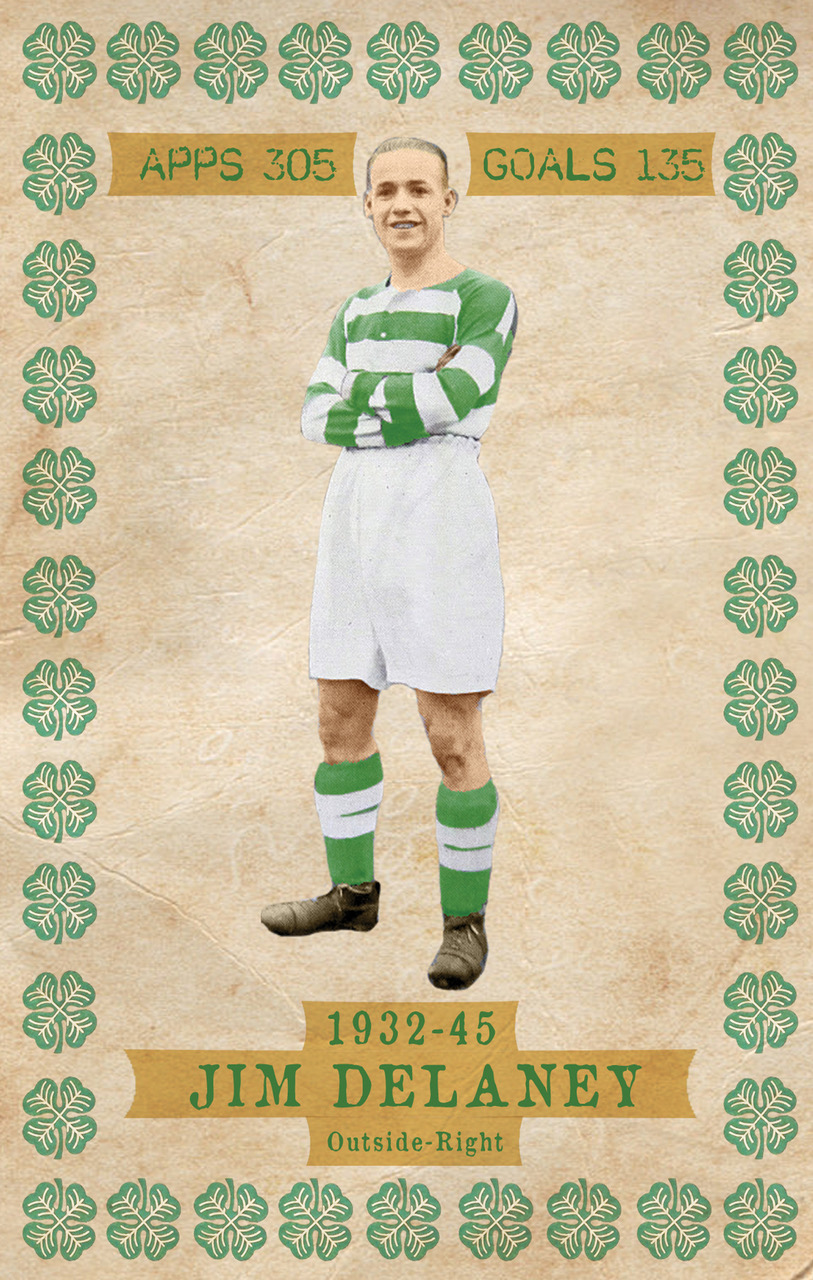
Jimmy Delaney, Celtic in the Thirties by Matt Corr, out now on Celtic Star Books. Image Celtic Curio
After he had disembarked the conductress came up and asked my mother if she knew who she had been talking too. My puzzled mother said “Of course I do – he’s my cousin.” “That was Jimmy Delaney” said the conductress. “I know” replied my mother still puzzled. She knew he played football but it had never occurred to her that other people would know him. Some years later Jimmy Delaney was the first Celtic Legend I met although as a young boy at the time I did not then appreciate the position he had held in Celtic history.
In 1963 you could not imagine Celtic winning a League never mind getting to a European Cup semi – final.
Two of my mother’s brothers – Eddie and James – were Celtic fans. Although Eddie moved to Dundee around the end of 1959 and for the next few years got his Saturday football fix at Dens Park or Tannadice. He was lucky as in that period Dundee had a great side and won the League in 1962. The following year Eddie became the first member of our family to attend a European Cup Semi Final when he was at Dens Park to see Dundee play AC Milan. I was a bit envious. In 1963 you could not imagine Celtic winning a League never mind getting to a European Cup semi – final.
As in my father’s family my mother’s sisters had no great interest in football itself but they knew how much the game and Celtic in particular meant to the family and the community. My aunt Margaret did have to become more interested in Celtic when she married Peter Monaghan. My uncle Peter was a real Celtic man and even had a season ticket. Up until about 1990 he was the only person I knew who actually had one. In those days season ticket holders were rare and probably related to, or descended from some of the earliest Celts. The two Monaghan boys, John and Brendan, were older than me and regular Celtic match attendees from an early age.
The organist who played “Moonlight & Roses”!
My parents married in 1949. Not wanting a fuss they went over to Ireland and had a quiet wedding with just two witnesses. The settings were not simple though. Mt Mellary Abbey in Cappoquin, Co. Waterford. My father’s brother, Michael, was based there having being ordained in 1939. He said the Nuptial Mass in the grand abbey in front of a mere handful of people including the organist who played “Moonlight & Roses”!
They stayed in Dublin for a while after they were married before settling down in a room and kitchen above a shop in New Stevenston. That is where I spent almost the first three years of my life. It was a very basic flat with a shared toilet on the landing and a tin bath for washing in. In 1953 we moved a bit up in the world – to Garrowhill, Baillieston. It was there that I spent my really formative years and it was to some degree because of that locale that I became a Celtic supporter.
Mike Maher – On the long road to Lisbon
To be continued…
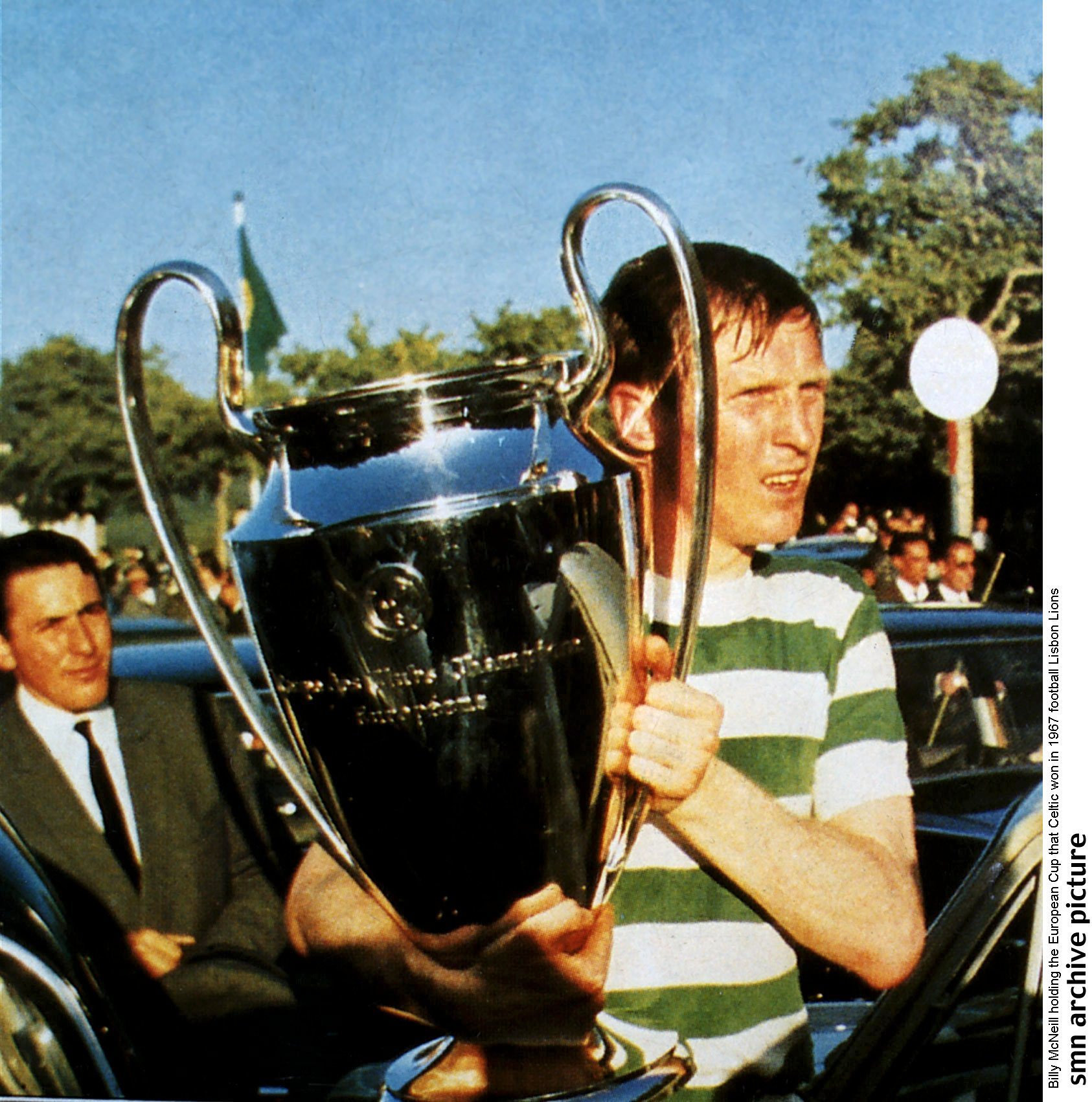
Billy McNeill holding the European Cup that Celtic won in 1967 football Lisbon Lions. Photo SMN
READ THIS…Pilgrimage to Lisbon – How I came to possess a piece of Billy McNeill’s jersey

Celtic Pools – Join the Weekly Lottery and support the Celtic Academy. Why not join Celtic Pools for £1 a week with the chance to win up to £25k