Although McNair was best known for wearing Celtic’s green-and-white, he also starred in dark blue. On 15 occasions, he was chosen to represent Scotland, although he never managed to score. Scotland had a mixed record at this time; McNair won seven times, lost four and drew four as well.
Arguably the Icicle’s best moment in a Scotland shirt came when he helped his country win the 1909-10 British Home Championship. This was a notable part of the football calendar in the days before international tournaments such as the World Cup or European Championships.
Since 1904, the Bhoys had regularly taken part in European summer tours, and Alec had enjoyed such visits in 1904, 1907 and 1912. However, he had not travelled in 1911 owing to the tragic death of his newborn daughter, Helen just before the Bhoys were to depart.
By 1913, McNair was in his 30s. It may be expected that he would be giving some thoughts to retiring. As such, the Celts started the 1913-14 season with a benefit game for him. Rangers lost 2-0 at Celtic Park, and Alec took home a large cheque. Although Celtic’s choice of opponent might seem surprising, in fact such games were not unusual in this era.
By the end of that season, the Bhoys were the Champions for the first time since 1910. They were also again on the move, visiting Germany, Austria and Hungary. Once more, Alec was not part of the group, although the reason for this absence is unclear. There have variously been suggestions about a possible injury or needing to take care of his wife.
Either way, he did not join his teammates, who witnessed evidence of growing military preparations across the continent. Within months of returning from this trip, Europe and the world were plunged into a bloody war which would last more than four years. Many Celtic fans and some players and former players would fight and even die in the conflict.
At home, McNair and his teammates were still footballers, although in changed conditions. Scottish football saw many differences, including restrictions on when games could be played and the Scottish Cup not being held again until peacetime.
Players lives were altered too. As well as a maximum wage of £1 per week, they were also expected to contribute to the war effort. Some Scottish players enlisted in the armed forces whilst others worked in reserved jobs deemed an essential part of Britain’s military actions. In McNair’s case, and given his previous expertise, he went to work in a munitions factory.
In 1915, Alec still lived in Stenhousemuir, doing so with his wife Mary and their children. Alec and Mary had enjoyed a mainly happy life together, albeit one that also included tragedy, such as the death of their daughter in 1911. However, Mary often had health issues.
In August 1915, Alec faced the biggest challenge of his life. His wife died of a heart attack when aged only 28. Aside from having to deal with this loss, McNair now had to take sole responsibility for raising his children, alongside his war duties too. It was a challenge he met, but not easily.
In a footballing sense, the 1914-18 era had been a successful one for Alec and the Bhoys. They claimed the 1915, 1916 and 1917 titles. As Champions, they also helped raise funds for war causes as each year the league winners played a League Select at Hampden in a special charity match.
November 1918 saw an end to more than four bloody years of fighting. By the following year, Celtic were once more the Champions, and Alec was able to celebrate a league title in his fifteenth year at Celtic Park. Despite this impressive feat, he was far from finished and would still have many more years in green-and-white.
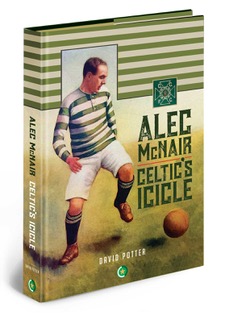
Alec McNair, Celtic’s Icicle by David Potter, click to order your HALF PRICE copy.
In 1920 came an on-field event which possibly laid a path for Alec McNair’s future career plans. The Celts hosted Dundee in April. The match ended in chaos owing to a pitch invasion by some Celtic supporters. They even tried to attack some visiting players, but it was McNair who stepped in to protect his footballing opponents.