Pat Woods, the eminent Celtic historian, retrieved information on this game during a visit to the National Library in Paris. The select team comprised of players from three local clubs, Racing Club de Roubaix, Excelsior AC and SC Fives, the latter’s recently renovated home stadium of Stade Virnot in the eastern suburbs of Lille being the venue for the prestige match.
The opposition was strong. SC Fives had just finished runners-up in the French Championship, whilst fifth-placed Excelsior had beaten neighbours RC Roubaix to win the Coupe de France 12 months earlier, that match taking place at the Stade Olympique in Colombes. Excelsior had an ex-Celt on their books at that time, defender John Donoghue, who had moved there two years earlier. [Note that John Donoghue had played alongside Peter in the goalkeeper’s final competitive appearance for Celtic, the Scottish Cup-tie at Brechin City in February 1927]
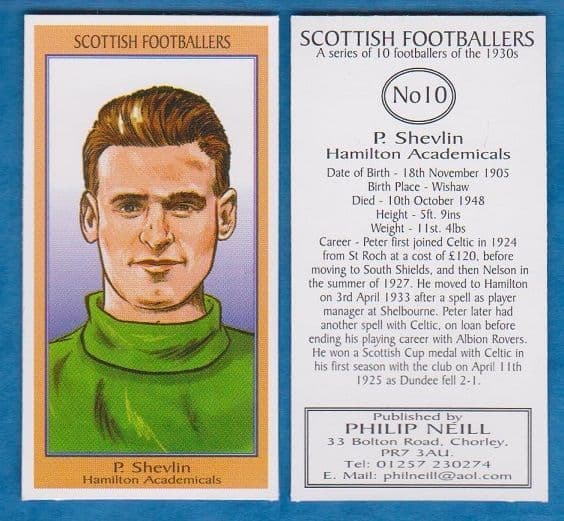
The Celtic line-up for this match is also fairly unique, in that with regular goalkeeper Joe Kennaway now on holiday in the USA, former Celt Peter Shevlin was between the posts, presumably as a guest given that he was registered with Hamilton Academical, and indeed had played against Celtic just the previous month. The full Celtic team was as follows.
Peter Shevlin; Bobby Hogg & Peter McGonagle; Jock Morrison, Chic Geatons & George Paterson; Jimmy Delaney, John Crum, Frank O’Donnell, Malcolm MacDonald & Hugh O’Donnell.
The French side began strongly but were reduced to 10 men early on when centre-forward Norbert Van Caeneghem had to leave the field with an injury. This caused some confusion in the 8,000 crowd, perhaps unaware that substitutes were not allowed in Scottish football at that time, albeit it did not stop the Select team opening the scoring through their Austrian internationalist Heinrich Hiltl in the interim.
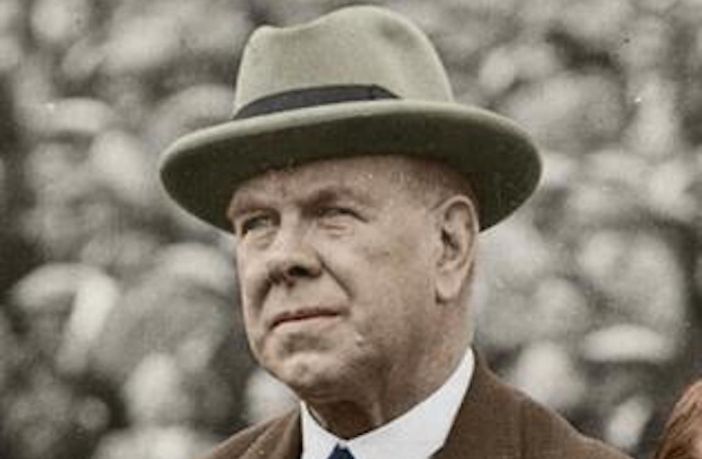
Willie Maley did consent to the introduction of a replacement player on the half-hour, Constant Tison from RC Roubaix joining the fray, and Entente were still ahead at the break. Six minutes into the second half, Hungarian Janos Kalmar doubled the French lead, but Celtic fought back with two goals in as many minutes through Malcolm MacDonald and Frank O’Donnell, albeit The Evening Times credits the first goal to Delaney.
Despite all-out attack from the Celts, the match was finally settled in favour of the hosts thanks to a late double from SC Fives’ French international forward Ernest Liberati.
As a footnote, SC Fives would merge with Olympique Lillois to form Lille OSC in 1944, whilst seven years earlier, Excelsior AC signed a young Argentinian defender named Helenio Herrera.
Whatever would become of him?
The 1934/35 season would be bittersweet for Peter. He would make the highest number of League appearances as Hamilton Academical finished fourth in the First Division, seven points behind title winners Rangers, whilst going all the way to the Scottish Cup final before losing out to the Ibrox men. Peter was outstanding in that cup run, particularly in the 2-1 semi-final over Aberdeen at Celtic Park on Saturday, 30 March 1935. But he would miss out on the final due to slice of huge misfortune. I’ll pick up on that later.
Peter would also enjoy a victory over his old club, a 4-2 win for Accies at Douglas Park on Saturday, 15 September 1934. Back to the book.
Douglas Park, Hamilton was the next port of call for an unchanged Celtic team four days later. The game got off to a flying start as Jimmy McGrory beat his old Celtic colleague Peter Shevlin to give the Hoops the lead after 20 minutes, only for Dave Wilson to equalise seconds later. A second scoring burst around the hour mark saw Bobby Reid and Bertie Harrison push Accies 3-1 in front before Jimmy Delaney reduced the deficit. With Celts chasing a point, Wilson sealed the match for the hosts with his second goal five minutes from time.
The return at Celtic Park saw a Hoops win but another outstanding performance from Peter, once again recorded in the forthcoming book.
Seven days later, on Saturday, 12 January 1935, the Celtic supporters would look forward to welcoming two of their own back to Parkhead, where Hamilton Academical were the visitors. As it transpired, former skipper Jimmy McStay would not be fit enough to play, although he would recover to lead his men all the way to the Scottish Cup Final that season, ensuring that there would be Hoops at Hampden, albeit in the red-and-white colours of the Accies.
Wearing the gloves for the Douglas Park outfit was Peter Shevlin. Like the great McGrory, he was another former St Roch’s man from those heady, early years, having started his junior career at Pollok.
Continued on the next page…