On the same day that Foley left Celtic for Plymouth, Everton signed a 17-year-old centre forward from Burnley called Tommy Lawton, as plans to replace the great Dixie Dean commenced. By June 1938, when he lined up against Celtic at Ibrox in the final of the Empire Exhibition Cup, Tommy Lawton would be both first-choice striker at Goodison and the top goalscorer in the English First Division. His Everton teammates that day included two familiar names, Willie Cook and Joe Mercer.
Mercer would become famous to football fans of my vintage as the manager who delivered the English title to Manchester City back in 1968, that side of Colin Bell, Francis Lee and co competing with the Best, Law and Charlton offering of former Maine Road hero Matt Busby, across the city at Old Trafford.
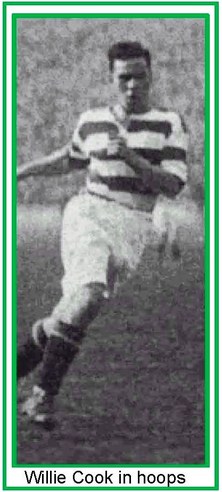
Coleraine-born Cook had joined Celtic in February 1930 from Port Glasgow juniors, as a potential successor to Willie McStay, quickly establishing himself in the Hoops defensive triumvirate of the time, beside John Thomson and Peter McGonagle. The trio would enjoy the thrilling Scottish Cup replay win over Motherwell in April 1931, before embarking on the North American tour that summer.
On 5 September 1931, Willie Cook would be the closest player to the incident between his goalkeeper and Sam English, as the young Celt tragically lost his life. One year on, he would wear Ireland’s green to make his Six Counties debut beside English, in the 4-0 defeat by Scotland at Windsor Park, Belfast. Jimmy McGrory, another who played at Ibrox that horrible day, scoring the second goal for the Scots. Who writes these scripts?
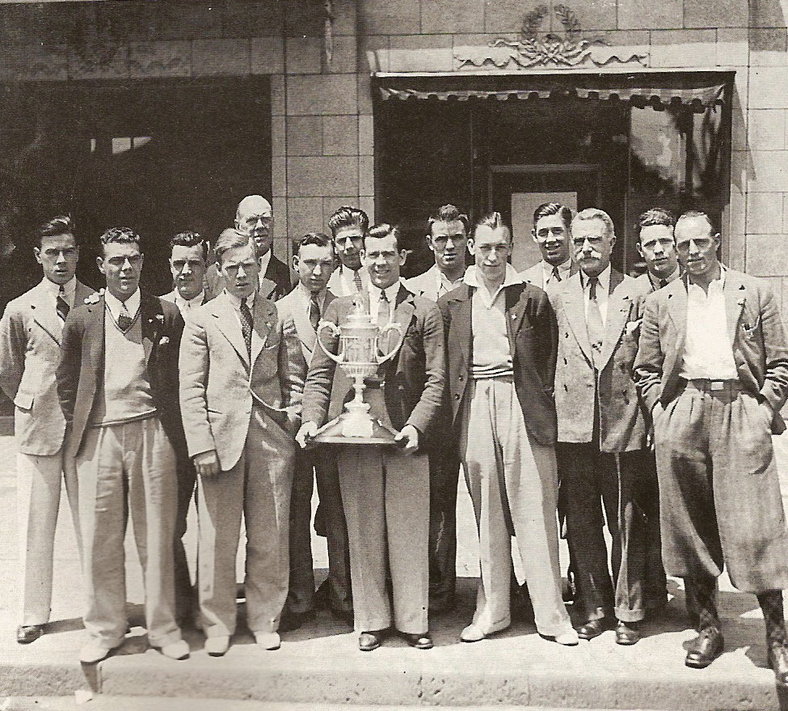
Three months later, on 30 December 1932, Willie Cook left Celtic to sign for Everton, where he would win the FA Cup in his first season, following a 3-0 victory over a Manchester City side featuring Matt Busby and Wembley Wizard, Jimmy McMullan. Beside Cook and Dixie Dean in the Toffees’ line-up was another hero of Scotland’s famous 5-1 victory over England in 1928, Jimmy Dunn. Dunn had been in the Hibernian team beaten in successive Scottish Cup Finals by Celtic at Ibrox in 1923, with the McStay brothers in the Hoops and the Maley siblings Alex and Willie in opposing dugouts, then an Airdrie team featuring another Wembley hero, Hughie Gallacher, at Hampden the following year. It would be third time lucky for Dunn, who scored Everton’s third, after Dixie Dean had made it 2-0 in the second half. Everton’s first goal, their first-ever at Wembley, was also scored by Scot, Coatbridge-born Jimmy Stein.
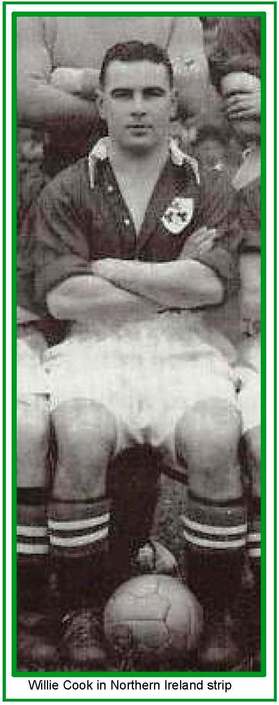
Cook would make over 200 appearances for Everton before the outbreak of the Second World War effectively ended his top-flight career. Following the Empire Exhibition defeat at the hands of his old club, Celtic, in June 1938, his Everton side would go on to claim the English title that season, his last. The quality of the two English sides beaten by Celtic in that tournament, Len Shackleton’s Sunderland and Tommy Lawton’s Everton, is often very much under-appreciated, in my humble opinion.
Anyway, once again, I digress. (You don’t say? – Ed!)
Back in Glasgow in January 1936, Willie Hughes had missed out on the 4-3 Ne-erday defeat by Rangers, as Peter McGonagle played his last match in the Hoops. With Jock Morrison moved to full-back to cover for the out-of-favour McGonagle, Willie returned at left-half for the visit of St Johnstone, three days later, Celts winning 2-0 with goals from Frank Murphy and a late Willie Lyon penalty.
Hughes would then drop out of the side again until the end of February, before making his final appearances in a 3-2 win at Hampden, Jimmy McGrory scoring twice against his future chairman, Desmond White, the Queen’s Park goalkeeper, and the 4-0 victory over Clyde at Shawfield. He would score his last goal for the club in the win over the Bully Wee, played on my late ‘Leap Year Baby’ godfather’s birthday, Saturday, 29 February 1936. He was the man who accompanied my dad to Lisbon, and his last trip to see Celtic was even more emotional, determined to make his way to the Camp Nou in March 2008 despite knowing he had just months to live. A real superstar. I hope you enjoyed a very special, heavenly 21st birthday recently, Uncle Robert.
Celtic would go on to claim their first League title in a decade at the end of that season, with Hughes looking on from the sidelines. He played his final match in the Hoops on Saturday, 19 August 1936, at left-back in a 2-1 defeat by St Johnstone at Muirton Park, Willie Buchan with Celtic’s solitary goal.
Within a month, on 22 September 1936, Willie Hughes had moved across the river to join Clyde. In his first game against Celtic for his new club, the Scottish Cup semi-final at Ibrox on Saturday, 3 April 1937, there was another amusing anecdote involving the player. The legend is that left-back Hughes was doing such a great job of marking his player, Celtic outside-right, Jimmy Delaney, that an irate Hoops fan ran onto the pitch and withheld the ball from Willie until he had been chastised for the difficult time he was giving the Cleland maestro. Celts would win 2-0 in front of 76,000 to qualify for the final later that month against Aberdeen, where almost double that crowd would pack into Hampden.
Willie would play twice at left-back against Celtic for Clyde in 1937/38 then at inside-left for Arbroath at Celtic Park on Saturday, 1 April 1939. I guess some things never changed where he was concerned.
Unlike most of the heroes in my story, Willie did enjoy a long life following his retirement from the game, outliving two wives before passing away on New Year’s Day 1996, by then in his 87th year.
Thanks, as always, to the Celtic Wiki, a wonderful source of reference information.
Matt Corr