

Sunday must have felt like a sliding-doors moment for two of Celtic’s summer signings…

Kelechi Iheanacho celebrates scoring the winner for Celtic at Rugby Park, Kilmarnock v Celtic, 14 September 2025. Photo Vagelis Georgariou (The Celtic Star)
As Kelechi Iheanacho scored a 95th-minute winner at Rugby Park and endeared himself to the travelling support, and more besides, Shin Yamada was nowhere to be seen, left out of the matchday squad altogether.
Had Iheanacho not been signed, would that decisive moment have fallen to Shin? We’ll never know, but their contrasting fortunes tell a story not just of two players, but of Celtic’s politics and recruitment strategy.
Iheanacho arrived after the transfer window closed, a free agent and a trusted name from Brendan Rodgers’ contact list. He is, by every definition, a manager’s signing.

Shin Yamada of Celtic. Celtic v Livingston, Scottish Premiership, Celtic Park, 23 August 2025. Photo Stuart Wallace IMAGO Shutterstock
Shin, by contrast, is widely viewed as a “club signing,” perhaps brought in through Celtic’s recruitment department rather than at Rodgers’ request. The difference is clear already. Iheanacho has been handed an opportunity to relaunch his career, while Shin now struggles even to make the bench.

Johnny Kenny of Celtic reacts during the Premier Sports League Cup match between Celtic and Falkirk at Celtic Park on August 15, 2025 (Photo by Ian MacNicol/Getty Images)
The European squad lists underline the situation. Johnny Kenny, not Shin, made the cut. If that hierarchy reflects Rodgers’ thinking, Shin is effectively fourth choice, behind Daizen Maeda, Iheanacho, and possibly Kenny, before he can even contemplate challenging for a starting shirt.
It is hard not to feel sympathy for Shin. At 25, he was on the fringes of the Japanese national team, having recently won his first cap, and eyeing a World Cup year. To arrive in Glasgow expecting to compete and instead be cast as a rotation option, or worse, is likely a bitter pill to swallow.
This situation highlights Celtic’s disjointed summer strategy. Data, analytics, scouting and coaching input are all valuable in modern recruitment, and collective decision-making is essential. But signing a player whom the manager has no real intention of using? That is far harder to justify.
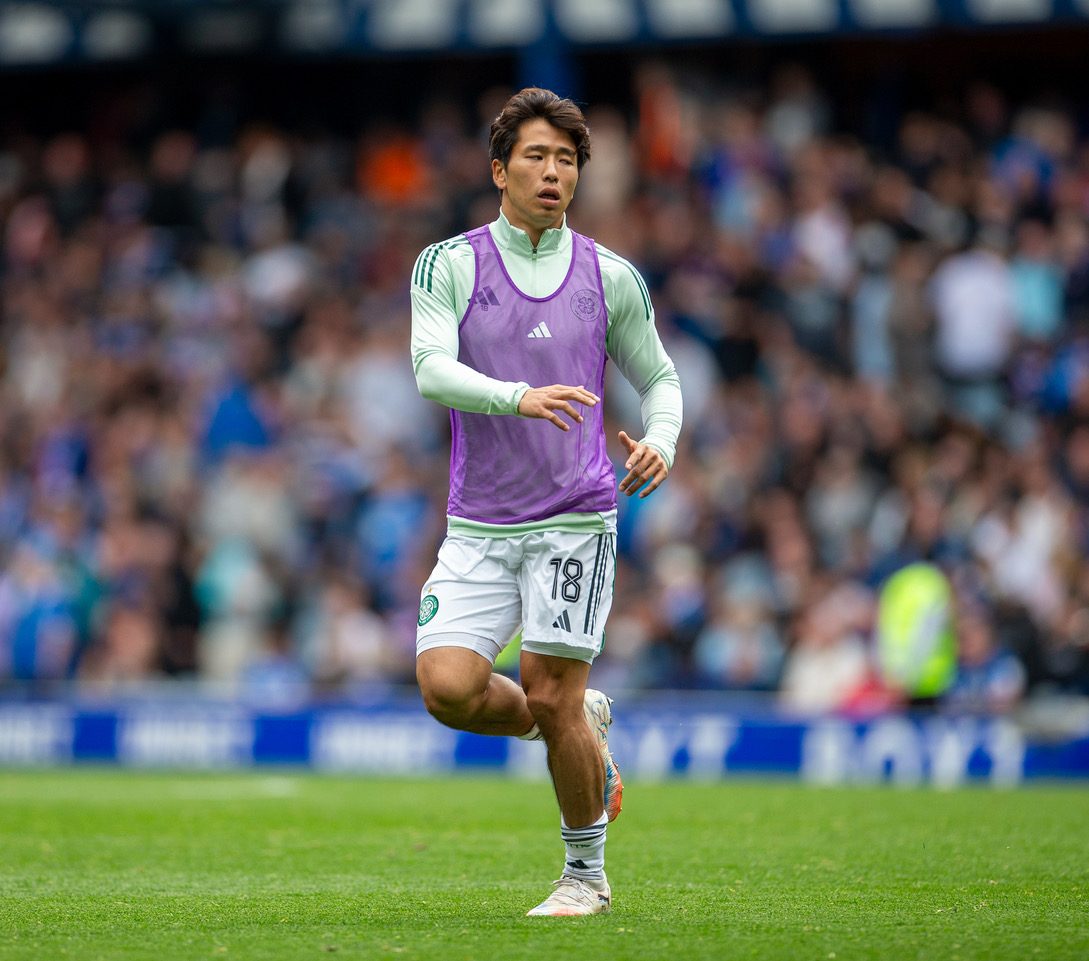
Shin Yamada – theRangers v Celtic, 31 August 2025. Photo Vagelis Georgariou (The Celtic Star)
Shin Yamada’s skill set is not incompatible with Celtic’s needs. His pace and movement could have been a weapon in Europe, and a period of focused training might have acclimatised him to the domestic challenge of breaking down low defensive blocks. Whether this is another example of Celtic’s two-pronged recruitment—club picks versus manager picks—or simply Rodgers’ view that Shin is not yet ready, it seems the player has become a victim of process rather than performance.
When Shin chose Celtic, he surely looked at the successes of Daizen, Reo and Kyogo and believed that, even as a back-up, performances could earn him a place. His cameo at Ibrox suggested he might indeed be a useful focal point in attack. Instead, he finds himself behind Maeda, Iheanacho and perhaps Kenny.

Shin Yamada of Celtic. Celtic v Livingston, Scottish Premiership, Celtic Park, 23 August 2025. Photo Stuart Wallace IMAGO Shutterstock
We can only hope the club has now communicated his standing clearly, because a player of Shin’s calibre did not move to Scotland merely to collect a wage. Japan’s national manager has made it clear he does not rate the Scottish Premiership, meaning European football is Yamada’s only realistic shop window. Excluding him from the European squad effectively ends any short-term chance of international recognition with a World Cup on the horizon.
Some may shrug, but Celtic should consider the bigger picture. The club has built a strong reputation in the Japanese market. Convincing a 25-year-old international prospect like Shin to sign inevitably came with assurances about opportunity. If those assurances are not honoured, it risks damaging a market that has served Celtic well.
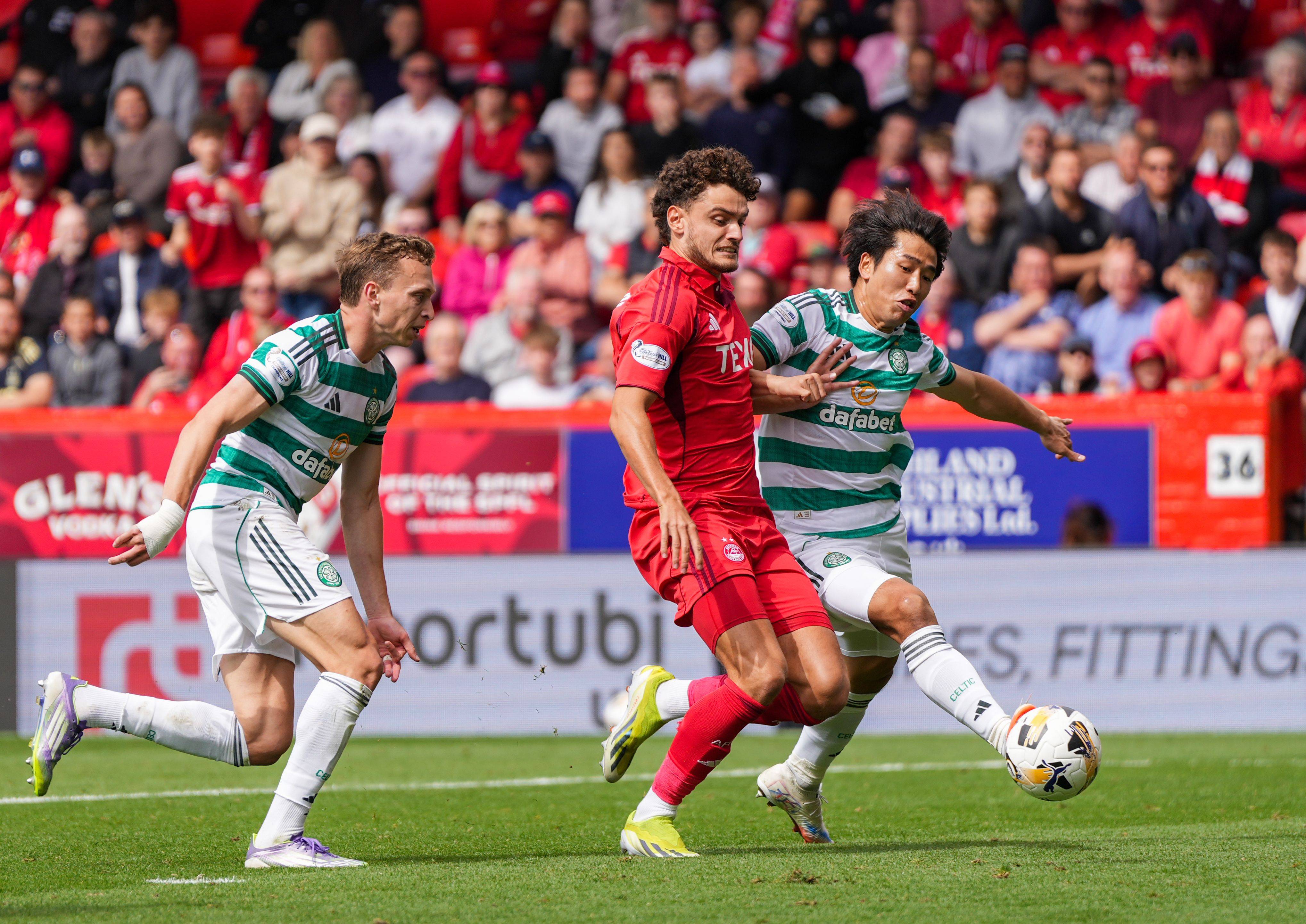
Shin Yamada of Celtic tackles Dante Polvara of Aberdeen. Aberdeen v Celtic, Scottish Premiership, Pittodrie Stadium on 10 August 2025. Photo Stuart Wallace/IMAGO Shutterstock
Shin’s plight underscores the structural issues in Celtic’s transfer model. Multiple voices contribute, talent identification, data, analytics, scouts, coaches, and manager, but the process only works if all agree before a deal is finalised. If a manager signs off with conditions (“yes, but only if I also get my main target”), the bottlenecks and mixed signals are inevitable. The result is an unbalanced squad, unhappy players, and the risk of another cycle of squad bloat, just as Celtic had begun to streamline.
During the Ange Postecoglou era, Celtic were fortunate that recruits were strong characters who, even when out of favour, remained professional and avoided public discontent. Whether the current group shares that temperament remains to be seen, a critical factor as the club faces a season already marked by Champions League elimination and behind the scenes ‘manufactured stress’.

Kelechi Iheanacho celebrates scoring the winner for Celtic at Rugby Park, Kilmarnock v Celtic, 14 September 2025. Photo Vagelis Georgariou (The Celtic Star)
For Iheanacho, Sunday was a launchpad. A 95th-minute goal, the manager’s trust, and the start of a potential redemption arc. For Shin, it was another reminder of a door that may already be closing.
Celtic’s challenge now is not simply to balance the squad, but to ensure their recruitment process is fully aligned, from scouting and analytics to boardroom and manager, because without the manager’s complete buy-in, signings risk becoming expensive passengers.
Until that alignment is achieved, promising players like Shin Yamada will continue to slip through the cracks of a system that should really be propelling them forward.
Niall J
CELTIC IN THE EIGHTIES by DAVID POTTER – OUT NOW!

Celtic in the Eighties by David Potter. Out now on Celtic Star Books. Click on image above to order.







Shin looked a useful player.
Brendan got petty and played politics by treating him and the other Japanese lad disgracefully. That arrogance makes me so angry. Johnny Kenny should have been let go to Bolton. Whilst I am sure that Brendan wants to be manager next season, it’s this sort of behavior that, if looked at carefully, might very well cost a manager his job elsewhere in the SPL and in the EPL, as well as any other European league.
An interesting article, well done Niall J.
It’s hard to understand who does what at Celtic FC.
Are Japanese guys (and same in the women’s squad) for selling merch overseas ? Is it data/scout’s job related ?
And by the way who picked Maeda ?
Have to say I thought Yamada and Inamura (apologies for the spelling) looked more than decent, as was Iwata.
What I don’t care for is Rodgers’ style of playing as, to me, it’s dire to watch. I’m also a believer in ‘form players’ but, sadly, the manager is not. He needs to have a good look at the whole of the midfield, for example and reflect on what they are delivering…or not.