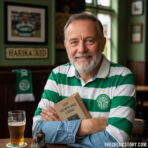
Five memorable Celtic moments, with a nod to the late Celtic Historian and Celtic Star legend David Potter, on this day starting in 1892…

David Potter’s Celtic Books
ONE – SATURDAY 16th APRIL 1892 – Celtic’s first ever fixture on this date came in the league against Cambuslang, a side with a modest but historically notable claim to fame – they were the opponents in the very first Scottish League game ever played at the old Celtic Park. Fresh from a 5-0 demolition of Hearts in their opening league fixture, the Celts got the job done again, winning 5-2 at home. The goals on this particular afternoon came from Neilly McCallum, Peter Dowds and Johnny Campbell among others, and while Cambuslang managed a 3-1 win against Celtic in an earlier meeting that season, this final encounter left them finishing 11th in the 12-team league. They never returned to top-flight football. A footnote of a club, perhaps, but their name is permanently woven into the early fabric of the Hoops story.
TWO – SATURDAY 16th APRIL 1904 – One of the great days in the history of the Scottish Cup, and one of the great days in Celtic’s history full stop. The Hoops faced Rangers in the final at the newly redeveloped Hampden Park – the first cup final to be held there – in front of a massive 65,000 crowd, and it is also the first final in which Celtic wore the Hoops. Things looked bleak when Rangers surged into a 2-0 lead and Celtic looked well short of their best. Then Jimmy Quinn took matters into his own hands. A thundering run pulled one back in the 37th minute, he equalised just before half-time, and ten minutes from the end the Mighty Quinn completed the first hat-trick by a Celtic player in a Scottish Cup final, winning it 3-2. Quinn, who had made his scoring debut in a 4-3 win over St Mirren three years earlier, went on to play 331 games and score 217 goals. The 1904 final was where the legend truly began.
THREE – THURSDAY 16th APRIL 1914 – A Thursday evening with a 5:45 kick-off at Ibrox – unusual circumstances for a Scottish Cup final, but these were unusual times. Celtic and Hibernian had met five days earlier at the same ground, drawing 0-0 in front of 55,000, and a replay was required to settle matters. The Thursday crowd was a more modest 36,000, but those who made it were treated to a far more satisfying spectacle. Jimmy McColl, brought in up front in place of Ebenezer Owers, scored twice, and Johnny Browning helped himself to a brace as well, Celtic running out emphatic 4-1 winners to complete the league and cup double that season. It would prove to be the last Scottish Cup final before the competition was suspended for the duration of the First World War – a fitting way to sign off.
FOUR – SATURDAY 16th APRIL 1927 – The Scottish Cup final at Hampden, and a remarkable occasion for reasons beyond Celtic’s involvement. East Fife, a Second Division side, had somehow navigated their way to the national showpiece – they weren’t even in contention for promotion, never mind a cup final – and their presence attracted a crowd of 80,070 to see if the fairytale could be completed. It could not. Celtic won 3-1 with goals from Adam McLean and Paddy Connolly, while East Fife’s Robertson had the misfortune to add an own goal to their afternoon’s misery. It was a comfortable enough victory in the end, though credit where it’s due to East Fife for making it that far. Celtic lifted the trophy, took the applause, and the Fifers went back to the Second Division. The tradition of Celtic lifting silverware at Hampden was already becoming a very familiar sight.
FIVE – WEDNESDAY 16th APRIL 2008 – Shunsuke Nakamura. That stunning, swerving, long-range effort that flew past the Rangers goalkeeper and reminded everyone watching – at Celtic Park and across the world – exactly what the little Japanese maestro was capable of. But the drama was far from over. Nacho Novo levelled in the 50th minute, and then Scott McDonald had the chance to restore the lead from the penalty spot after a handball on the line, only to see his effort saved. McDonald, to his eternal credit, made immediate amends, providing the assist in the 90th minute for Jan Vennegoor of Hesselink to power home a header and win it 2-1. It was the kind of late, heart-stopping winner that keeps title races alive, and the big Dutchman – who would score again on the final day of the season in that glorious Helicopter Sunday – was right at the heart of it. Other dates in April have produced their own Celtic magic, but this one belongs to Nakamura, McDonald and the man with the longest name in Scottish football history.

Celtic Pools Weekly Lottery