

How Celtic engages with fans, or more accurately, how it doesn’t
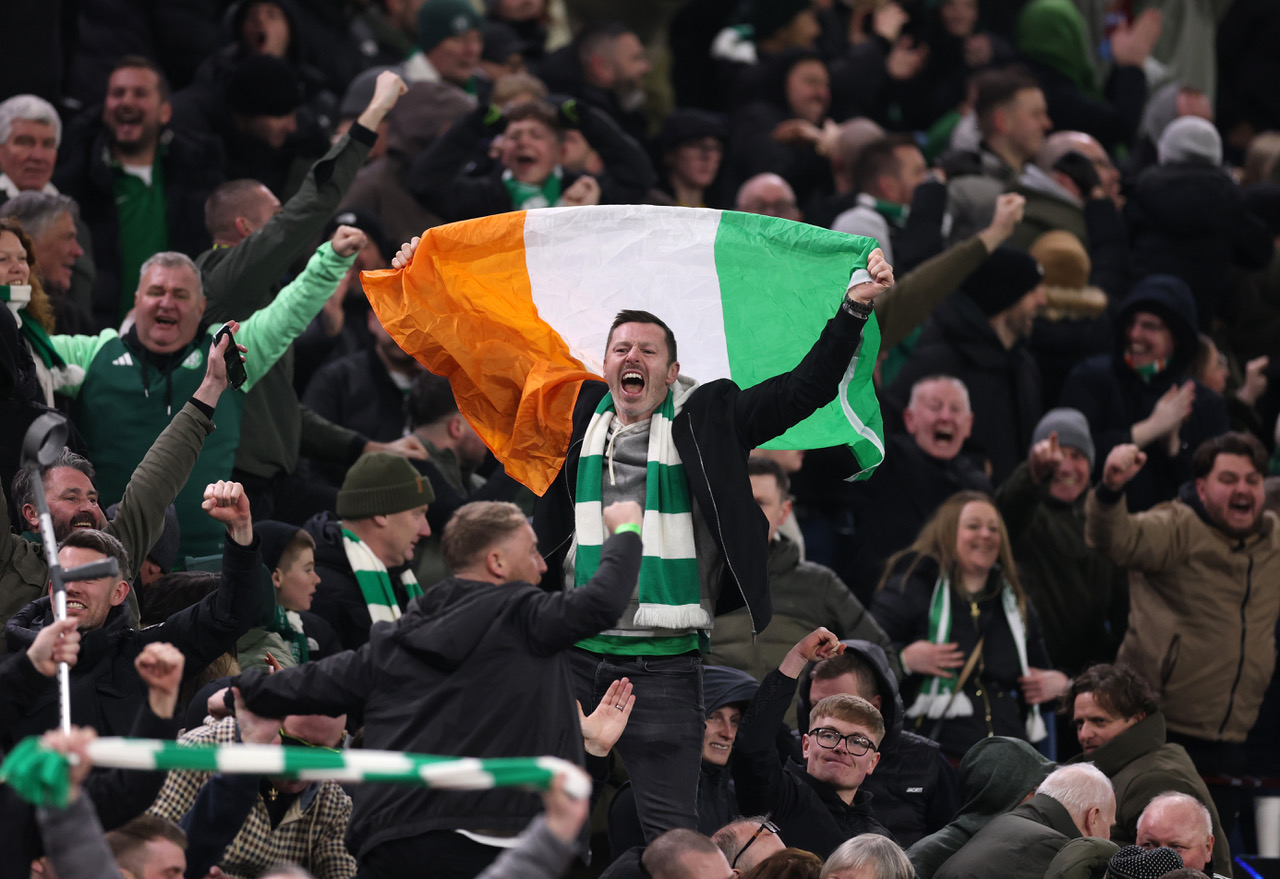
Celtic fans celebrate with an Irish flag during the UEFA Champions League match between Aston Villa and Celtic at Villa Park on January 29, 2025. (Photo by Julian Finney/Getty Images)
Across the first three earlier articles covering the Monday Night Meeting between the club representatives and supporter groups, we’ve looked at Celtic’s long-term strategy, their self-policed accountability model, and their failure to modernise.
Each strand points to a club that talks about being “world class” yet repeatedly fails to match that ambition with transparency, communication, or coherent action. Nowhere is that more evident than in how Celtic engages with its supporters, or, perhaps more accurately, how it doesn’t.
The handling of the long-delayed fan survey and the muted response to the Fairhurst Inquiry tell a familiar story, consultation without conviction, communication without clarity.
When supporters asked when the results of the 2024 Fan Survey would finally be released, over a year since it was conducted, the answer was, once again, that it’s coming soon. CEO Michael Nicholson confirmed the report would be published in October 2025. Head of Commercial Operations Kevin McQuillan, however, took the lead on this topic, and, to his credit, his tone could not have been more different from what we’ve come to expect from the club’s top table.
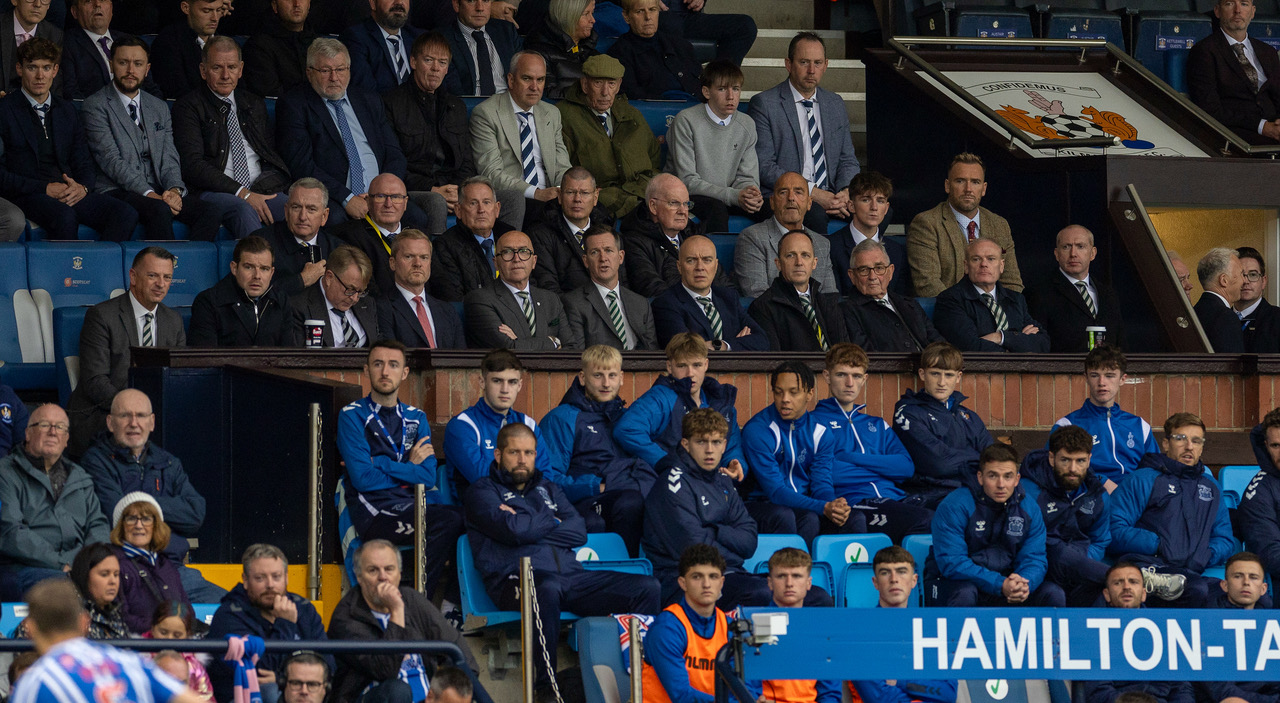
The Celtic Board at Rugby Park, Kilmarnock v Celtic, 14 September 2025. Photo Vagelis Georgariou (The Celtic Star)
McQuillan admitted mistakes. He explained the delay was due to the complexity of the data and the need to reformat the results for public release. He acknowledged lessons had been learned and even accepted that the club would approach any future survey differently.
It was a simple, honest response, one that struck the right tone and demonstrated humility. Supporters appreciated it. They described his openness as a “welcome change” from the defensiveness that had characterised other sections of the meeting.
In truth, McQuillan’s approach should be the norm, not the exception. His candour showed how easily trust could be rebuilt through basic honesty and accountability. But the wider frustration remains, a year-long delay in publishing a fan survey undermines the very principle of engagement. Supporters took the time to offer their opinions, the club sat on the findings for over twelve months. The optics are terrible. Engagement cannot be meaningful if feedback disappears into a corporate black hole.
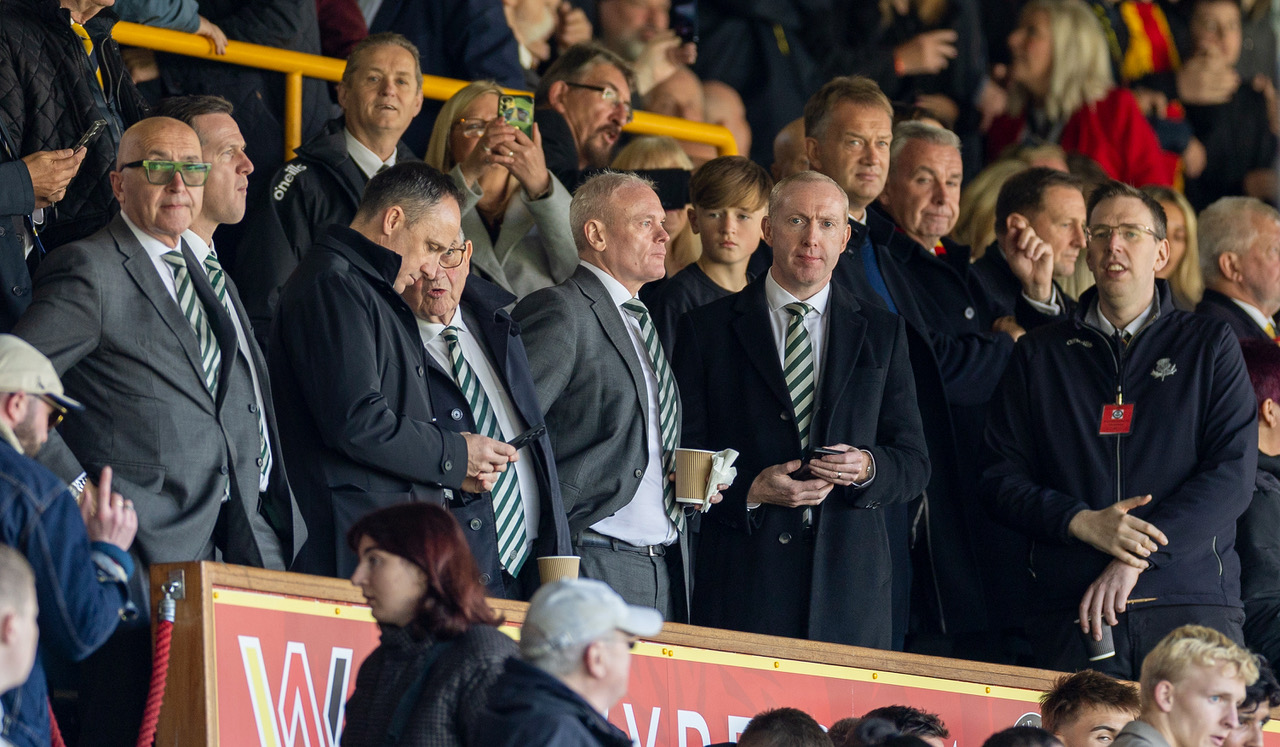
The Celtic Board. Partick Thistle v Celtic. Premier Sports League Cup. Sunday 21 September. Photo Vagelis Georgariou (The Celtic Star)
McQuillan also hinted that the same staff responsible for managing the fan survey are working on other projects, including the club’s digital strategy and proposed new app. That admission prompted questions about whether Celtic are properly resourced.
Are key staff being stretched across too many projects? Are important areas being delayed or diluted because the club simply doesn’t have enough people to deliver on its own promises? The fact an operational review is underway to assess resourcing might be encouraging, but it also raises the question of why such a review wasn’t completed years ago.
If McQuillan’s section of the meeting was an example of how communication should work, the discussion on the Fairhurst Inquiry showed how it too often doesn’t. The Fairhurst report was commissioned by the club following the policing incident on 16 March, when ordinary Celtic fans, not just ultras or organised groups, found themselves kettled, manhandled, and prevented from reaching Celtic Park before a major match.
The incident shocked many, especially those who hadn’t experienced the kind of policing that certain sections of the support have faced for years.
Supporters at the meeting were clear, the report was too soft. It failed to reflect the anger, frustration, and, in some cases, trauma of those who were there. Michael Nicholson explained that Fairhurst had been hired to “collate feedback” rather than make conclusions, and that the club had passed that report to Police Scotland along with its own comments. He also said a meeting had been requested to discuss the matter further.
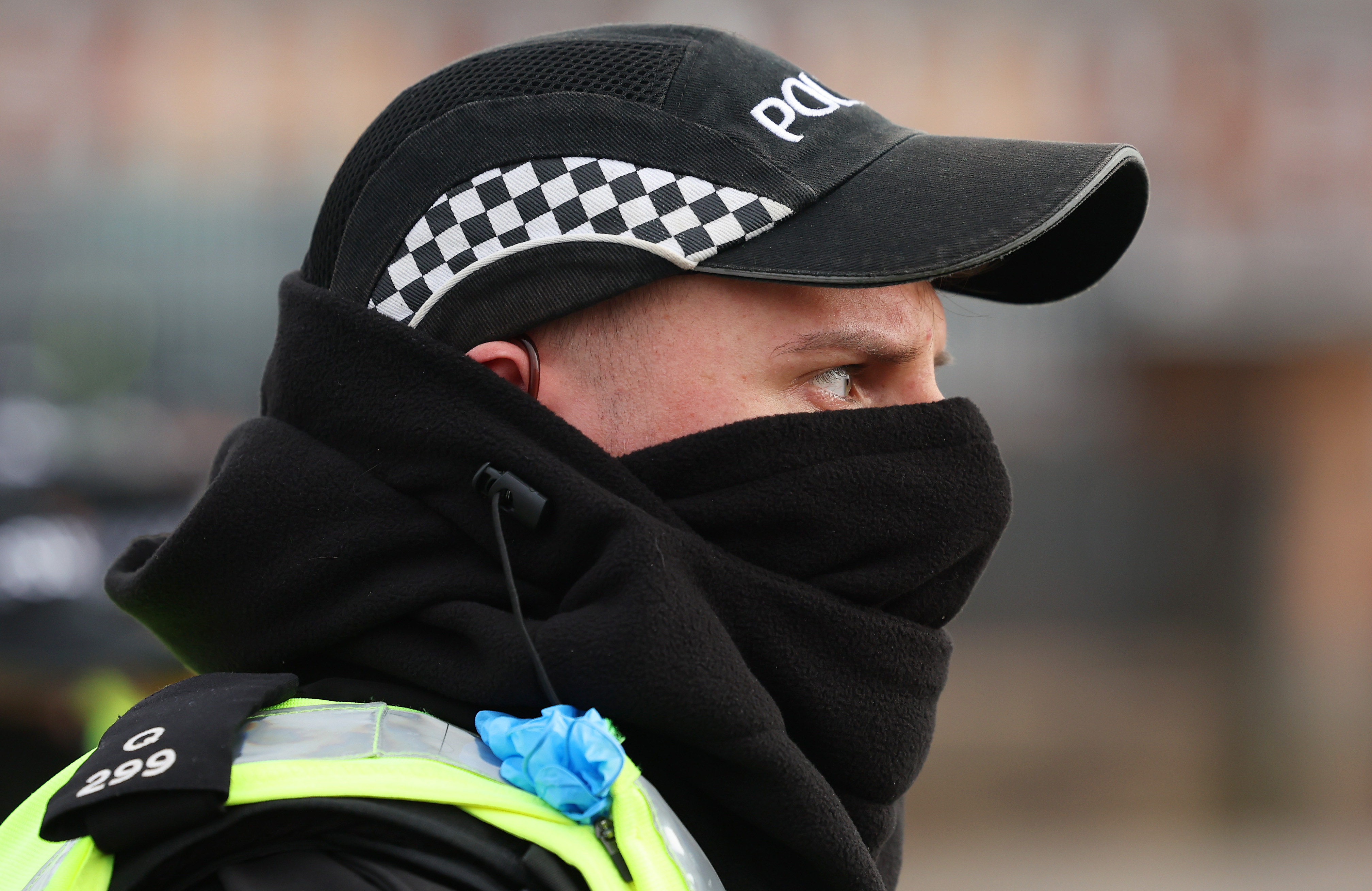
Police officer wearing a face covering prior to the Scottish Premiership match between Celtic and theRangers at Celtic Park on March 16, 2025 . (Photo by Ian MacNicol/Getty Images)
On the surface, this appears procedural. But to many fans, it felt passive, like a box ticked, or a letter sent. Several supporters urged the club to take a firmer stance. If Police Scotland refused to allow a supporter representative to attend that meeting, they argued, Celtic should challenge that publicly. The club’s Head of Safety, agreed to make the request for fan inclusion, and that’s welcome. But the very fact it needs to be requested rather than insisted upon speaks volumes.
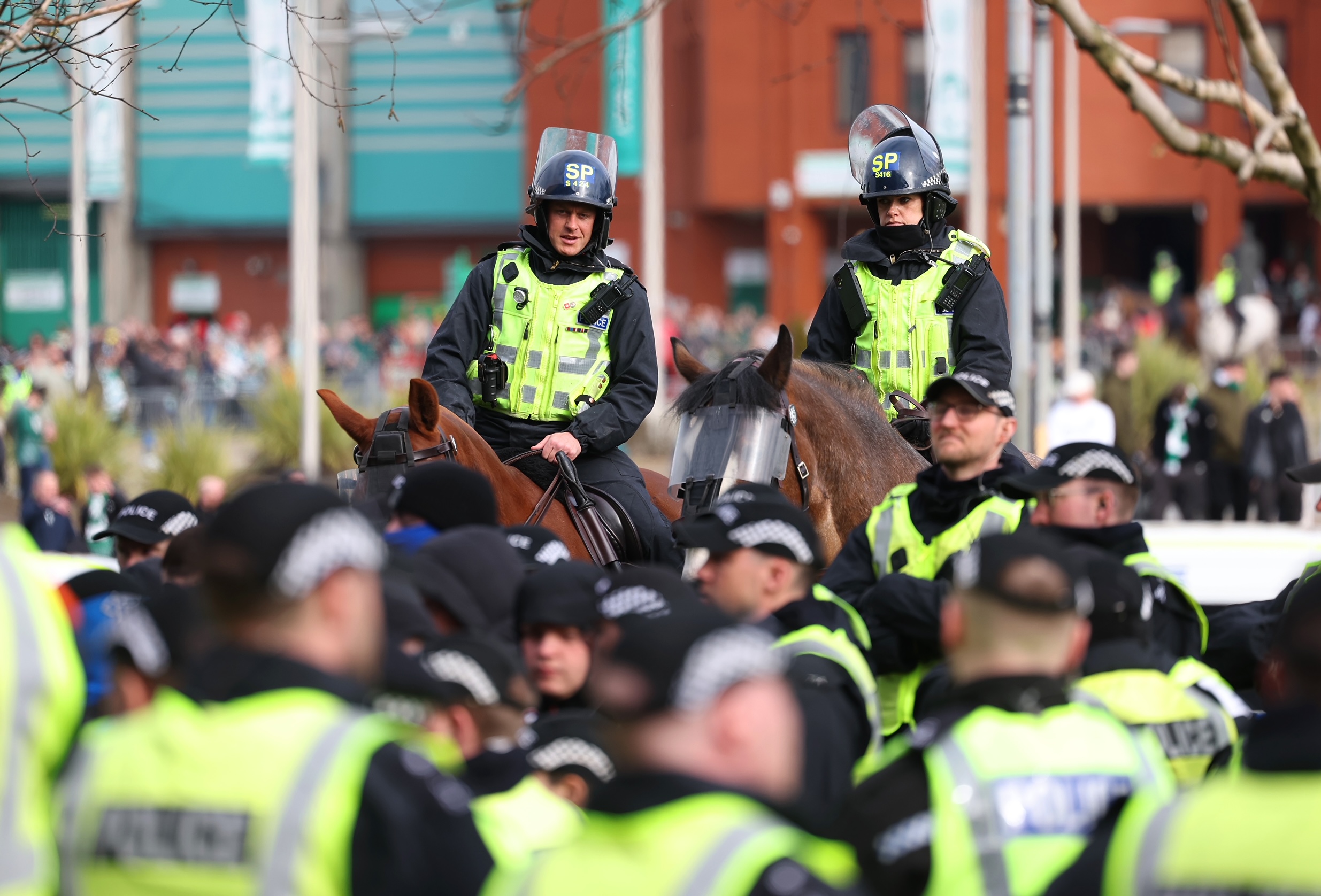
Police on horseback are seen outside the stadium prior to the Scottish Premiership match between Celtic FC and Rangers FC at Celtic Park on March 16, 2025. (Photo by Ian MacNicol/Getty Images)
This was not an issue of fan behaviour or protest. It was about law-abiding supporters trying to attend a football match who found themselves subjected to policing tactics that many described as disproportionate and aggressive. For the club to frame its role purely as a facilitator between supporters and the police misses the point entirely. Celtic’s duty is to protect its supporters, not merely to pass their feedback along.

Police are seen lining up outside the stadium prior to the Scottish Premiership match between Celtic and theRangers at Celtic Park on March 16, 2025. (Photo by Ian MacNicol/Getty Images)
Credit should be given for commissioning an independent report in the first place. It was, at least, an attempt to gather evidence rather than rely on internal spin, something the club might consider applying to other areas of its operation. But tone matters, and the tone of the Fairhurst report, and Celtic’s response to it, did not convey the gravity of what happened that day. For a club that often speaks about community and caring for its people, this felt detached, bureaucratic, and cold.
The uneasy relationship between Celtic and its ultras undoubtedly complicates matters, but the events of 16 March went far beyond that dynamic. This was not about banners or politics. It was about safety, dignity, and the right to attend a football match without fear. The supporters kettled that day weren’t agitators, they were ordinary fans, many with families, many with disabilities, many simply caught in the wrong place at the wrong time. The club’s response should have reflected that.

Police are seen lining up outside the stadium prior to the Scottish Premiership match between Celtic and theRangers at Celtic Park on March 16, 2025. (Photo by Ian MacNicol/Getty Images)
If Celtic are serious about improving relations between the club, supporters, and Police Scotland, they must show strength as well as diplomacy. Any meeting about policing and supporter welfare should require fan representation, not simply request it.
And that, ultimately, ties the two strands of this discussion together. The fan survey and the Fairhurst Inquiry are both case studies in how Celtic engage, or fail to engage, with their supporters. One shows that humility and honesty can build goodwill. The other shows that passivity and opacity damage it.
Until the club stops treating consultation as a PR exercise and starts viewing it as an essential part of governance, engagement will remain an illusion.
Niall J

Very well written piece…thank you…Cutting to the chase, I am of the opinion that KERCHING is the driving force behind just about everything the Board does…Decisions that help making money are backed up by decisions chosen not to lose money…It’s all they care about… I wish FAB all the best with their endeavours…but don’t hold out much hope.
Well written my eye! Niall J, you aee a disgrace!
Michael Nicholson DID NOT SAY THE CLUB ARE “WORLD CLASS IN EVERYTHING WE DO”
Yet it is your 100% inference! Why would you do this if not to cause more damage and harm? Why leave out the first, and MOST IMPORTANT PART OF THE SENTENCE?
“OUR AIM IS TO BE”, but instead, you wrote it as if it was, his complete statement!
People like you are a big part of the problem!
You are an embarrassment!