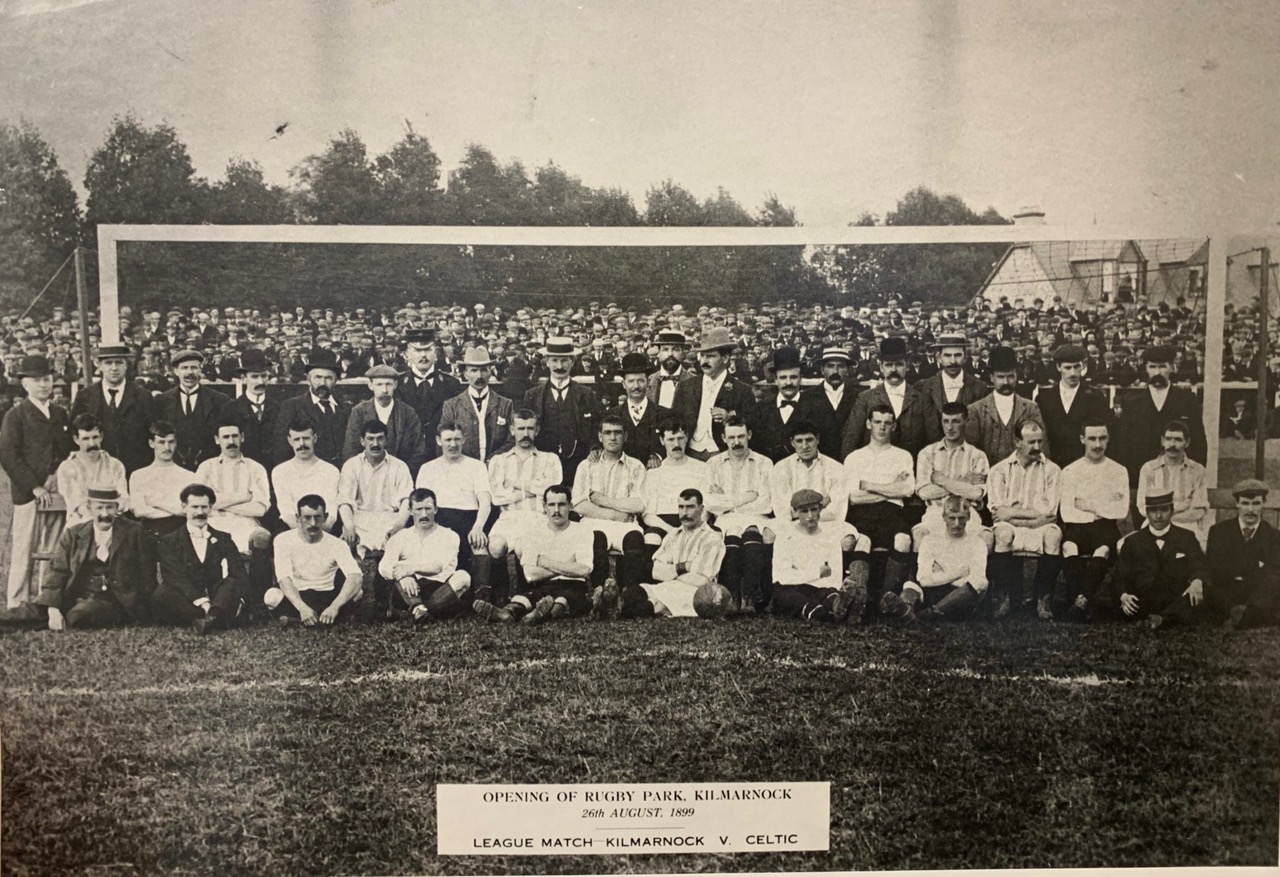
Here are extracts from Will’s story, published on The Celtic Star last year, which provide some context on that period of his life and which, I suspect, trigger the request for the letter…
The 1901 Census shows William (27, a Joiner, born in Ayr) and Bertha Quinn (34, a British subject born in Germany) living at Fleming Street, Riccarton, Ayrshire with their combined six children; Johanna Elizabeth Hislop Quinn (10, born in Finnieston, Glasgow), William Dalton Quinn (8, born in Glasgow), James Aird Hislop Quinn (8, born in Finnieston, Glasgow), Margaret Quinn (6, born in Ayr), Stephen Quinn (2, born in Ayr) and Gertrude Quinn (7 months, born in Riccarton).
Note that back in the Census of 5 April 1891, Bertha Hislop is a lodger residing with the Urquhart family at 13 Elliot Street, Finnieston, Glasgow, where her daughter Johanna was born later that same month. Bertha is listed as being 25 years old and a Seaman’s wife – as Bertha Backhauser she had married James Hislop in Mile End, London on 15 September 1889 – and her place of birth is Heimingen, Germany.
So, given the ages of his children in 1901, it would appear that her first husband James Hislop died between 1893 and 1898. He may be the Master Seaman James Hislop who died of Yellow Fever in Rio de Janeiro on 9 March 1894, aged 30. Coincidentally, exactly 130 years later, on 9 March 2024, I was in Rio de Janeiro on holiday! Hopefully, no Yellow Fever to follow though!
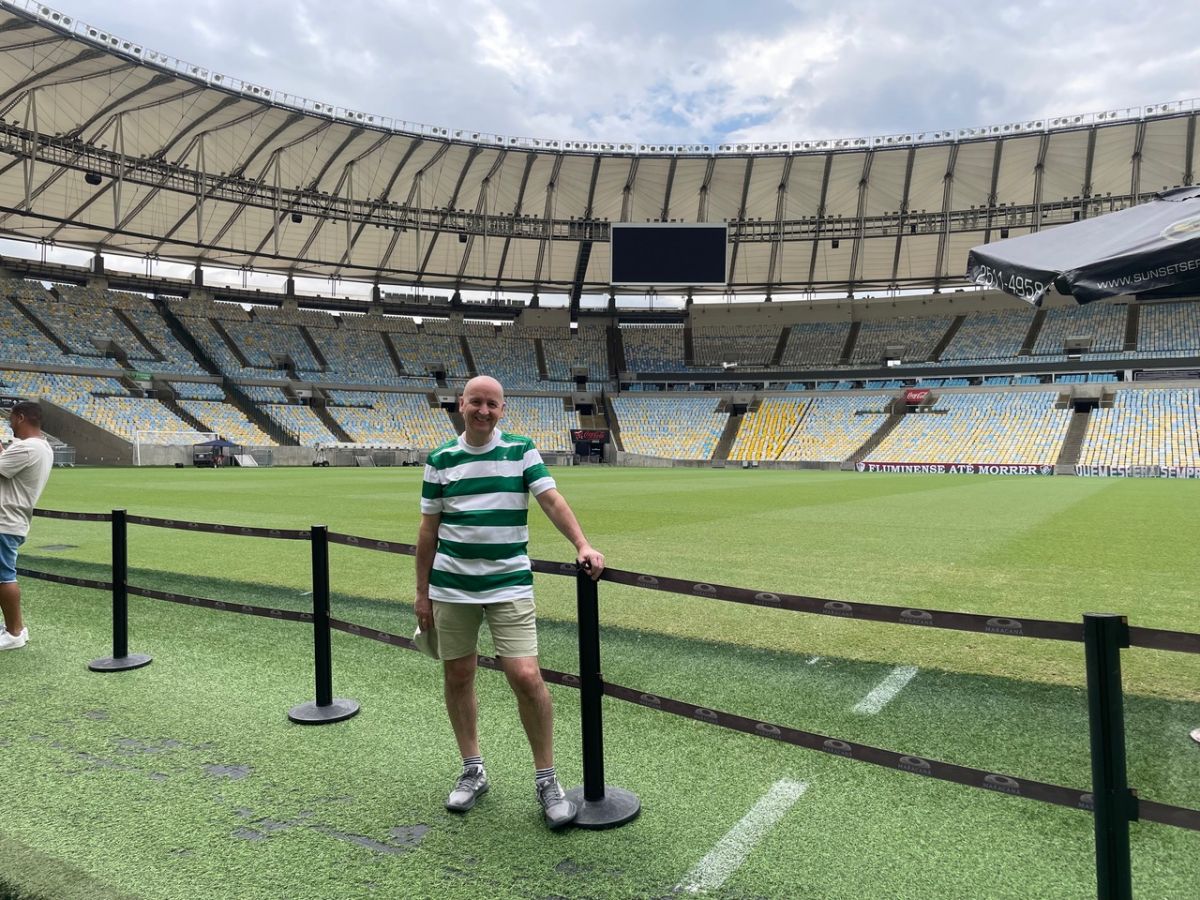
Matt Corr in Rio
Will Quinn was then widowed for a second time, on 26 March 1902, a few days after his 27th birthday, when wife Bertha died at 17 Fleming Street, Riccarton, aged 36. Cause of death is listed as sarcoma of leg and liver, from which Bertha had been suffering for eight months.
As the first anniversary of Bertha’s death approached, there was then further tragedy for Will, as the couple’s infant daughter Gertrude Quinn died of Diptheria at Kilmarnock Infirmary on 10 March 1903. The little girl had been ill for eight days and passed away five months short of her third birthday. God rest her.
Just over a year after the tragic death of Gertrude and two years after the loss of her mother, his second wife Bertha, to cancer, Will took the plunge again. On 7 August 1904, he married Anastatia (Annie) McAvoy in Kilkenny, Ireland. Will would have been 29 at that time. I believe Annie may also have been born there around October 1875, so she would have been only a few months younger than her new husband. In a strange twist of fate, Annie had been one of the witnesses at Will and Bertha’s wedding back in February 1898 and was a friend and work colleague of his sister, Mary Jane. This would turn out to be Will’s third and final marriage and would last for more than three decades.
Will and Annie Quinn would have five children together, the first two of those at their home in Fleming Street, Riccarton, a stone’s throw from Kilmarnock’s Rugby Park. John Quinn was born on 20 July 1905, and he was followed by a daughter, Anastatia Grace Quinn, on 22 October 1907.
Between those births, Will endured further heartbreak with the loss of both parents. His mother Rosina Quinn died at her home at 89 South Harbour Street, Ayr overnight on 9/10 March 1906 of natural causes, aged 59. This would place her date of birth as c1846. She is listed as being married to Michael Quinn, Hotel Porter and the death is registered by her son William Quinn, of 17 Fleming Street, Riccarton.
Will’s father Michael Quinn passed away at 33 Carrick Street, Ayr on 7 January 1907, aged 77. This would place his date of birth as c1829. Michael’s profession is listed as Private 21st Foot (Army Pensioner) and he is described as the widower of Rosina Vance. Michael’s cause of death is given as carcinoma of face, and the death is registered by his son Joseph Quinn. No separate address is given for Joseph, suggesting that he also lived at Carrick Street.
Sometime after Anastatia Grace’s birth in October 1907, the Quinn family moved to Dublin, as they are listed there in the Census taken on 2 April 1911.
The 1911 Census of Ireland shows William (36, a Joiner, born in Scotland) and Anastatia Quinn (35, born in Kilkenny) living at 3 Beach Road, Pembroke East, South Dublin with their combined five children; William Quinn junior (18, a Caretaker, born in Scotland), Margaret Quinn (16, born in Scotland), Stephen Quinn (12, born in Scotland), John Quinn (5, born in Scotland) and Anastatia Quinn junior (3, born in Scotland).
Will and his family would then return to Scotland, as in October 1911, at the age of 36, he commenced a job with Celtic, whom he would serve as Trainer then Groundsman from then until his death in 1939.
If you would like to read these two articles in full then the links are below.
Will Quinn heads from Dublin to Glasgow, then to Scandinavia with Celtic
In the light of the new information triggered by the letter from Kilmarnock
In the light of the new information triggered by the letter from Kilmarnock, I had another look at Will’s circumstances and the timeline.
It is now my belief that following the deaths of his parents – his dad had passed away just two weeks before the letter was written – it was Will Quinn’s intention to relocate to Ireland with his family. A new start following so much tragedy and a return home for his wife. But Annie then fell pregnant – baby Anastasia Grace was born in October 1907 – so those plans were put in abeyance until after her birth.
I will back that suggestion up with another piece of memorabilia in the next article.
Hail, Hail!
Matt Corr
Follow Matt on X @Boola_vogue
Visit Celticstarboooks.com for signed copies of Matt Corr’s books including Celtic in the Thirties Vol 1 & 2.

Celtic in the Thirties by Celtic Historian Matt Corr is published in two volumes by Celtic Star Books, click on the image above to order signed copies.