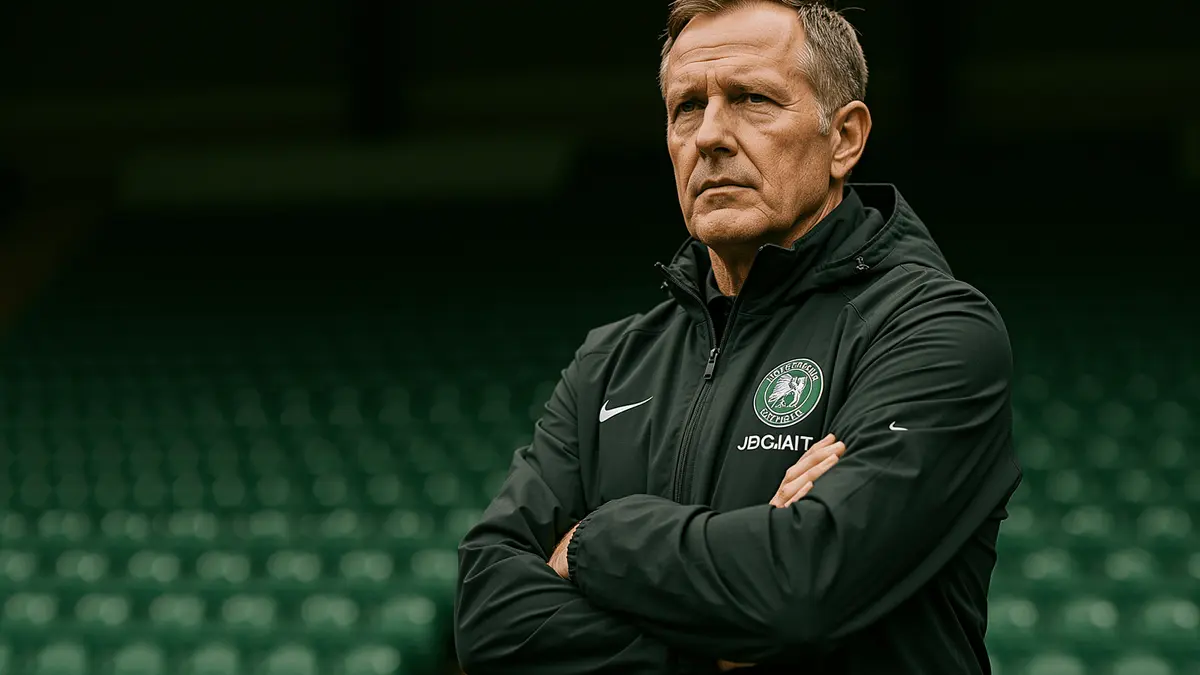
Martin O’Neill is Celtic manager – permanently, officially, and after a summer of uncertainty that tested the patience of every supporter who lived through it, this is the appointment that finally draws a line and sets a direction.
As confirmed by the official Celtic FC announcement, Martin O’Neill has been appointed Celtic manager on a one-year contract, with an option for a further year. The deal was finalised following talks with principal shareholder Dermot Desmond, and ends a managerial process that began in genuine turbulence and wound its way through emergency appointments, a title secured on the final day, and a summer in which the club’s direction was anything but clear. This is the biggest Celtic story of the window – and it needed to be resolved.
Celtic CEO Michael Nicholson framed the announcement as the starting point for a busy summer, stressing that the club must be in the best possible position to compete. O’Neill himself described it as a “great honor” to be officially reinstated, but was careful to add a note of warning – that the trophies won during his interim period cannot become a reason for complacency. That’s the right tone. The right instinct. And honestly, the kind of grounded realism this moment required.
One Year to Change Everything
The one-year deal – with the option for a second – is worth thinking about carefully rather than either celebrating or dismissing. It is not a statement of total conviction, and it would be dishonest to pretend otherwise. But it is entirely logical given the circumstances. O’Neill came back into a club mid-crisis, steadied it over 35 matches – 27 wins, 4 draws, 4 losses – delivered the Premiership and the Scottish Cup, and did so without the benefit of a proper pre-season or a squad built to his preferences. Giving him twelve months with a real transfer window and a clear mandate is not timidity. It is proportionate.
O’Neill was pointed in his post-appointment comments, saying he expects “a summer filled with activity.” That is not vague aspiration – that is a man who has assessed the squad that took him to the title and knows where it fell short. Celtic trailed Hearts for a significant stretch of the 2025-26 season before the late turnaround. That gap does not close on goodwill alone. It closes with recruitment, with depth, and with the kind of structural reinforcement a one-year interim arrangement simply could not deliver.
The decision between O’Neill and Robbie Keane was never as clean as some made it sound – Desmond weighed both men seriously, and the pushback from supporter groups to the Keane option was loud and organised. That the fanbase’s voice shaped the outcome matters. It always does at this club.
The Bigger Picture
What O’Neill’s permanent appointment actually unlocks is clarity – and clarity is what this summer desperately needed. A manager confirmed means recruitment can accelerate with a defined brief. It means European qualifying preparations have a clear tactical framework. It means the players already at the club know who they are working for beyond the next result.
There is history here that gives genuine grounds for optimism. What O’Neill built at Celtic in his first tenure transformed not just results but the psychological relationship between the support and the squad. The standards he set, the belief he generated – that is not ancient history for supporters of a certain vintage, it is a lived reference point. Whether he can do something comparable in the current landscape, against a Hearts side that pushed Celtic hard and a Rangers squad that will not stand still, is the genuine question this season has to answer.
The one-year structure means there is no hiding from that question. Results will determine whether the option is triggered. There is a clarity to that too – perhaps an uncomfortable one, but clarity nonetheless.
The manager is appointed. The window is open. Now comes the work that actually matters – building a squad capable of making this more than a rescue job retroactively reframed as a triumph.
Let’s see them deliver.
Mon The Hoops.