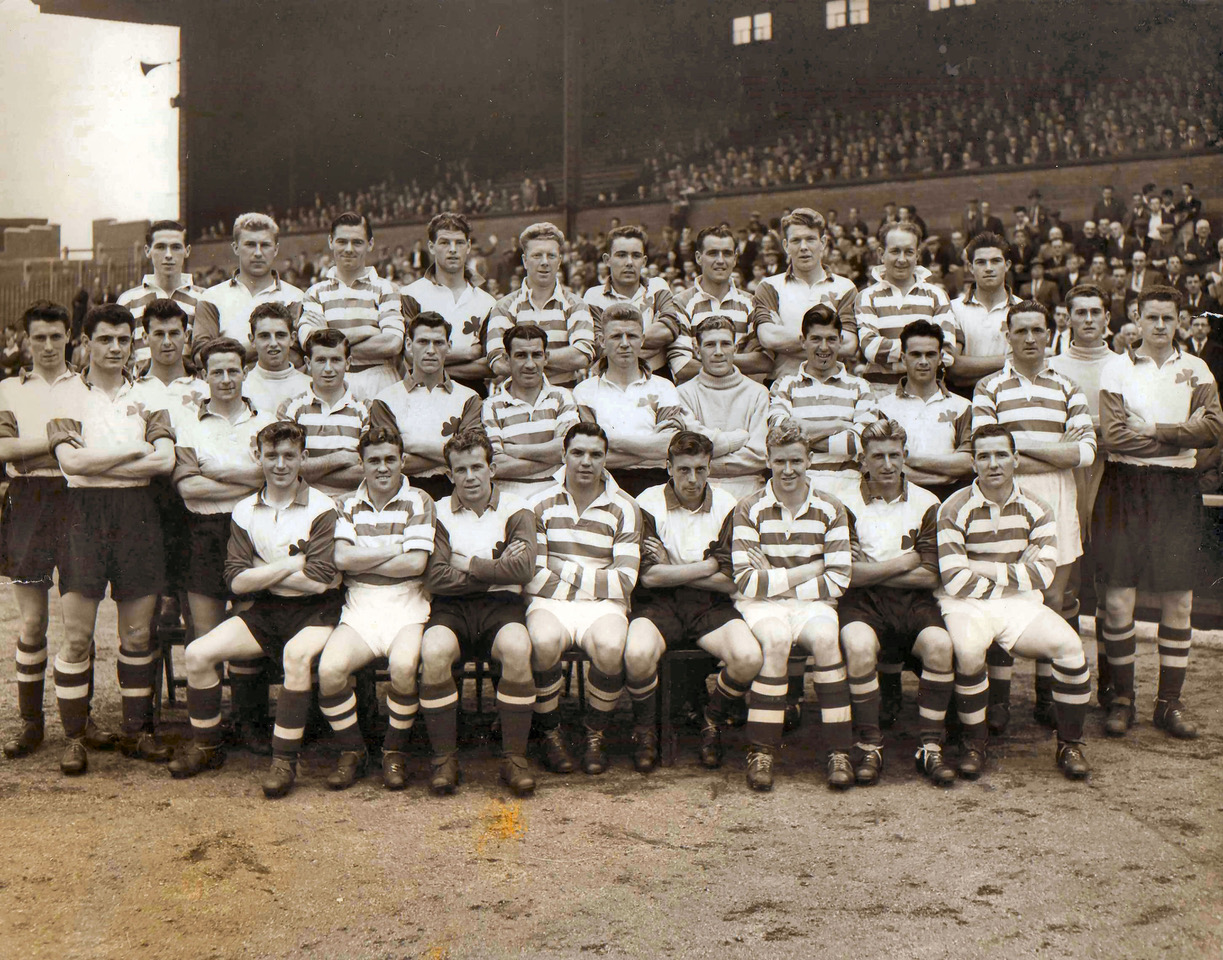
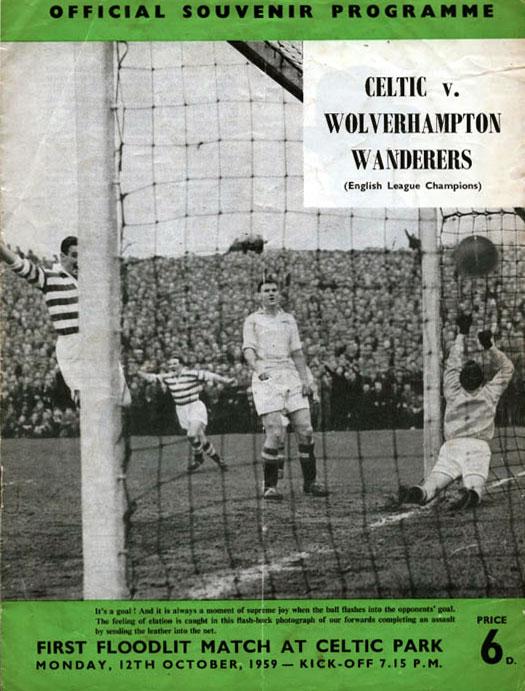
 There would be one last hurrah for Matt in the first team, and perhaps fittingly it would be an historic Celtic occasion. On Monday, 12 October 1959, English champions Wolverhampton Wanderers played against the Hoops to inaugurate the new Celtic Park floodlights, more than 45,000 in the ground to witness the next phase of stadium improvements.
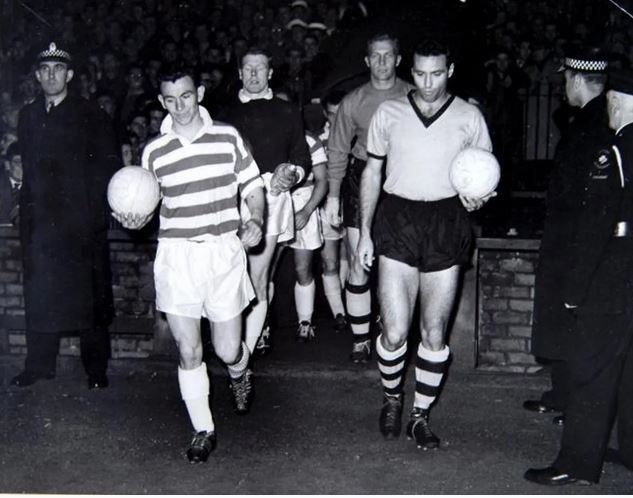
Wolves featured several fringe players due to England’s match in Cardiff five days later whilst Celtic lined up as follows.
John Fallon; Dunky MacKay & Neil Mochan; Eric Smith, Bobby Evans & Bertie Peacock;
Steve Chalmers, Matt McVittie, Ian Lochhead, John Divers & Bertie Auld.
England striker Peter Broadbent had been overlooked by the international selectors and he made a point to them by opening the scoring on 20 minutes. In a match dominated by Wolves, Jimmy Murray sealed their 2-0 victory midway through the second half following a mistake by Dunky MacKay. The Midlands club would also feature in the news as Matt McVittie left Celtic Park to join Bobby Brown’s promotion-chasing St Johnstone on Tuesday, 25 November 1959, Wolves winning the race to sign Kilmarnock’s prolific centre-forward Joe McBride the same day to boost their squad ahead of the forthcoming European Cup tie with Barcelona.
Matt would face his old teammates exactly 12 months later as Celts travelled to Perth to face promoted St Johnstone at Muirton on Saturday, 26 November 1960. Indeed, he would lay on the winning goal for Gardiner with 10 minutes remaining as Saints recovered from the loss of an early Steve Chalmers goal to win 2-1 and move ahead of Celtic in the League table. He would not feature in the return match against the new Scottish Cup-finalists at Celtic Park on Wednesday, 5 April 1961 as a second-half Willie Fernie equaliser saw the sides draw 1-1.
Matt finished the season as the club’s top League goalscorer with eight as Saints finished six points clear of the relegation slots to retain their First Division status for 1961/62. They were then drawn with Celtic, Hibernian and Partick Thistle in a tough League Cup section. Celts would edge a five-goal thriller at Firhill to open their campaign with a win before McVittie came back to haunt his old club again with an outstanding display in Saints 1-0 win at Parkhead four nights later, Wednesday, 16 August 1961. The Glasgow Herald was fulsome in its praise of his contribution.
“McVittie, once of Celtic, passed the ball more intelligently than any of the Celtic forwards, all of whom played much too closely.”
Matt would miss the return game at Muirton Park a fortnight later, having injured his arm in a collision with the post during the weekend match at Easter Road. On a desperate night for Celtic, two first-half goals for the hosts allowed them to complete a double over the Hoops to put themselves on the brink of qualification. Saints would duly win the section then defeat highly rated Motherwell in the two-legged quarter-final. They were actually 2-0 up at half-time and just 45 minutes away from their first major final before losing to Rangers by the odd goal in five after extra-time in the semi-final at Celtic Park on Wednesday, 11 October 1961.
Seven days later, Matt was in the St Johnstone team finally beaten at the fifth attempt since their promotion by Celtic, 3-0 in a League game at Muirton, but he was missing from the side who lost 3-1 in the return game in Glasgow on Saturday, 3 February 1962. Saints final League match of the season will go down in history, albeit for all the wrong reasons from a Perth perspective.
On Saturday, 28 April 1962, they hosted champions-elect Dundee with 27,000 spectators packed into Muirton. A single point would see the Dark Blues win their first-ever Scottish title whilst that outcome would also be enough to secure Saints survival in the top-flight, but with Matt McVittie playing through the middle with strike partner Alex Ferguson both teams went for the win, Dundee duly taking the title with a 3-0 victory.
That would still be enough for St Johnstone assuming St Mirren did not beat Dunfermline Athletic, and the Buddies were trailing at Love Street. But then a Willie Fernie-inspired second-half comeback saw St Mirren win 4-1 to consign St Johnstone to the Second Division on goal average. Matt scored 11 League goals in 65 appearances for Saints from November 1959 before heading south to sign for Cambridge United on Friday, 17 August 1962.
Having featured in countless Glasgow derbies during his spell at Celtic, Matt played for both senior clubs in Cambridge, and on 29 September 1962 he scored for United against City in a Southern League Premier Division local derby in front of 7,000 spectators. The last photo we have of Matt (see below) as a senior footballer is taken before Cambridge United’s home game with Kettering Town on Boxing Day 1962, by which time he was 35 years old.
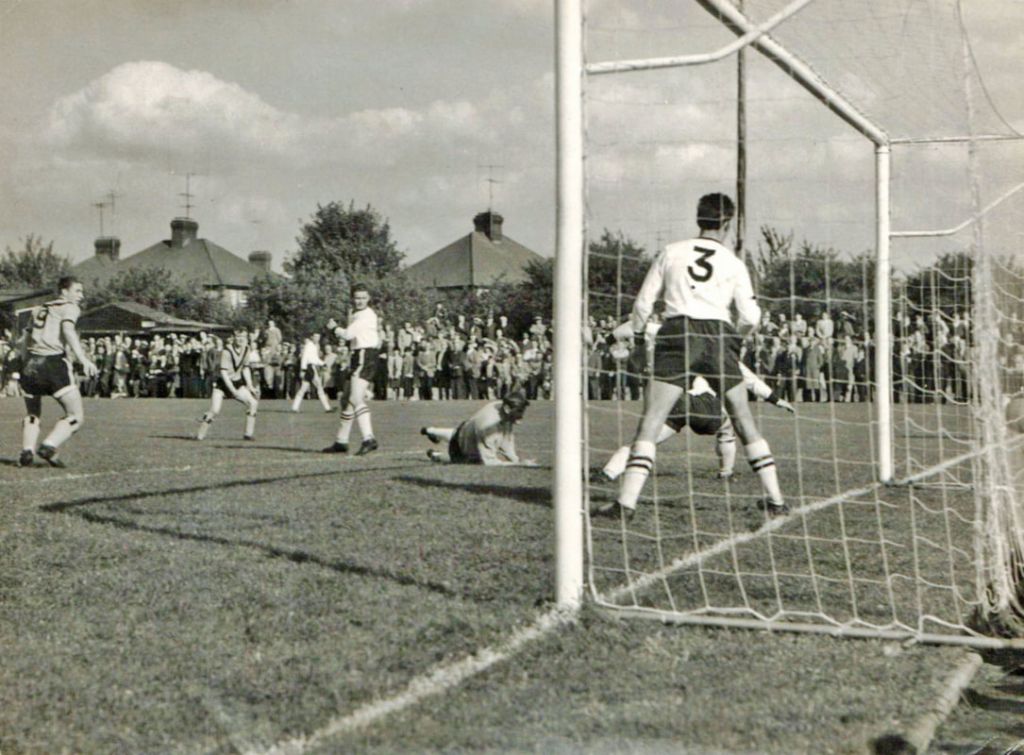
Matt is second from left swearing the diamond jersey of Cambridge United and scoring against rivals City.
He would head north across the River Cam the following year to sign for City, the current Southern League champions.
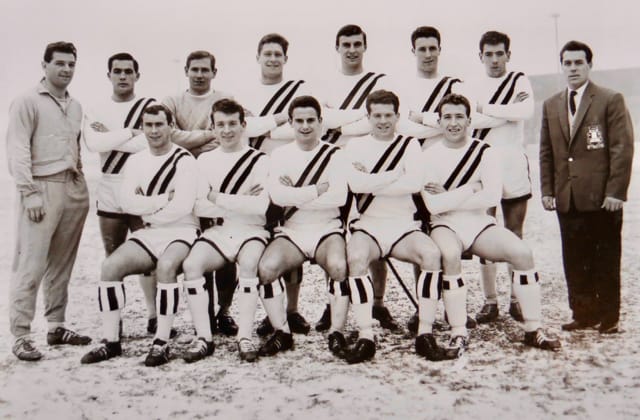
Cambridge United on Boxing Day 1962, when they lost 3-1 at home to Kettering Town in the Southern League Premier Division. Front: second from left Matt McVittie
Peter Goldie on Matt McVittie
Matt McVittie was an outside-right, but also played inside-forward. He was quite small, but very wiry. He played quite a few times in the first team and was still there when I left.
Follow Matt on Twitter @Boola_vogue
PLEASE SUPPORT THE FINE CELTIC WRITING FROM CELTIC HISTORIANS LIKE MATT CORR AND DAVID POTTER BY PURCHASING A BOOK FROM CELTIC STAR BOOKS, CHOOSE FROM A FINE SELECTION BELOW…