He began the next season as manager at Sporting Gijon, a traditional ‘yo-yo club’ who were enjoying a period of success in the top flight, a third-place finish and two Copa finals in the previous three years. Whilst they retained their Liga status during his two-year reign, there was no further tangible progress.
In November 1984, Boskov headed for a new challenge in Italy, to preserve the Serie A status of Ascoli. His side came up just short, relegated to Serie B for season 1985/86 by three points, although he did enjoy success the next season, bringing Ascoli straight back up as champions. This led to the offer which would see his most high-profile period of success, a return to Sampdoria to lead his former club. So, as Irish superstar and future Celtic manager, Liam Brady, was signing for Ascoli from Inter Milan, Vujudin Boskov was checking out, swapping the Adriatic coast for the western seaport of Genoa.
Boskov’s impact on the club was immediate, finishing in sixth place in his first season, as World Cup-winner Maradona’s Napoli won a first-ever Scudetto as part of a domestic double. His Sampdoria side was and would be sprinkled with players who would soon become household names, such as Vialli, Mancini, Lombardo, Pagliuca and Vierchowod. They only missed out on European football that season through an extra-time defeat in the UEFA Cup qualification play-off to an AC Milan team, themselves about to embark on their own ‘Golden Period’. Italy was definitely the football place to be in 1987.
Season two in Genoa saw significant further progress, Sampdoria fourth in Serie A and Coppa d’Italia winners, following their two-leg victory over Torino. This provided entry into the 1988/89 European Cup-Winners’ Cup, a narrow defeat of Sweden’s Norrkoping followed by a 4-2 aggregate triumph over Carl Zeiss Jena. In the Quarter-final, a last-minute away goal by Vialli allowed Sampdoria to qualify at the expense of Dinamo Bucharest, after the sides were locked at 1-1. Boskov’s side would then face the Cup-holders, Belgium’s Mechelen, in the penultimate round, an excellent 3-0 win in the Stadio Luigi Ferraris enabling them to overcome a 2-1 first-leg defeat. The Final in Berne saw Sampdoria take on Cruyff’s Barcelona, Gary Lineker et al. The Italians never recovered from the loss of an early Salinas strike, Rekarte finishing it off in the closing minutes with a second, to claim the trophy for Catalunia.
La Sampa’s domestic season had again been successful, a fifth-place League finish, tucked in behind the traditional giants and Napoli, twinned with the retention of their Coppa, beating Diego and co in the final. This allowed Boskov another bite at the Cup-Winners’ Cup cherry and the opportunity to go one better, in 89/90.
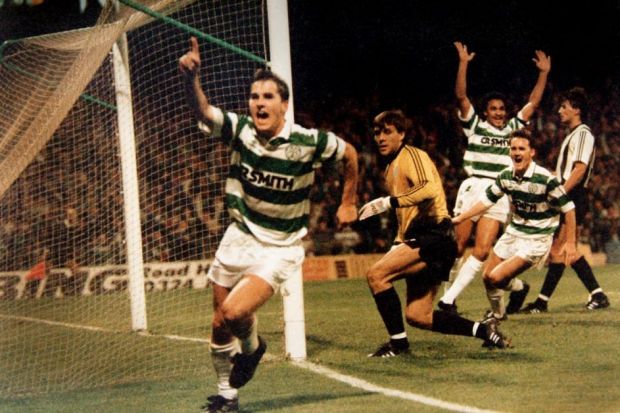
The campaign began in Norway, with home and away wins over Brann Bergen, as Celtic exited on away goals to Boskov’s compatriots, Partizan Belgrade, on a never-to-be-forgotten night at Parkhead, Jackie Dziekanowski scoring four, only to watch as Stefan Skepovic’s dad scored the crucial goal at the death.
An excellent victory over Borussia Dortmund, followed by back-to-back wins against the Swiss side, Grasshopper, saw Sampdoria through to the last four, where George Weah’s Monaco lay in wait. Two vital away goals by Vialli secured a draw in the Principality, Vierchowod and Lombardo sealing a place in the Gothenburg Final, with strikes in the return.
There they would face twice-winners, Anderlecht, the ‘Celtic Da’ theme continued with the presence of a certain Charly Musonda Snr in their ranks. They had knocked out holders, Barcelona, in the early rounds and were confident of a third success. Ninety minutes came and went without a breakthrough in Sweden, before the goal-machine, Vialli, struck twice again in extra-time, securing a first European trophy for Boskov and Sampdoria. With Milan retaining the European Cup and Juventus and Fiorentina contesting the UEFA Cup Final, Italy was flexing its muscles in terms of continental football domination.
There was another Top Five finish for Sampdoria in domestic football that season and whilst they relinquished their Coppa to eventual winners, Juventus, the Gothenburg triumph gave them passage to defend that title in 1990/91. First up was Kaiserlautern, a single-goal defeat in Germany overturned by Mancini and Branca in Genoa.
This was followed by two victories over Olympiacos, before the Euro run was brought to a shuddering halt in the Quarter-final by Legia Warsaw, conquerors of Aberdeen in the previous round, Vialli’s late equaliser in the return unable to prevent a 3-2 aggregate defeat.
That European disappointment was tempered by a wonderful Serie A campaign, Sampdoria finishing five points clear of European Cup-holders, AC Milan, to win a first-ever Scudetto. Boskov would then have a crack at winning the Big Cup with a third side. It had been some time since the heady days of 1966/67 with Vojvodina Novi Sad, then with Real Madrid, a decade or so later.
So, for the last year of the European Cup before the rebranding as UEFA Champions League, Boskov’s Sampdoria faced our old friends Rosenborg, themselves at the start of what would be an incredible run of thirteen successive domestic titles. The Italians were on a different level however, winning 7-1.