Two nights before the Cup final, Peter recalls that Parkhead trainer Alex Dowdells advised him that he was in the team for Hampden, and indeed his name was duly printed in the match programme as Celtic’s right-half. Sadly, there was to be huge disappointment for the 21-year-old Goldie. When Jimmy McGrory read out the team as the players enjoyed a pre-match lunch in a Glasgow restaurant, Eric Smith would be in there rather than Peter. No explanations were ever forthcoming.
One can only imagine the crushing disappointment as he sat in the stand with his family to watch his teammates go down 3-1 in front of 133,000 spectators, although a gentleman to the end, he says he would have chosen Smith ahead of himself in that position! A bizarre team selection saw left-back Frank Meechan picked at right-back, whilst the normal occupant of that slot, Mike Haughney, was listed at inside-right. It was yet another sign of the haphazard management style of the era, which would cost Celtic a realistic chance of success.
As an aside, the Hearts captain that day was Freddie Glidden. He would be the last surviving member of their 1956 cup-winning team until his death on New Year’s Day 2019, aged 91.
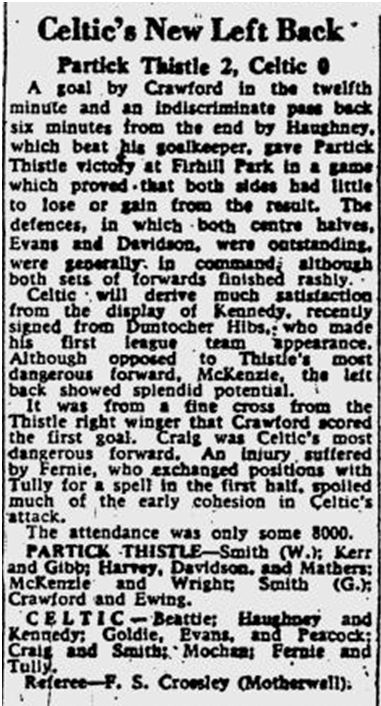
To add insult to injury, Celtic’s visit to Firhill on League duty two nights after the Scottish Cup Final saw Mike Haughney restored to right-back, Eric Smith to inside-right and Peter Goldie at right-half! With Sean Fallon and Frank Meechan both hurt at Hampden, former Duntocher Hibs defender Jim Kennedy would come in for a debut at left-back, again to face Johnny MacKenzie and again with much credit, as had Peter Goldie in his debut five months earlier. The pantomime season would continue, though, as Haughney sent a passback beyond his own keeper Dick Beattie for Thistle’s second goal, six minutes from time, in a 2-0 defeat. This was Peter Goldie’s first defeat as a Celtic player, in his ninth competitive game in the Hoops.
There would be two more before the week was out, as a League campaign which had earlier promised so much was concluded with a whimper. On Wednesday, 25 April 1956, Hibernian ensured they would finish above Celtic in the table by winning 3-0 at Parkhead, ‘Last-minute Lawrie’ Reilly becoming one of the select players to net a hat-trick for a visiting team at the old ground. And three days later, a Queen of the South side fresh from a 9-1 mauling at the hands of Partick Thistle survived the loss of a first-minute Jimmy Walsh goal to bounce back with three of their own, beaten cup-finalists Celtic slumping to a fourth successive defeat.
Peter would be displaced at right-half by Alec Boden for the final match of the season, Falkirk the visitors on Monday, 30 April 1956. A ‘crowd’ quoted as 2,399 would see Willie Fernie score the only goal of the game just before the break. Celts would thus end the season in fifth place in the table, having led at the halfway stage, whilst a third successive Scottish Cup final had yielded a second consecutive defeat. It was not really difficult to understand the reasons why.
The close-season saw Peter’s former Duntocher Hibs colleague Jimmy ‘Peam’ Docherty make his loan spell at Alloa Athletic a permanent arrangement, whilst his old hero, John ‘Hooky’ McPhail, retired having last played for the first team the previous September due to injury. McPhail’s younger brother Billy had impressed the Celtic management whilst with Clyde and he would sign up to continue the family tradition. Indeed, Billy would do that and then some.
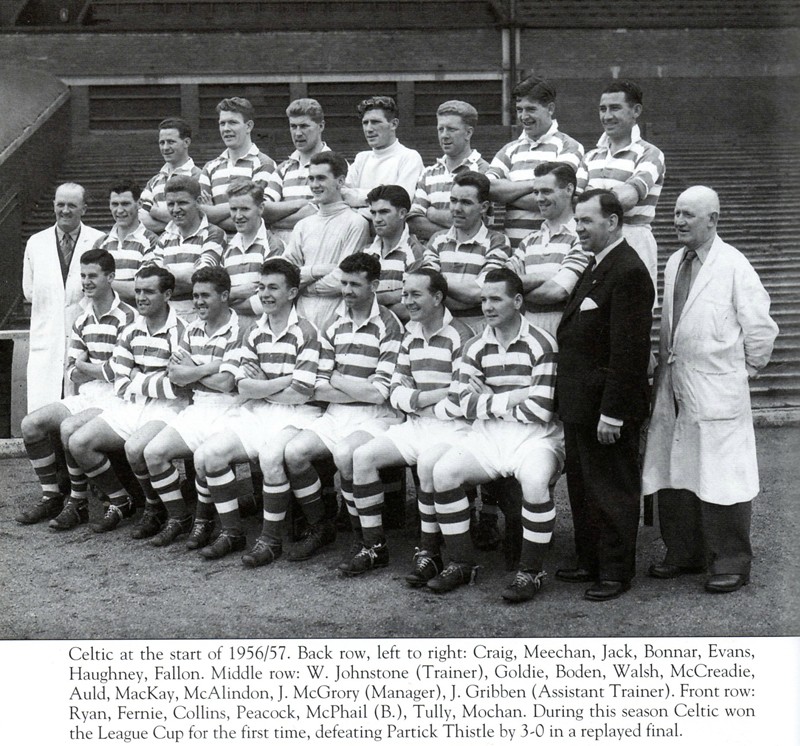
Despite making 11 competitive appearances in his debut season 1955/56, the next campaign would be a frustrating one for Peter Goldie, spent almost exclusively in the reserves. Celtic’s Jekyll & Hyde performances would continue with vastly contrasting League and Cup form. The campaign kicked off with a ridiculously tough League Cup section, which included three-time winners East Fife, holders Aberdeen and perennial group opponents and League champions Rangers. The first decade of the new competition had seen Celts manage to qualify from this stage on only two occasions, beaten in the quarter-final by eventual winners Motherwell in 1950, then in the last four by the Govan club the following season. Thus, there was no real expectation of progress from those with Celtic in their heart when this draw was announced.
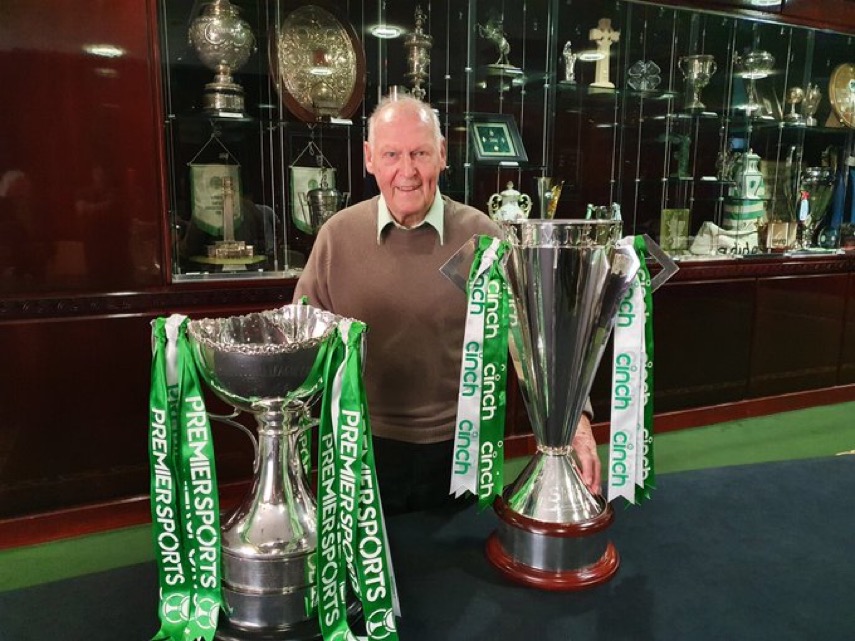
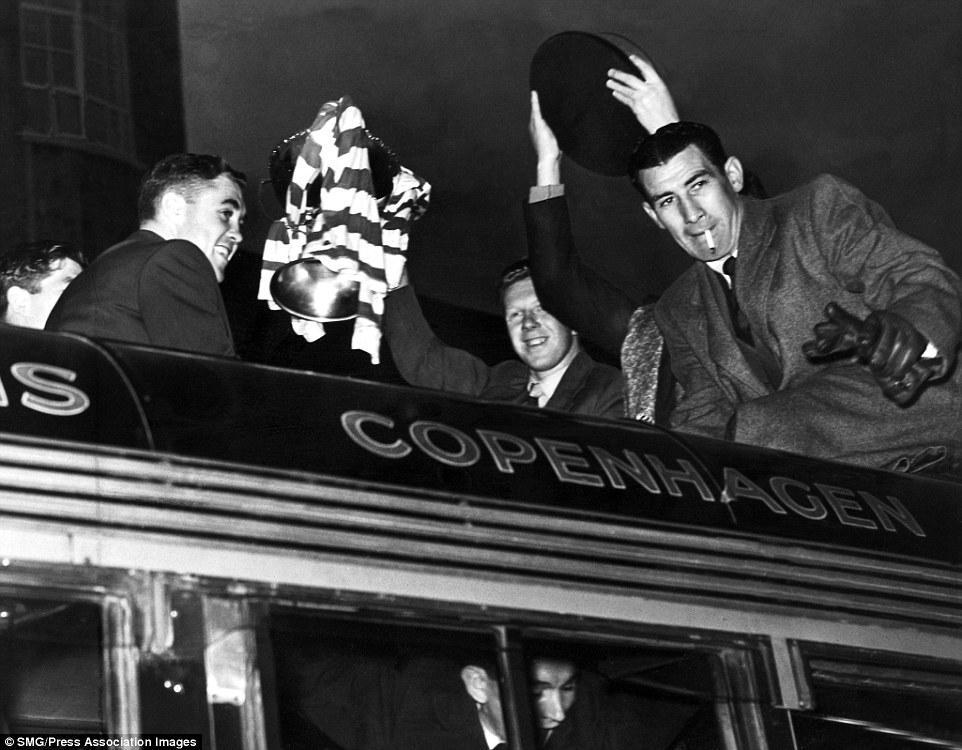
But Celtic are Celtic for a reason. The Hoops would storm through the section, dropping only a single point at Ibrox, before eliminating Dunfermline Athletic after a 6-0 victory at Parkhead left the second leg of their quarter-final a dead rubber. The semi-final with Clyde at Hampden was won with a Billy McPhail double against the club he had left just months earlier. He would repeat that scoring feat in the replayed final against Davie Meiklejohn’s Partick Thistle, as the Hoops finally got their hands on the trophy at the 11th attempt with a 3-0 win after a goalless draw. Billy and the Bhoys would be back for more the next season, with devastating results.
The League had been a different matter entirely, with three defeats adding to a clutch of uninspiring draws before things picked up at Christmas, a 7-3 win at Broomfield including four goals for winger John Higgins being a highlight. Inconsistency of selection and availability of personnel were again key factors, star man Bobby Collins breaking an ankle whilst there was still no sign of a return for club skipper Jock Stein who had played just one game since January.
CONTINUED ON NEXT PAGE…