On Saturday, 2 December 1911, the 12,000 supporters inside Parkhead caught their first glimpse of a diminutive inside-forward from Donegal by the name of Patsy Gallacher, in a 3-1 win over St Mirren. He would score his first goal for the club the following week at Hampden, with Jimmy Quinn grabbing a double in a 4-1 victory over Queen’s Park.
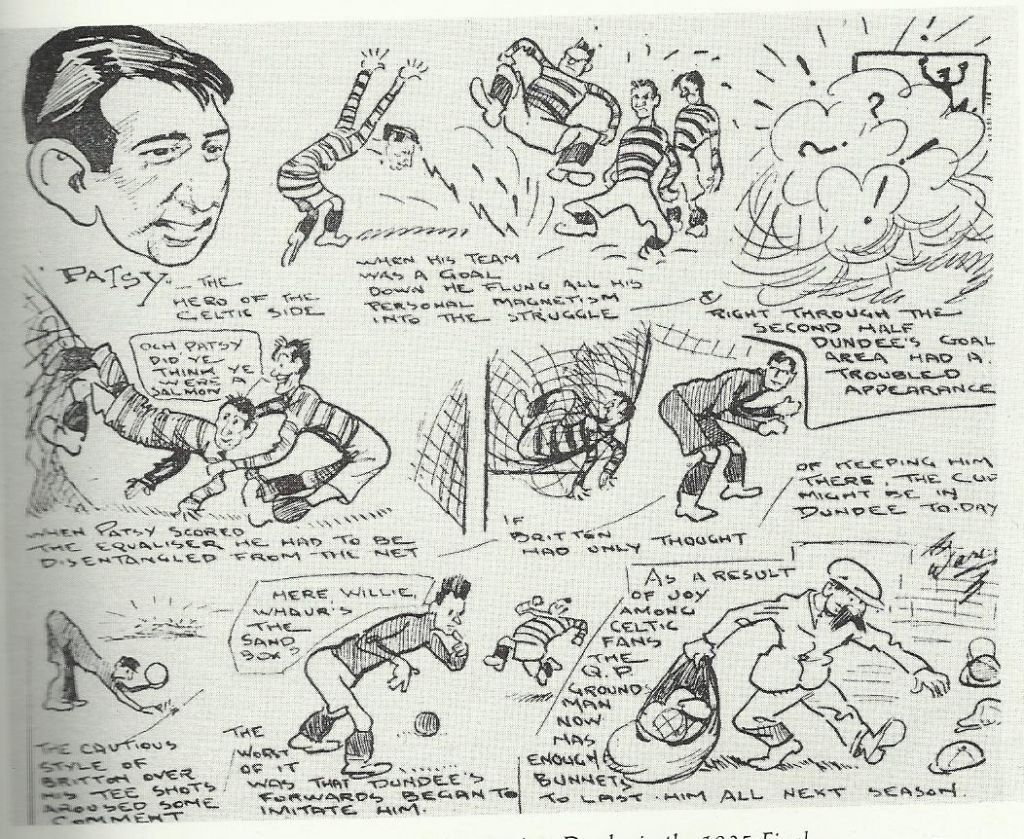
The little genius with the huge talent would go on to thrill a generation of Hoops fans over the next fifteen seasons, by which time he had amassed almost 500 games and scored an incredible 200 goals for Celtic. He would be the lynchpin in the Hoops side which would win five championships in six seasons, including four-in-a-row between 1914 and 1917, adding another medal to his collection in 1922. And although the Scottish Cup was suspended between 1914 and 1919 due to the war, he would manage four successes in that competition also, scoring in the final victories of 1912 and 1925, his goal in the latter being that iconic ‘somersault’ goal against Dundee.
Against that background, things were happening closer to home for John Connor in a football sense. In 1920, the local priest at St Roch’s had entered a side representing the parish in a local tournament, which they subsequently won. This led to the formation of St Roch’s as a junior club, the new team winning the Second Division championship at the first time of asking, with a side featuring a number of lads from the parish Boys Guild, including a lean 16-year-old forward called James Edward McGrory.
If that debut season was impressive then the following campaign, 1921/22, would be the stuff of dreams. The newly-promoted Garngad outfit would pip St Anthony’s to the First Division title, whilst reaching the final of junior football’s showpiece competition, the Scottish Junior Cup. Their opponents at Firhill in front of an amazing 28,000 crowd would be the experienced Kilwinning Rangers. Con Hilley gave the ‘Candy Roch’ the lead before the half-hour.
Con was Jimmy’s neighbour growing up, his mum and dad acting as godparents to the young McGrory. His older brother, Hugh, had signed for Celtic in May 1921 and would later play at Parkhead with Jimmy McGrory. Hugh is featured in a previous part of this series, his sad departure the trigger for the introduction of William Peter McGonagle as a Celt.
Back at Firhill, the Ayrshire side had equalised early in the second half before young McGrory headed the winner with ten minutes remaining, to secure an unbelievable double. There was a twist in the tale, however, as Kilwinning Rangers registered a protest at the eligibility of St Roch’s full back, Hugh Millar, who had recently been signed from Bellshill Athletic.
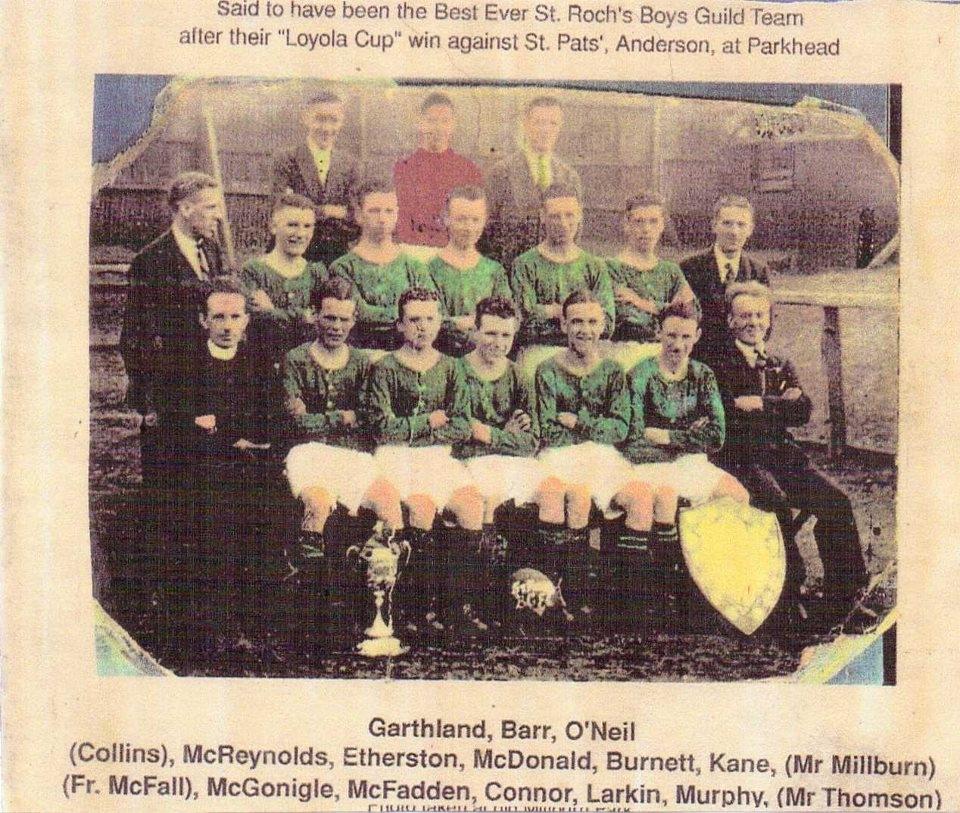
The appeal was upheld by the SJFA and a replayed final ordered at the same venue on Tuesday, 6 June 1922. In the interim, the street party celebrating the initial success had gone ahead. In his autobiography, ‘A Lifetime in Paradise’, Jimmy McGrory tells how the St Roch’s parish priest did not want to disappoint the locals who had thronged the streets of the Garngad. He handed the Inter-Parish trophy, recently won by the Boys Guild team, to the players to parade from the bus. No-one caught on.
The real celebration was merely delayed.
Over 32,000 crammed into Firhill for the rematch, with McGrory on the scoresheet again, netting the equaliser after Kilwinning had taken an early lead. Johnny Rollo would settle the destination of the trophy with a winner for St Roch’s, and this time there would be no dispute. With the Double secured, the Garngad side then met another Rangers, the Cambuslang version this time, in the final of the Glasgow Charity Cup, four days later at Cathkin Park, home of Third Lanark.
There would be no Treble as St Roch’s went down to a solitary goal, however, there would be a silver lining for the 17-year-old McGrory. Waiting in the dressing-room afterwards was the Celtic manager, Willie Maley, and Jimmy would be a signed Hoops player before he left the ground that evening. The rest is history, as they say. Curiously, for all his later success with Celtic, the League and Cup Double of 1922 with St Roch’s would be the only time Jimmy would achieve that feat in his entire career.
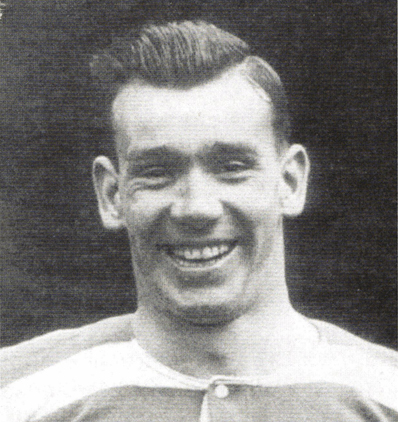
Jimmy McGrory
One can only imagine how much inspiration the early success of St Roch’s would provide to the young footballers of the Garngad, amongst them 10-year-old John Connor, seven years McGrory’s junior. By this time, John would be looking to follow in the great man’s footsteps by turning out for the Boys Guild team, and he would do.
There is a wonderful photo in the Celtic Wiki (see below), which features John in a side labelled ‘the best-ever St Roch’s Boys Guild team’. High praise indeed, considering some of the men who have worn that shirt. Jimmy McGrory had played wide throughout his early football career, due to the presence of Peter McGonagle’s cousin at centre-forward. There is another McGonagle in the photo with John, so perhaps he was also a relation. However, John is up front and centre with the ball between his feet, usually a sign that he was the regular centre-forward, team captain or both. At some point in time, John will become known as Jack, and most career profiles refer to him accordingly.