
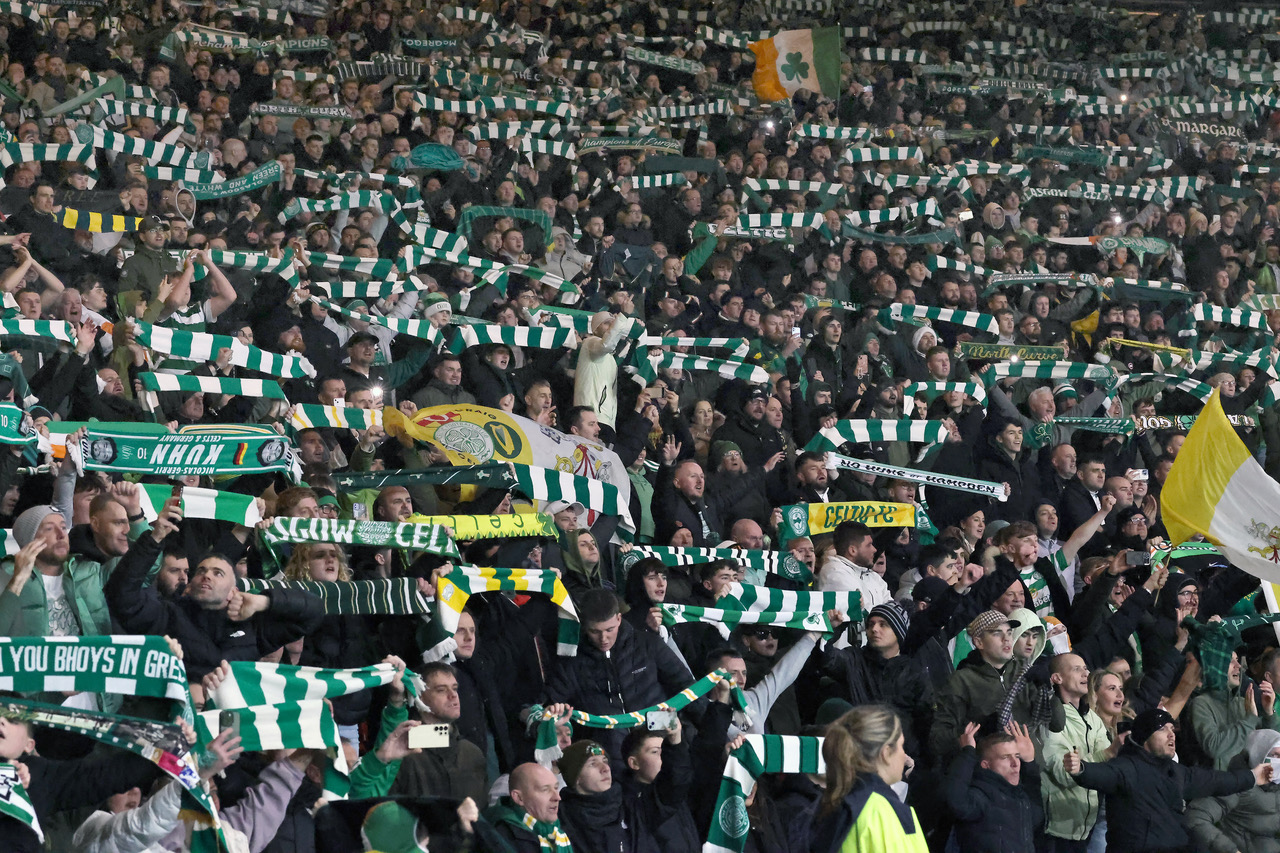
Celtic has long been a dominant force in Scottish football, boasting 55 league titles to its name…
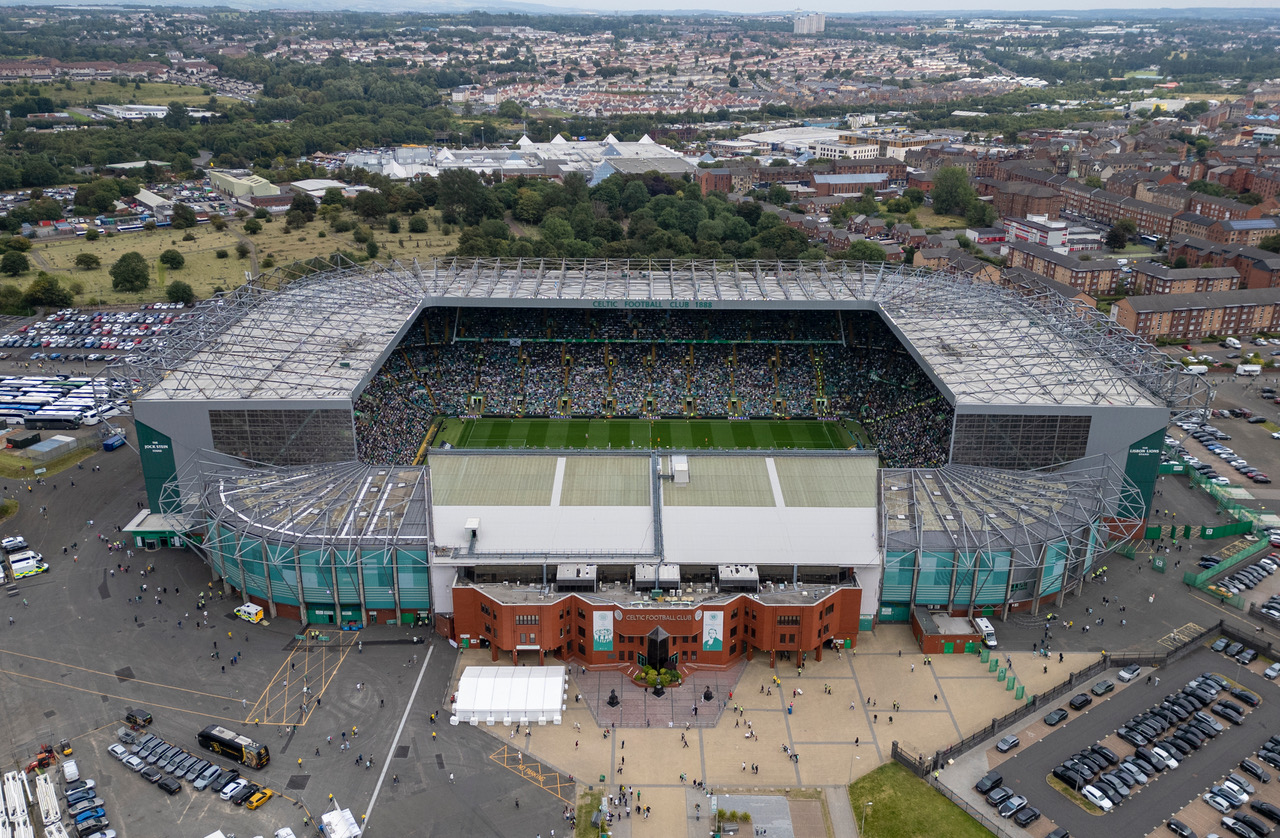
Celtic Park. Celtic v Livingston, 23 August 2025. Photo Vagelis Georgariou
However, the Celtic impact spreads far wider than the SPFL remit, reaching into supporter culture and influencing policy debates in the UK and beyond.
The growing presence of the club over the years has affected how Celtic arranges its cross-border networks, funding, as well as the overall football atmosphere in the country.
Consistent domestic success has also meant that Celtic consistently competes in UEFA club competitions every year, which boosts the club’s revenues and contributes to the national coefficient for other Scottish clubs in the process. Four teams from the SPFL are eligible for UEFA qualification spots at the end of the season, and Celtic’s contribution towards that has been important over the years.
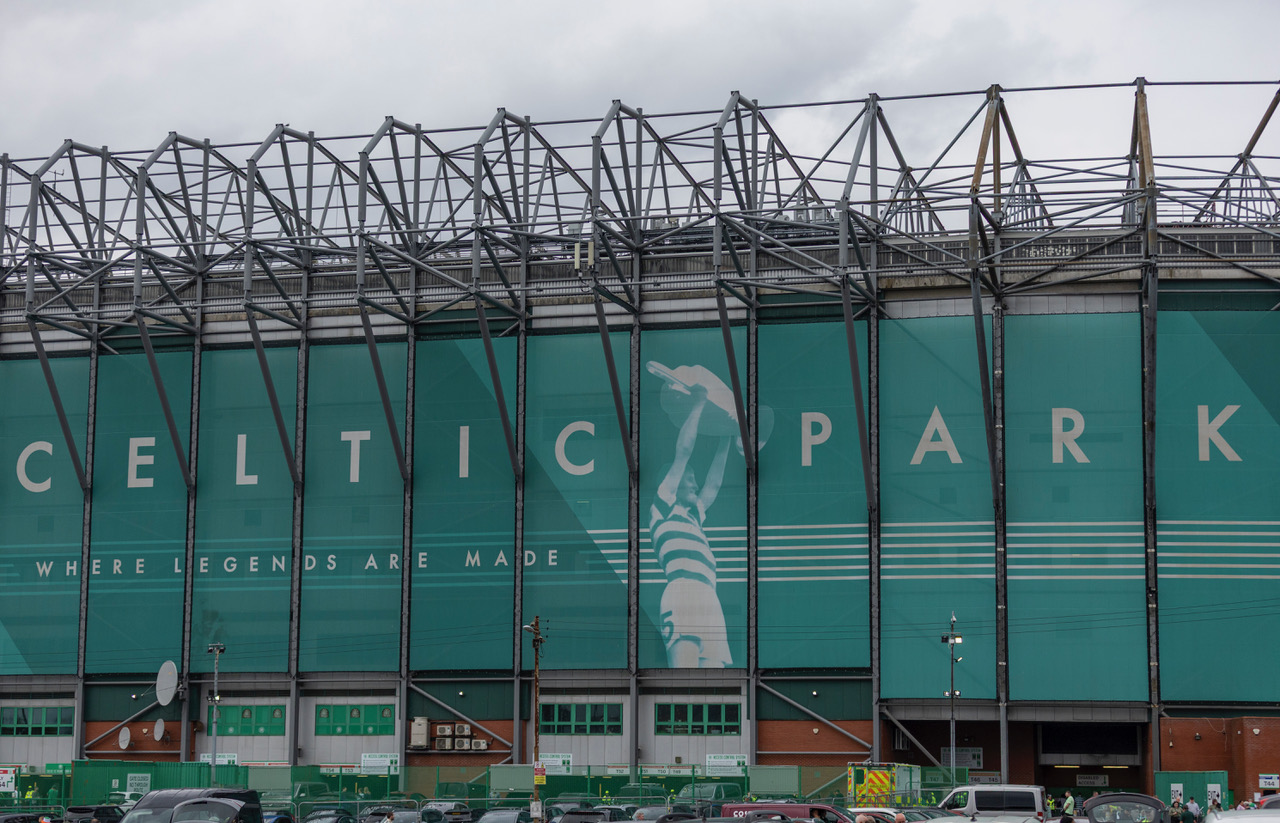
Celtic Park. Celtic v Livingston, 23 August 2025. Photo Vagelis Georgariou
The club’s dominance and track record of upsets on the major stage also draws a lot of attention from punters. New online bookmakers often compete for the best odds on underdogs and dark horses like Celtic to attract supporters to their platforms.
Celtic FC presents a fascinating case study of resilience, prudential financial planning, and an unrivalled commitment to the crest and colours of the club and the communities of supporters built around it.
Financial Ripple Effects and Dominance in Scotland
For more than a decade, Celtic has been a regular participant in the UEFA Champions League and the UEFA Europa League, which has sometimes strengthened the club’s coefficient in the UEFA standings, while bolstering finances. Clubs now receive a windfall of over £16 million simply for qualifying for the League Phase, which is a substantial amount for Celtic. Every win will also earn an additional £1.75 million to the total, while a draw nets £600,000.
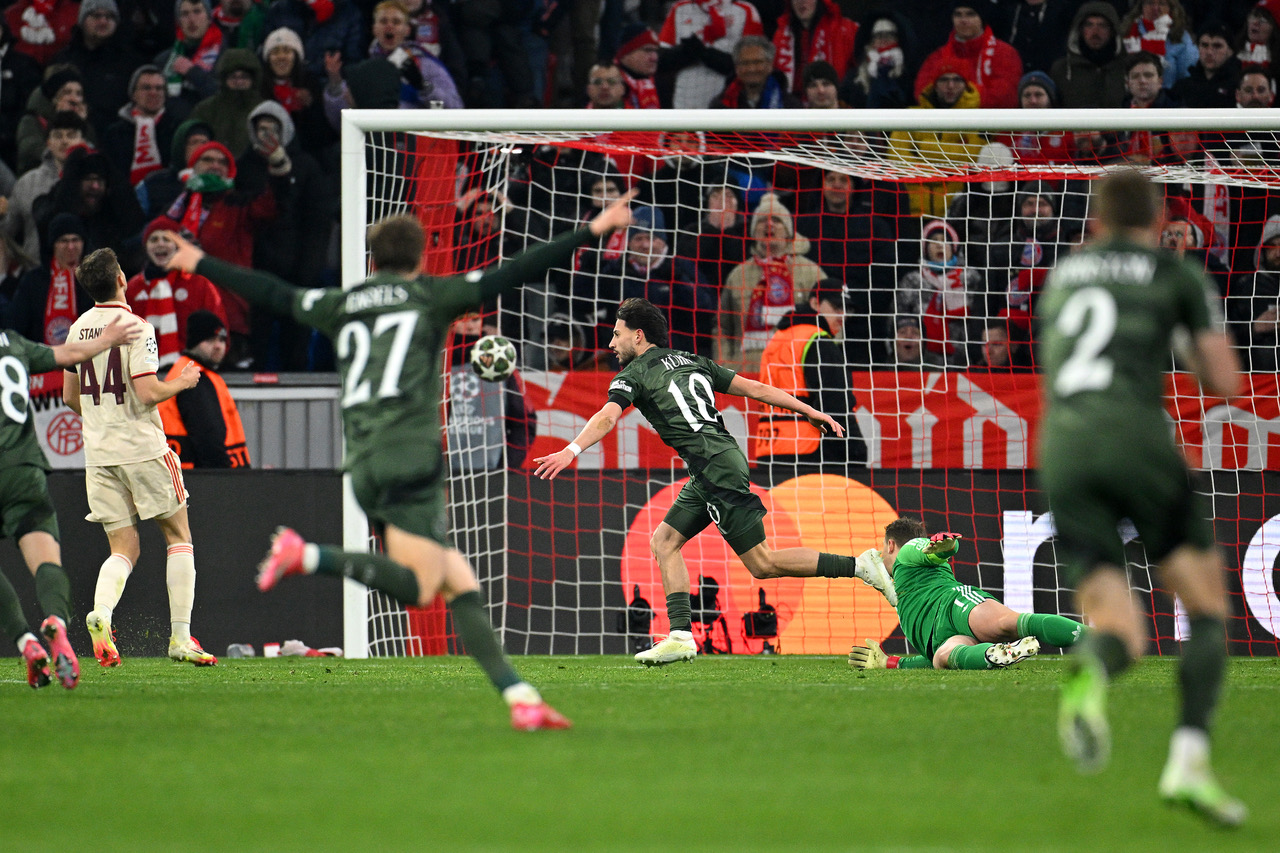
Nicolas Kuhn scores during the UEFA Champions League 2024/25 League Knockout Play-off second leg match between FC Bayern München and Celtic FC at Allianz Arena on February 18, 2025 in Munich, Germany. (Photo by Matthias Hangst/Getty Images)
This means that even a somewhat successful Champions League campaign can return the club at least £20 million in reward, which ensures Celtic’s financial viability and supremacy consistently in the SPFL. It is also worth noting that these financial windfalls do not only enrich Celtic FC, as UEFA solidarity payments are also distributed amongst other Scottish clubs.
Safe Standing and Fan Culture
Celtic is much more than a football club for its supporters – it is an institution and a symbol of shared cultural heritage and values, with a rich Irish-Scottish heritage and proud Catholic roots.
The Green Brigade is an outspoken group of passionate supporters who have shaped how football fans interact with their clubs and protect their shared identity in and out of the stadium.
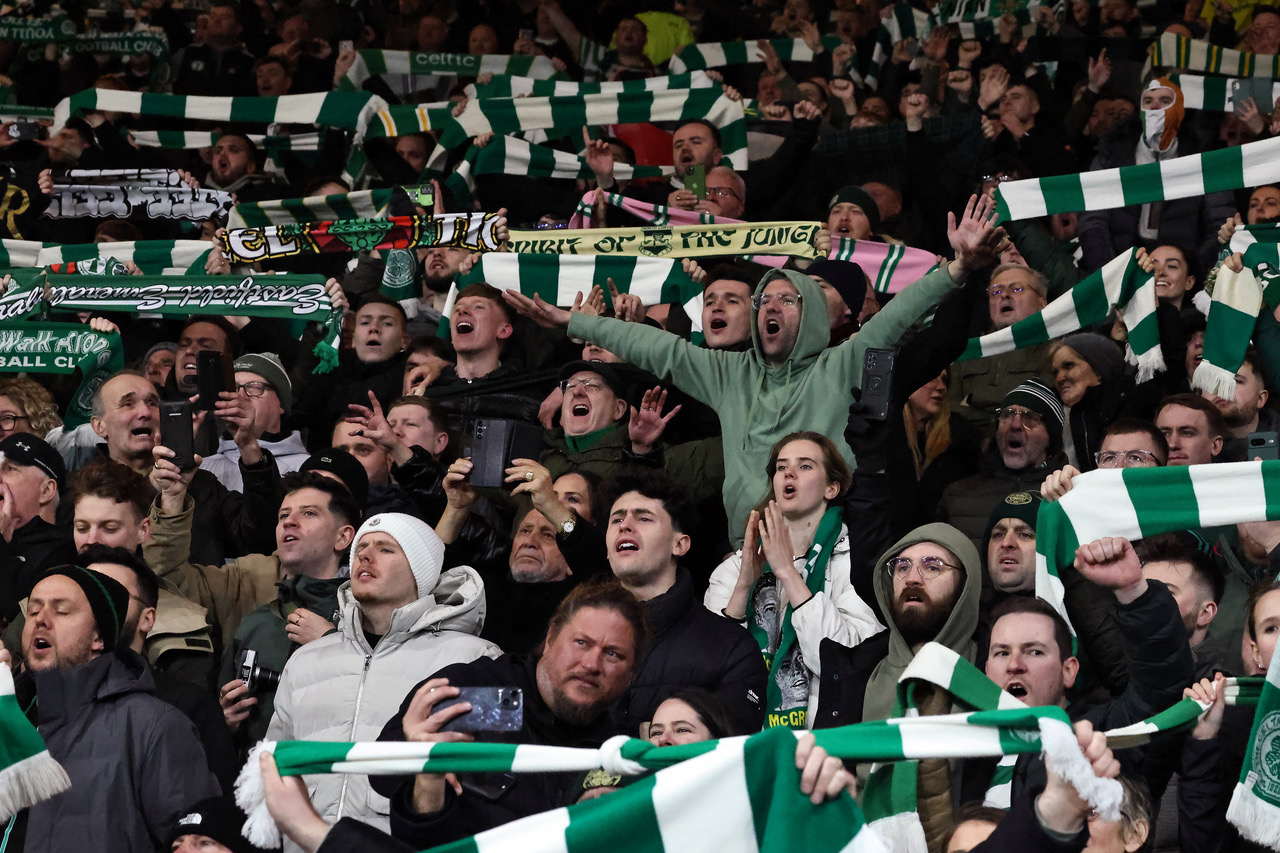
Celtic supporters during the Premier Sports Cup Final victory over theRangers at Hampden on 15 December 2024. Photo AJ for The Celtic Star
The activism and shared beliefs of Celtic supporters make it one of the most tightly knit clubs in world football, with die-hard supporters united by much more than football, with the sport serving as a unifying force and outlet for the community’s daily struggles, milestones, and Celtic was also the pioneer of safe-standing sections at Celtic Park, which drew interest from English and Welsh football clubs looking to modernise their stadiums.
The atmosphere at Celtic Park is renowned for its passion, loud chants, and a devotion to the club that is becoming exceedingly rare in modern football. This has also built up a reputation for away games against Celtic being some of the most challenging fixtures, even for some of Europe’s elite clubs. The Celtic Park atmosphere and energy have been a source of pride for multiple generations of Celtic supporters, and the club has set an example of how fans can energise their players to push harder and fight for the badge on every occasion.
Celtic’s Cross-Border Reach
The financial discrepancies between major European clubs and their relatively modest counterparts have been growing in recent years, which has made way for a new phenomenon of club specialisation.

Callum Osmand signs for Celtic. Photo Celtic FC
Celtic often recruits lesser-known young talent from overseas, as well as academy graduates untested in the English Premier League, to develop them and sell them on several seasons down the line at considerable profits. Sell-on clauses and other contract agreements allow Celtic to not only nurture talent but also to financially benefit from their continuing success in the future.
Long-standing supporters know about the Japanese ties of the club, bringing players like club legend Shunsuke Nakamura to Celtic Park, as well as Daizen Maeda, Reo Hatate, Hayato Inamura, and Shin Yamada, who all don the green and white Hoops kit.
Such international reach allows Celtic to tap into undiscovered talent at bargain prices, which strengthens the reputation of the club as an attractive destination for young footballers to kickstart their careers in Europe, feature and impress in UEFA club competitions, and build long-term support systems and relationships with players and managers alike.
Strategic Friendlies and Cross-League Relationships
An important part of Celtic’s international strategy is the thoughtful selection of friendly matches with international opposition.
During international and pre-season windows, Celtic often plays friendly fixtures with some of Europe’s elite clubs, such as Barcelona, Real Madrid, Bayern Munich, AC Milan, etc.
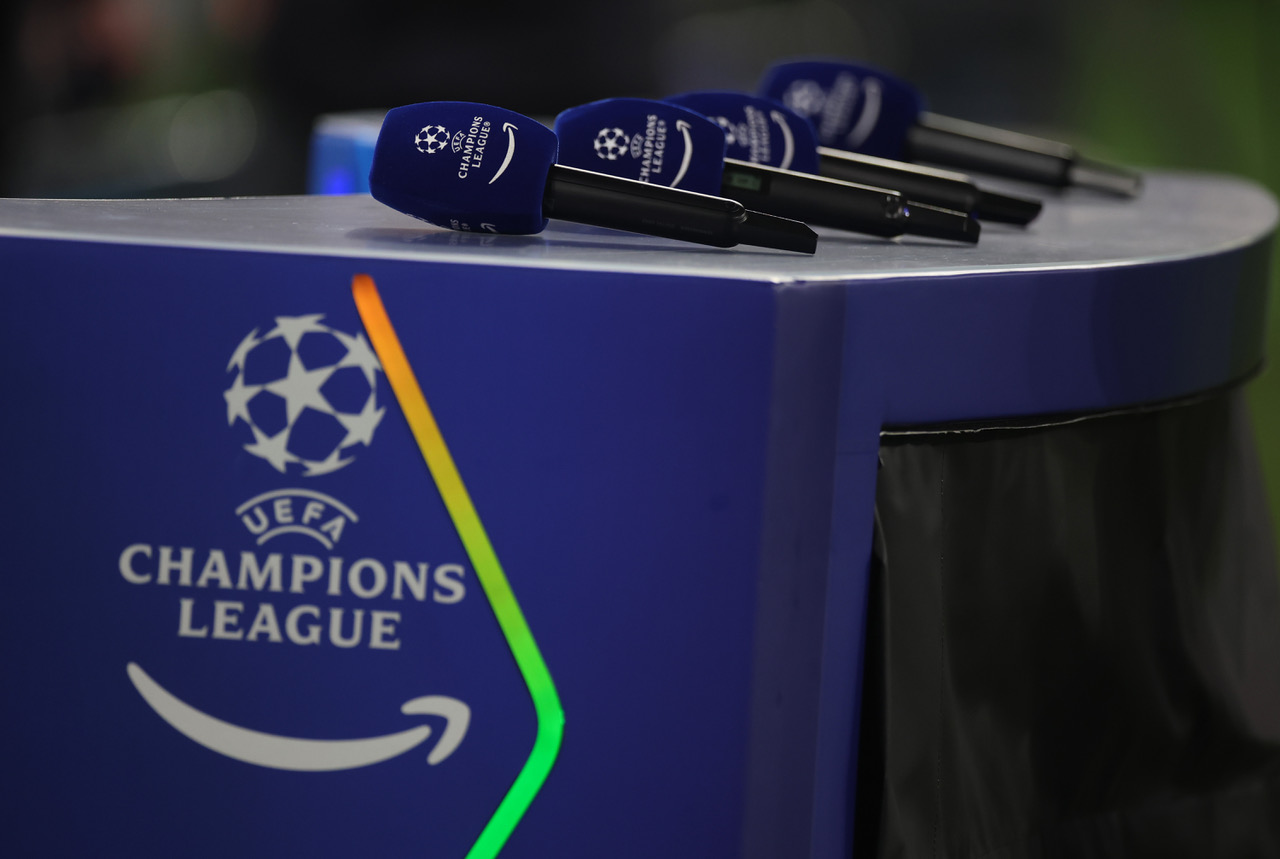
UEFA Champions League branded microphones are seen on a desk prior to the UEFA Champions League 2024/25 League Knockout Play-off second leg match between FC Bayern München and Celtic FC at on February 18, 2025 in Munich, Germany. (Photo by Alex Grimm/Getty Images)
This serves as both a litmus test for the club’s abilities on the pitch, as well as a huge commercial opportunity to fill Celtic Park with supporters, something that is challenging to do for any club during friendlies. By doing so, Celtic also allows huge clubs to scout their players more closely to boost the odds of a lucrative transfer taking place down the line.
The commitment towards uncompromising competition on the pitch, coupled with savvy business dealings off it, creates a combined success story of a club that routinely punches above its weight in the UEFA competitions, while maintaining financial solvency and withstanding the often predatory transfer policies of larger clubs splashing hundreds of millions on individual player purchases.
Conclusion
Celtic FC has gradually become a model club for those looking to develop strategies that allow not only survival, but prosperity under financial constraints in the face of modern footballing monoliths.

Daizen Maeda with the Premier Sports Cup after Celtic’s victory over theRangers on 15 December 2024 at Hampden Park. Photo Kenny Ramsay
The club has carved out a path that allows it to maintain its dominance in the SPFL, while consistently competing against Europe’s elite, all the while managing its finances well enough to sustain the club through some of its most challenging periods.
A rich history, a passionate supporter base, and a shared culture and resilience are all characteristics of the Celtic Football Club and the crucial factors that have sustained the club for over 137 years.






What a puff piece read that was, straight from Lawwells back pocket.
That plus all the in article ad links is starting to put me off this site.
What the hell was that? Has someone from the Lawwell camp hacked the sight?
Long story Jamie…