Very occasionally, as a researcher you stumble across a real nugget. A proper find. Something that makes all the hours invested worthwhile. Yesterday, I had one such moment, well several of them actually…
Last week, we published the story of John Ferguson, a Dalmuir-born defender who joined Celtic in the summer of 1928, just after winning the Scottish Junior Cup with Maryhill Hibs. I had unearthed some basic information on John as part of my research for the Celtic in the Thirties volumes last year. In newspaper reports and club handbooks he was listed as J. A. Ferguson. Turns out that was incorrect, and he was actually John Edward Ferguson.
The link to that article is here…
John took part in the annual pre-season public trial at Celtic Park on Wednesday, 7 August 1929, photographed beforehand alongside Hoops legends such as Jimmy McGrory, captain Jimmy McStay and former Maryhill Hibernian colleague Peter Scarff. Sadly, an injury sustained during that match cost him his place in the opening League game of the season a few days later against Hearts.
That was a historic occasion, as the new (and current) main stand was opened at Celtic Park and the club produced its first-ever match programme. Indeed, John’s name was printed in the teamsheet within the programme, at right-back in front of John Thomson, but it would be a young Chic Geatons who stepped in and seized his opportunity.
As Jimmy McStay’s deputy and with Irishman Willie Cook claiming the right-back berth on his arrival, John’s only competitive match for Celtic was the Glasgow Charity Cup semi-final against Clyde in May 1930, when he replaced McStay in central defence.
The following autumn, a planned loan move to Belfast Celtic was cancelled, once again because of injury, with John remaining in Glasgow. With no evidence of him playing that season and reports the following July that he was being watched at Celtic by a club from the Irish Free State, I had assumed that John may never have pulled on the Belfast Hoops despite agreeing to join them.
HOWEVER…
I had originally got involved in this research in response to a general request for help from John’s granddaughter on FaceBook. When I sent her my findings, she responded with a copy of a letter written by John’s dad to his son in November 1931. It referred to ‘football in Ireland’ being challenging but that he was pleased to hear that ‘John had scored the second goal.’
It just didn’t sit right that we didn’t have that information.
So time to have a look at the season AFTER the reports that John had signed for Belfast Celtic.
Through a mutual friend I am put in touch with Marty Flynn from the Belfast Celtic Society. I send Marty the article and ask him if he has any information on a player called John Ferguson playing for the Belfast Hoops in 1931/32. Marty responds quickly by saying that according to his records, two players named Ferguson made their Belfast Celtic debuts in October 1931, one with no Christian name listed at the start of the month and another at the end of October with the initial ‘G’ – “so I assume it’s the former you’re after.”
Great stuff, Marty. We have a hook.
A search of the Irish newspaper archives for that period turns up a John Ferguson signing for the club from Celtic on Thursday, 1 October 1931. This from the Derry Journal the next day.
“Belfast Celtic have secured John Ferguson, the Glasgow Celtic reserve centre-half, whom they signed yesterday. He will play against Derry City tomorrow, when the team will be otherwise unchanged from that which defeated Glentoran last week by four clear goals.”
And Saturday’s Derry Sentinel confirmed the signing, whilst adding that John had just finished a month’s trial with Hamilton Academical.
John did indeed make his debut in the 1-0 defeat at the Brandywell, replacing Inch at left-half and hitting the crossbar with a free-kick as Belfast Celtic lost their unbeaten record to the League leaders. There was a familiar face on the left wing that day, Con Tierney having also swapped Glasgow Hoops for the Belfast variety when he commenced a loan spell on Friday, 4 September, the day before the fatal incident at Ibrox which cost John Thomson his life.
The Northern Whig on the Monday reported that “Ferguson, late of Glasgow Celtic, made his first appearance for Belfast Celtic at left half and gave a promising display.”
For John’s home debut in the Irish League, a goalless draw with Portadown seven days later, he featured at centre-half. The Belfast Newsletter reported that “The newcomer, Ferguson, at centre-half, was the best of the home middle line.”
Following a break for the international match between Ireland and England at Windsor Park, Belfast on Saturday, 17 October 1931, I believe John played in his first city derby seven days later, a 2-0 League win over Cliftonville at Solitude. I say ‘believe’ as he is listed in the media as ‘G. Ferguson,’ and the Belfast Celtic Society records show him as a different player as a result.
The reason his initial was used was that this match marked the return of legendary full-back Bob Ferguson to the team, and I suspect the ‘J’ has been mis-recorded as ‘G.’ The reason I am convinced this is the case is that letter dated 1 November 1931, mentioned earlier, in which John’s father, speaking about John’s football career ‘in Ireland,’ notes he was pleased to hear that John had scored the second goal. On Saturday, 24 October 1931, seven days prior to him sending that letter to his son from his home in Clydebank, Ferguson scored Belfast Celtic’s second goal in that 2-0 win at Cliftonville, ‘putting into the net from McCullough’s cross,’ although the Northern Whig credits the assist to a corner kick from Con Tierney.
There is also no suggestion in any of the press reports that ‘G. Ferguson’ was a debutant in this match. In fact, in the Irish Weekly and Ulster Examiner of Saturday, 31 October 1931, a reference to ‘George Ferguson’ talks about his failure to ‘stay a gruelling 90 minutes, so far,’ implying that it is not the first time the reporter watched him play. The report also mentions that ‘he may have been hurt, of course, as a result of a heavy fall in heading the second goal.’
It gets better…
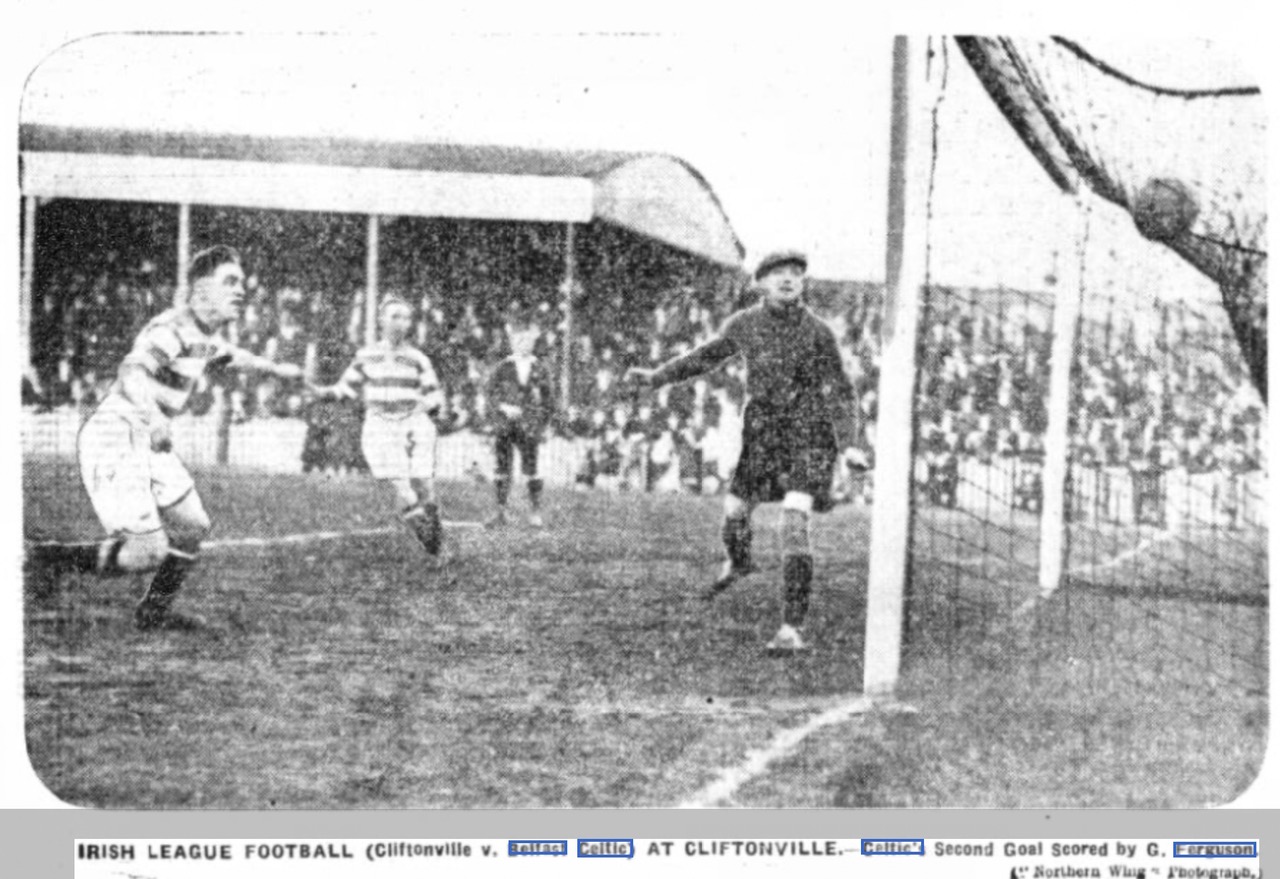
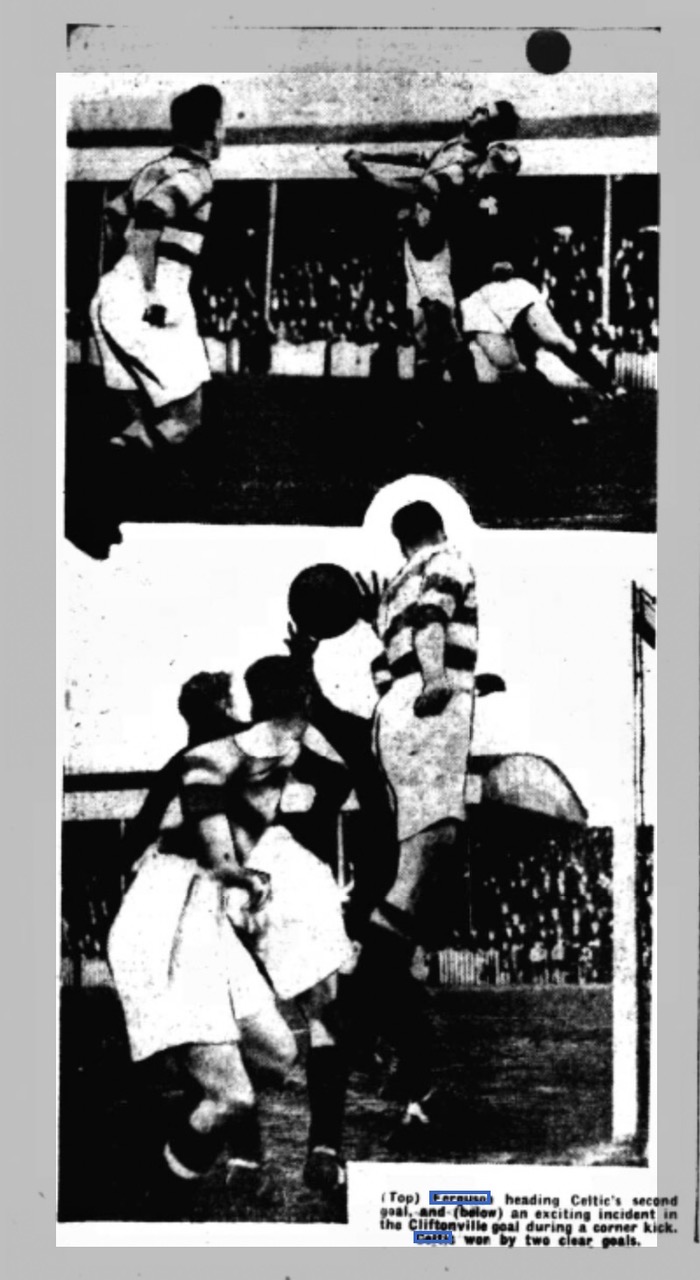
In the Northern Whig of Monday, 26 October 1931, there is a photo of John scoring that goal, shown below!
And in the same day’s Belfast Telegraph, there is another photo of John scoring at Solitude.
Despite that goalscoring performance, and perhaps on account of that injury suffered at Solitude, John’s name did not appear in either of the Belfast Celtic line-ups listed for the visit of Ballymena or the 2nd XI fixture at Newtonards seven days later, or the vital trip to face Linfield at Windsor Park on the opening Saturday of November. In fact, records provided by Marty at the Belfast Celtic Society indicate this was his third and final first-team appearance.
As mentioned in the original article, the following summer John signed for Brechin City, at that time a Second Division side. He would enjoy his best run of first-team games at Glebe Park, featuring in 33 of their 36 League games and a Scottish Cup tie in 1932/33 and adding three goals to that header at Solitude, captured for posterity and his family to enjoy.
So, there you have it.
J.A. Ferguson of Celtic, Ferguson and G. Ferguson of Belfast Celtic, were all in fact the same player, John Edward Ferguson from Dalmuir, who wore the Hoops with pride not just in Scotland but in Ireland.
Part of the history of two very special and unique clubs and a story which should be shared.
God bless him.
Hail, Hail!
Matt Corr
With grateful thanks to Marty Flynn at the Belfast Celtic Society.
Follow Matt on X @Boola_vogue
-
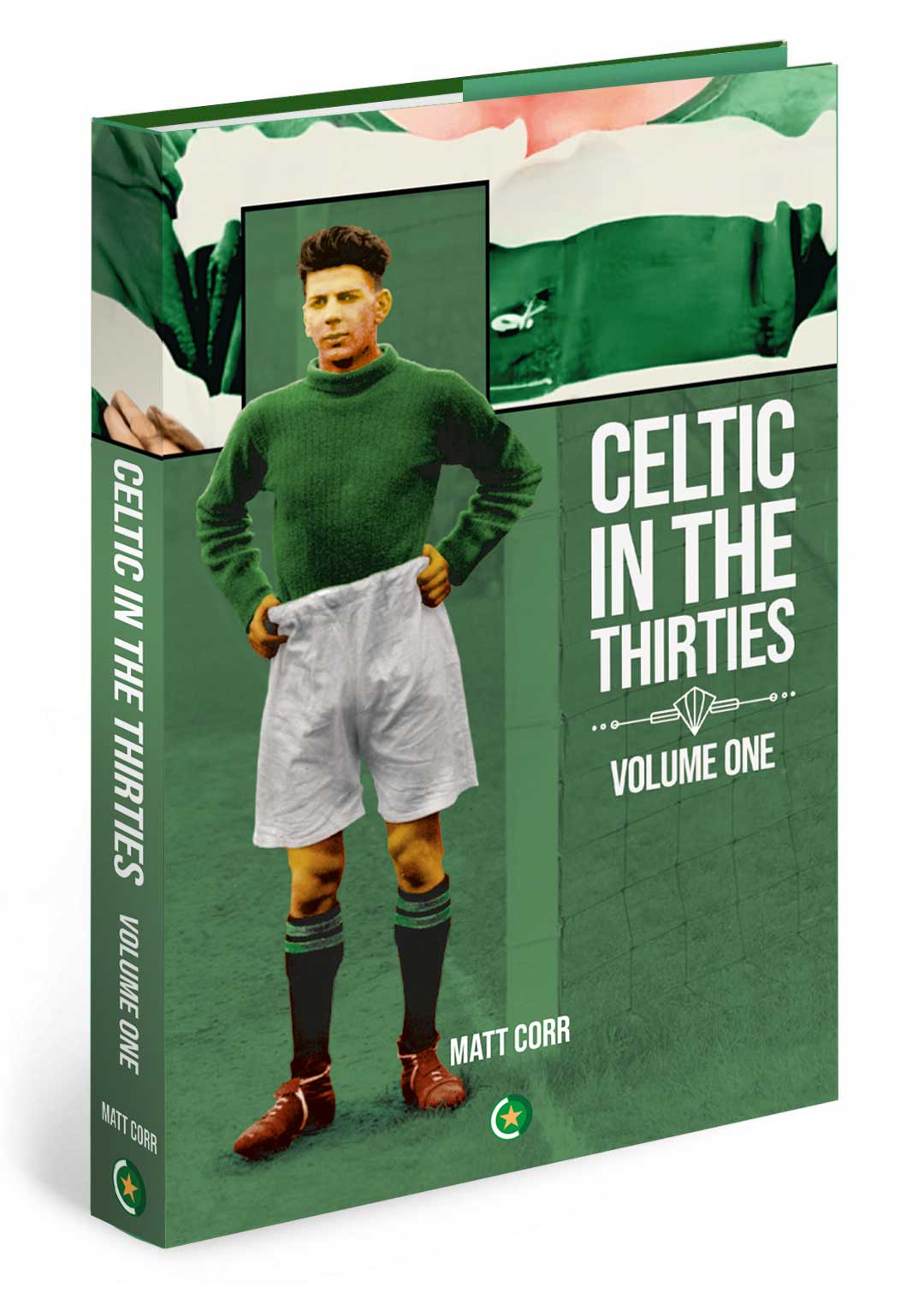
- Celtic in the Thirties – Volume One
-
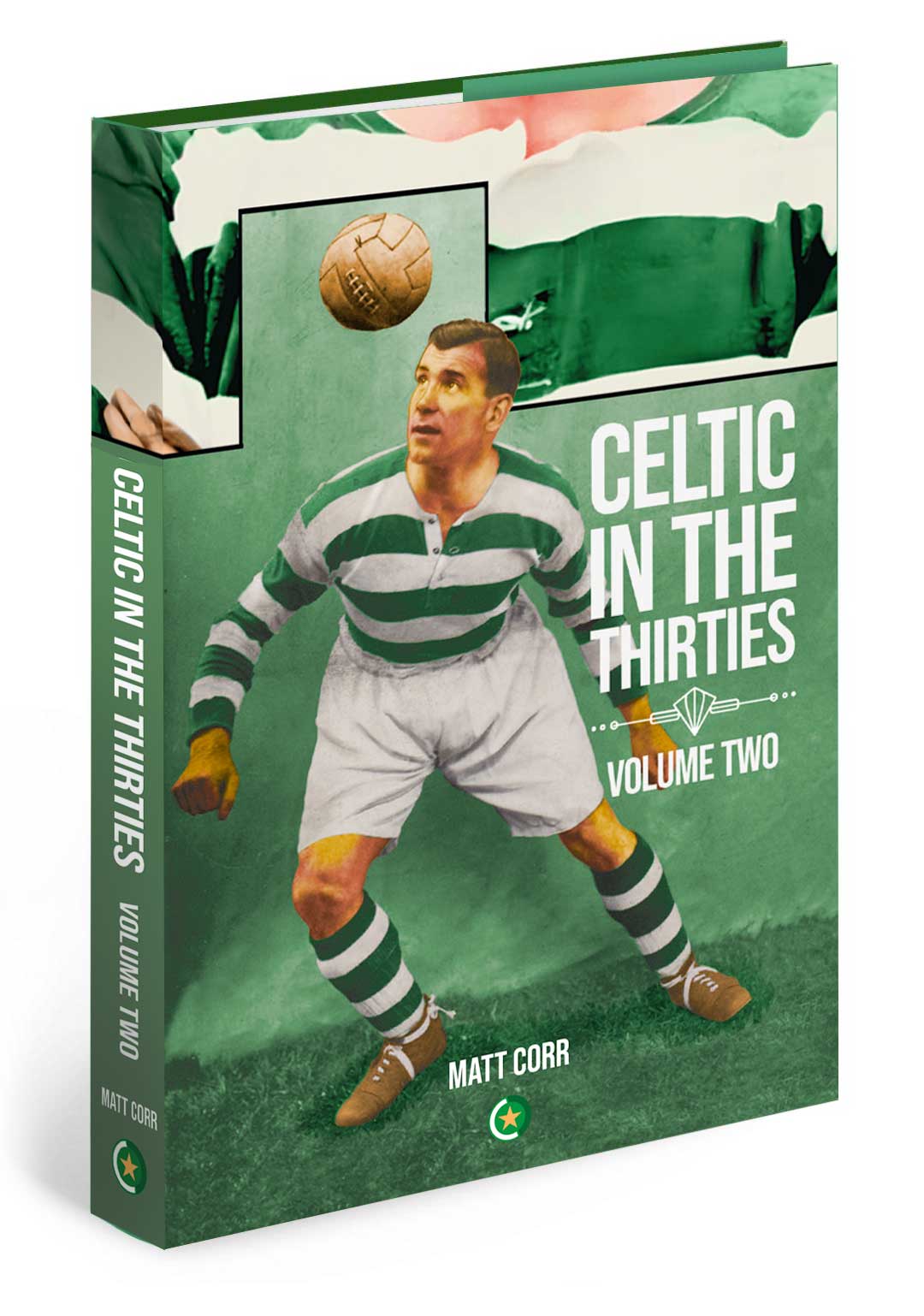
- Celtic in the Thirties – Volume Two
Order Celtic in the Thirties by Matt Corr (Vol 1 & 2) at Celticstarbooks.com
-
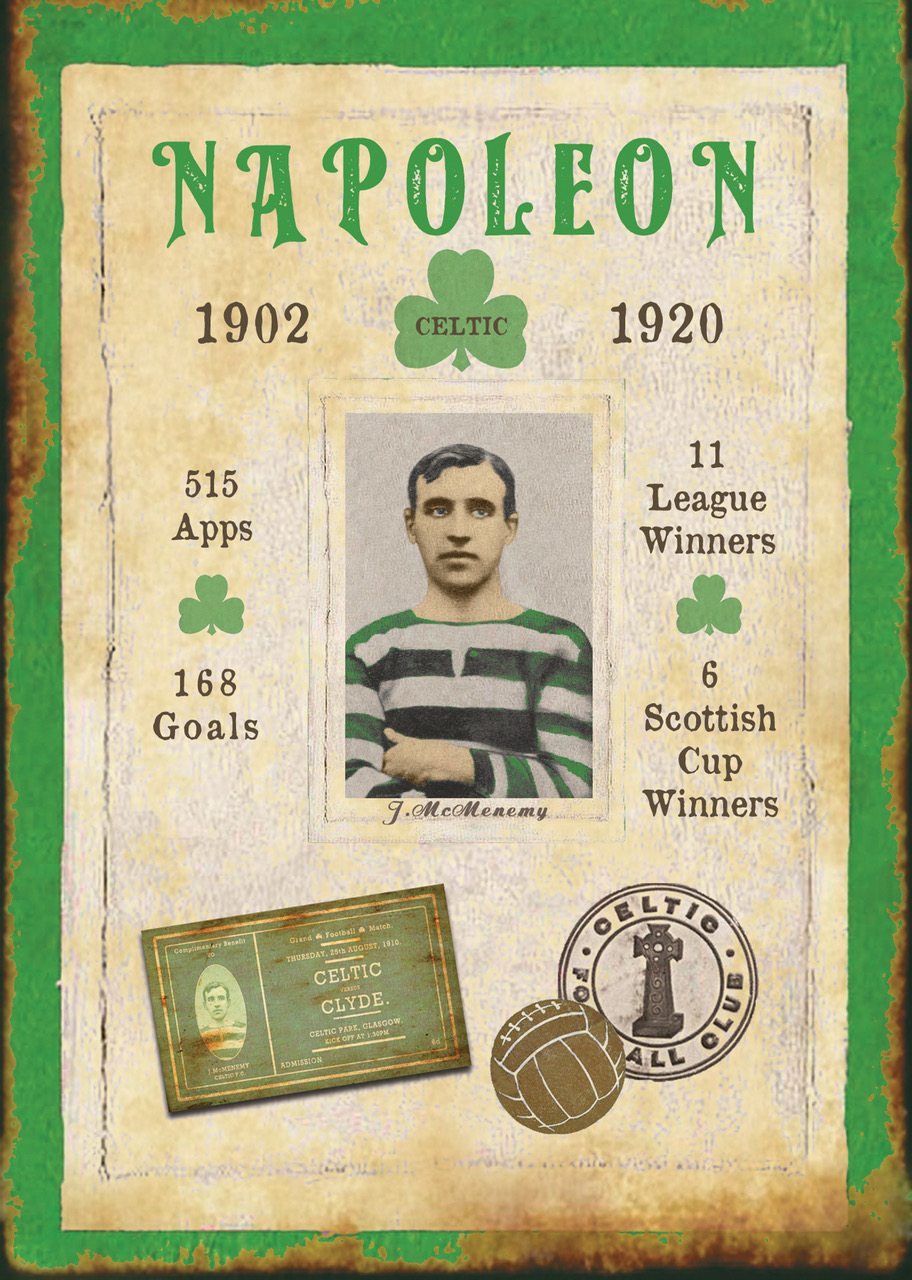
- Celtic’s Napoleon Jimmy McMenemy, image by Celtic Curio for Celtic in the Thirties, available at Celticstarbooks.com
-
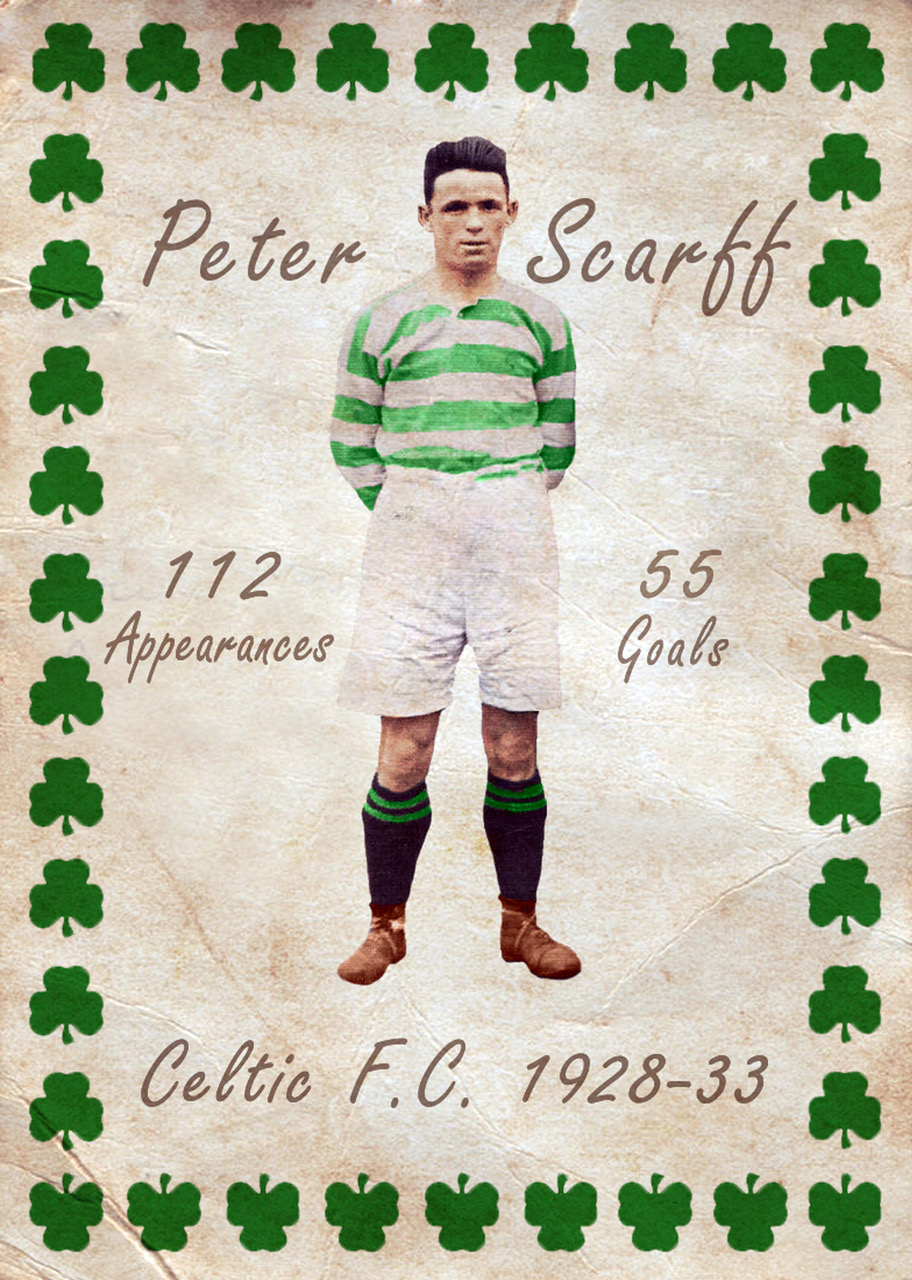
- Peter Scarff, Celtic FC.Image by Celtic Curio for Celtic in the Thirties (Vol 1 & 2) by Matt Corr.
-
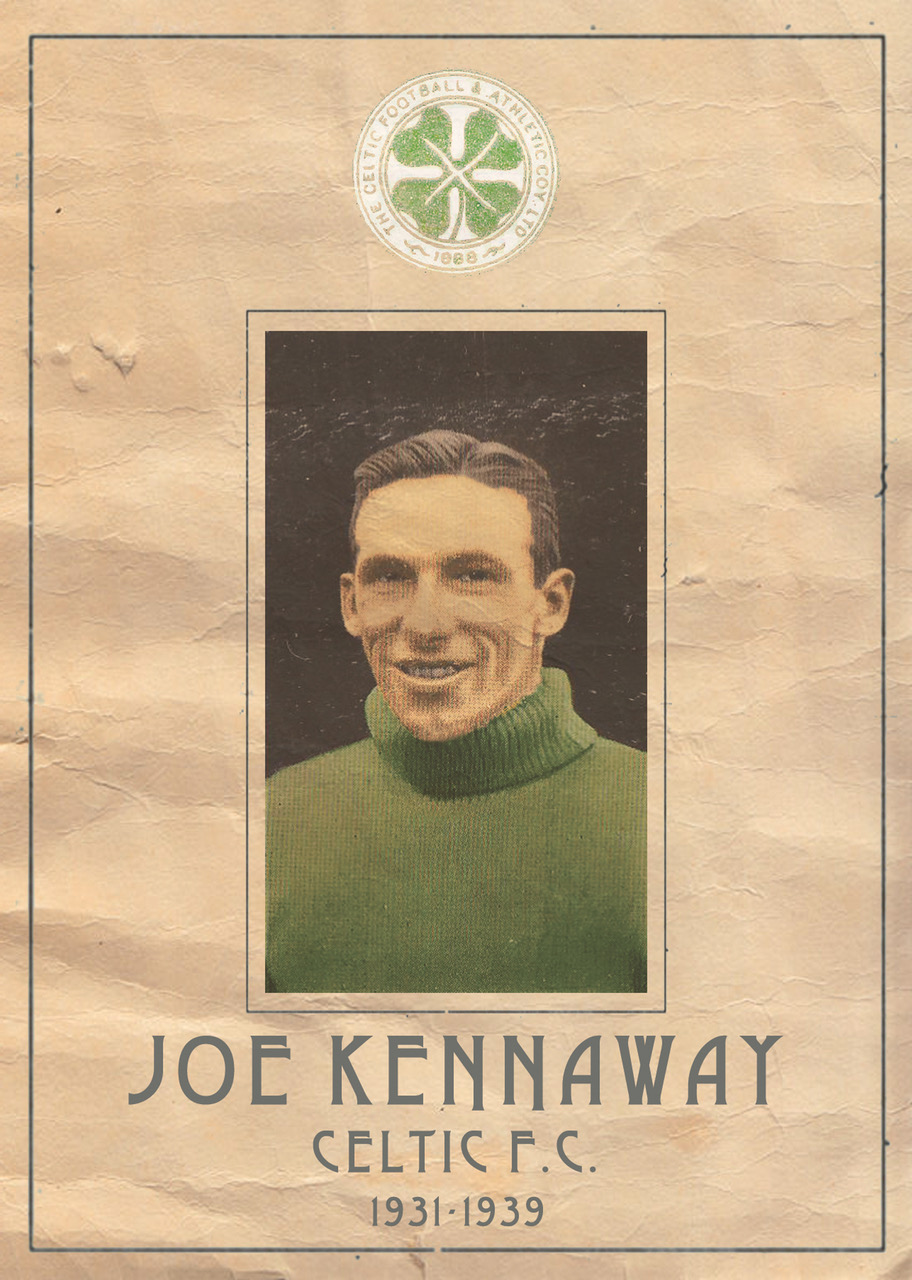
- Celtic in the Thirties – Unpublished works of David Potter – Joe Kennaway. image by Celtic Curio for Celtic in the Thirties by Matt Corr out now at celticstarbooks.com
-
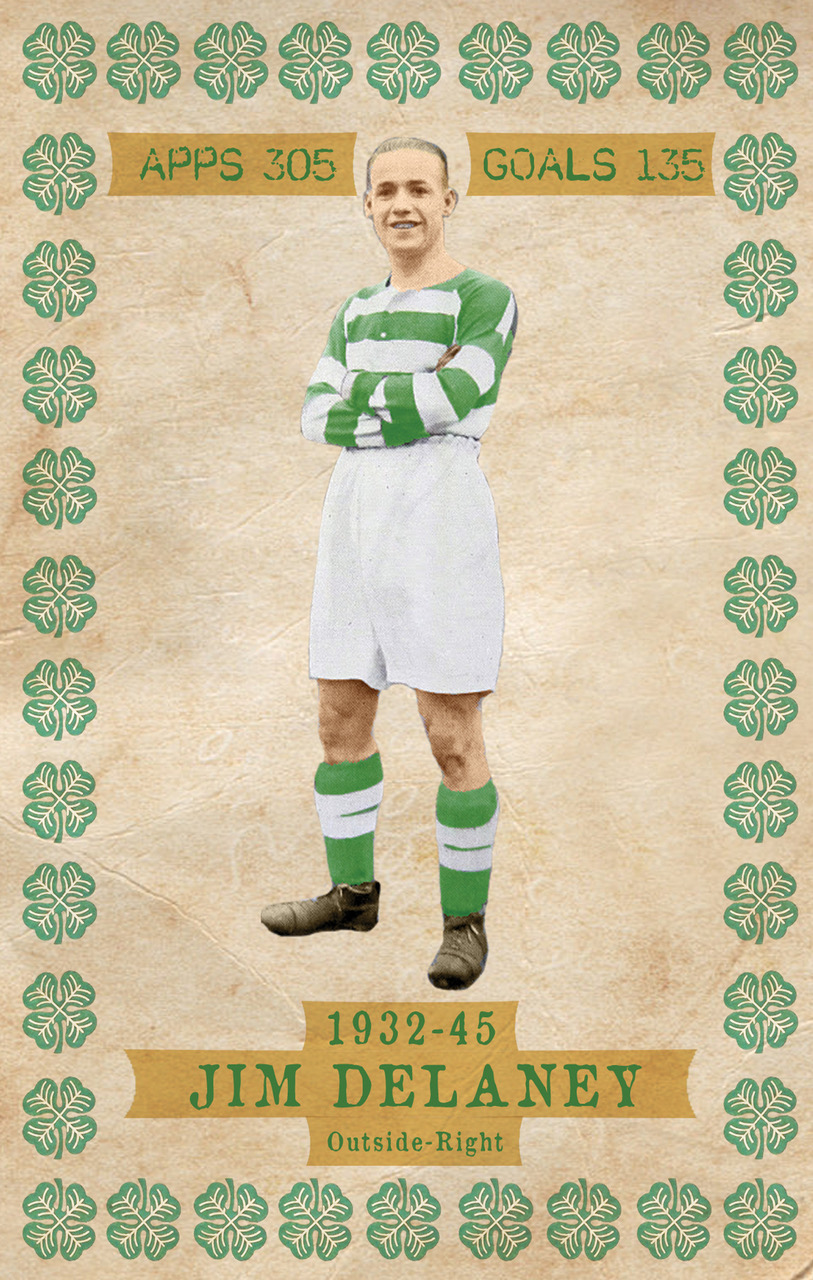
- Jimmy Delaney, Celtic in the Thirties by Matt Corr, out now on Celtic Star Books. Image Celtic Curio
-
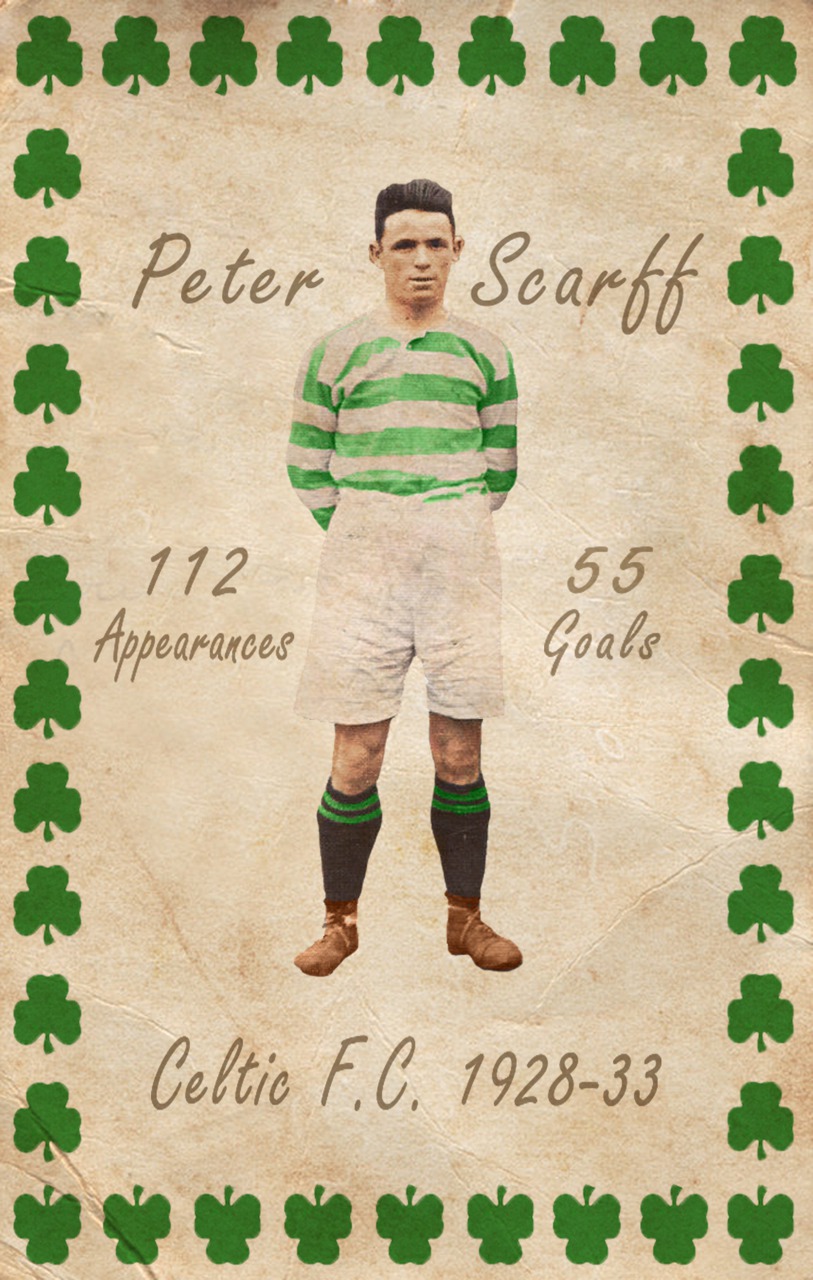
- Peter Scarff, Celtic FC. Image created for Matt Corr’s Celtic in the Thirties book by Celtic Curio
-
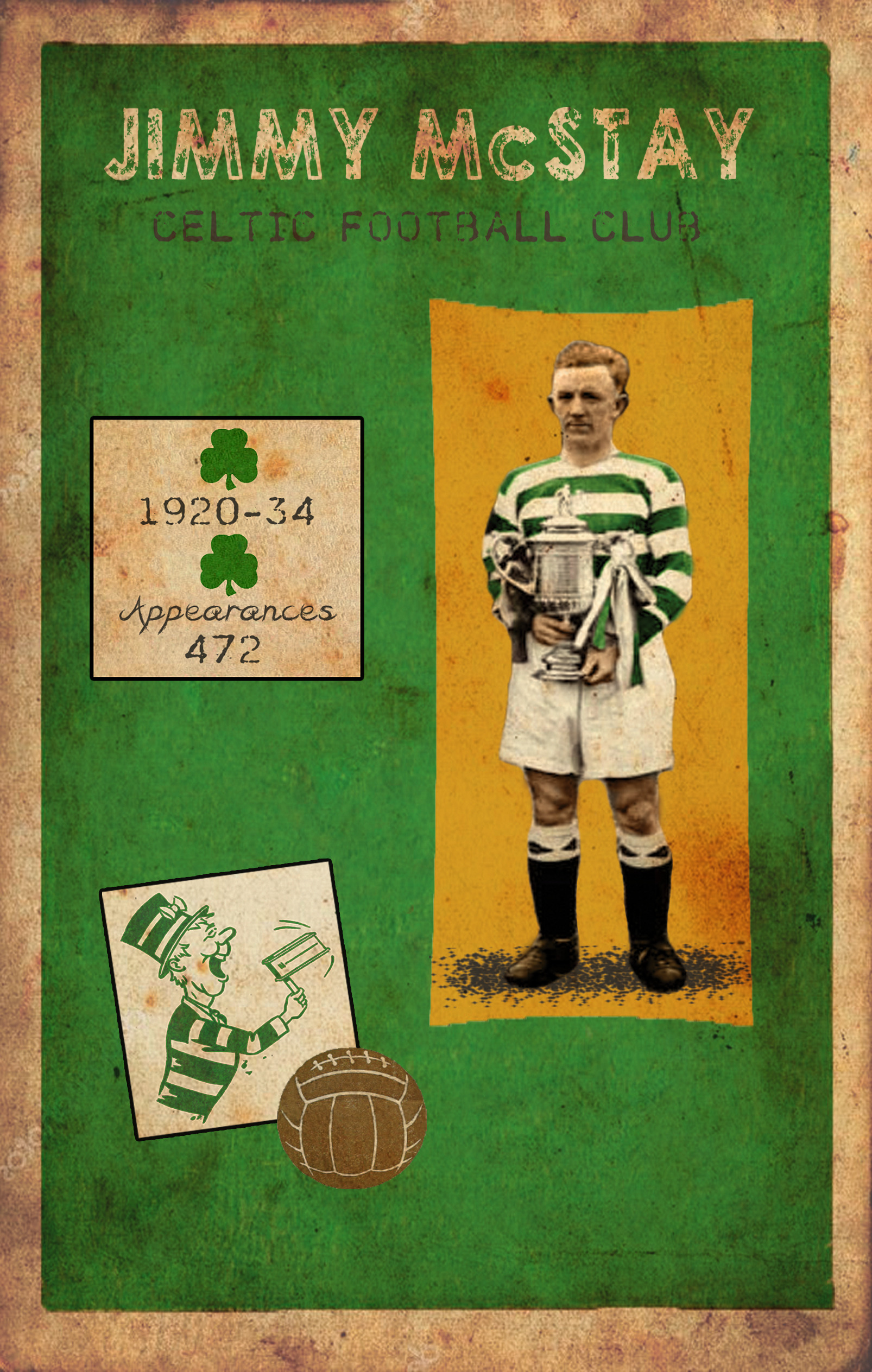
- Jimmy McStay from Celtic in the Thirties by Matt Corr. Image by Celtic Curio.
-
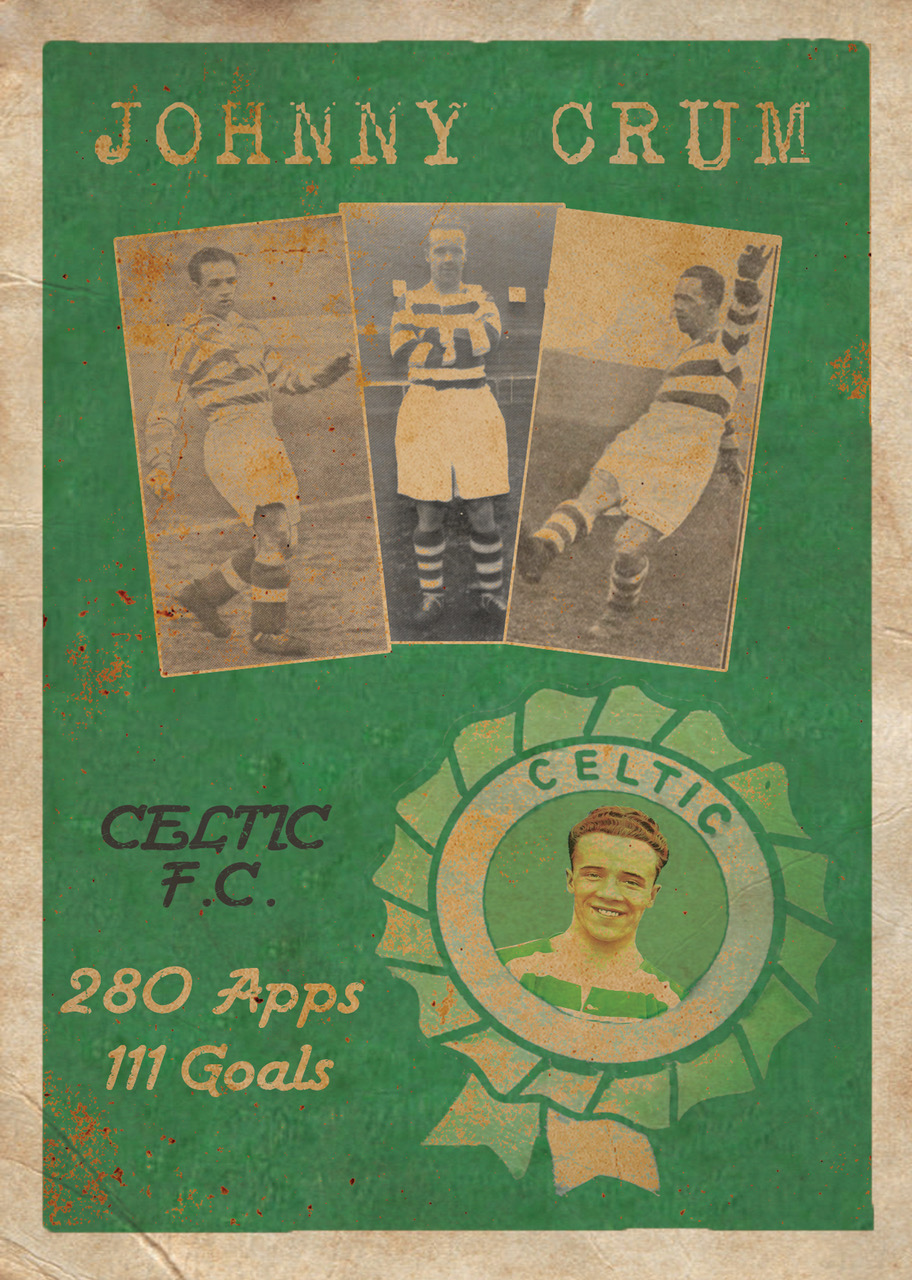
- Celtic star Johnny Crum, Image by Celtic Curio for Celtic in the Thirties
-

- Celtic in the Thirties by Matt Corr. Click on image to order