Two recent podcasts have offered real depth and reflection on the now-published minutes from last Monday’s meeting between Celtic, the Celtic Fans Collective and other supporter organisations…
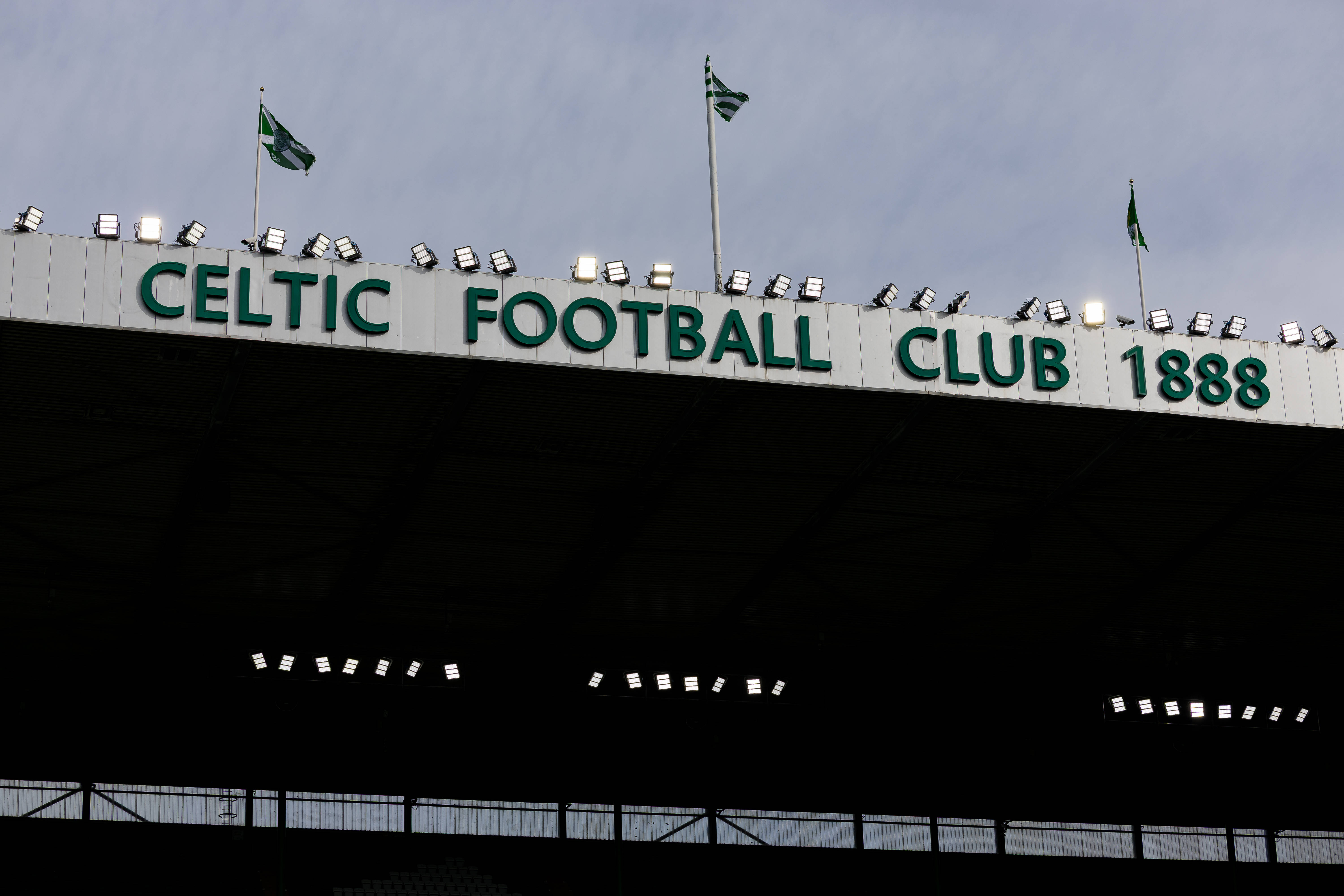
Celtic v Motherwell Scottish Premiership Celtic Park on 5 October 2025. Photo Raymond Davies PSI
Both are worth your time. Both are important. And both underline that, while the conversation with the club has finally begun, there’s still a long way to go.
The first, produced by RGC, runs for over two hours but it’s an essential listen. One of its contributors, Paul, who was in attendance at the meeting itself, methodically deconstructs the minutes, but also goes beyond them. The podcast captures not just what was said, but how it was said. It reflects on tone, on body language, on the mood in the room. It’s a serious, detailed production that highlights how much work lies ahead for everyone involved, not just for the Celtic Fans Collective, but for all supporter organisations who want to see meaningful change.
New podcast. And it’s a long one.
Though it was worth us walking through the minutes from Monday’s meeting given one of the boys was in the room. Hopefully helps brings a little more context to where we are as a support now. No shrugging at the back….https://t.co/sv3Qg32vZ2
— RGC Celtic (@RGCCeltic) October 9, 2025
The second, from The Cynic, offers another perspective. It’s slightly shorter, perhaps lighter on some of the granular detail, but it’s no less valuable. Martin, a member of the Collective who also attended the meeting, gives his honest assessment. He described going in with optimism, feeling that this could be a genuine opportunity to drive change. But as he left, that optimism had faded. He spoke candidly about a sense of embarrassment, as if the warnings from some supporters beforehand, that this meeting would achieve little, had been proven right.
Yet, it’s important to say this clearly. No one should feel embarrassed.
Every single person who attended that meeting did so in good faith. The decision by the Celtic Fans Collective to suspend the silent protests, in recognition of the club agreeing to meet and record minutes, was a show of trust. It was a public act of respect, a signal that the Collective was willing to take the club at its word and meet it halfway. Even with hindsight, that was the right thing to do.
Disappointment is understandable. But embarrassment? No.

Celtic Fans Collective, Founded September 2025.
Because in truth, in the space of just over a month, the Celtic Fans Collective achieved what many believed to be impossible. They pulled Celtic’s executive team and boardroom out from behind the curtain and into the light. They didn’t just get a meeting, they got one formally minuted and publicly acknowledged, sitting across the table from representatives of more than 420 fan organisations. That’s not a fringe protest group. That’s a movement. And the club now knows it.
Yes, the tone of the club’s representatives was, at times, defensive. Some answers felt dismissive. And in other cases, questions were batted away under the familiar guise of “confidentiality.” But step back from the frustration and look at what actually happened.
In some areas, like the Fan Survey, the Fairhurst Enquiry, and the recognition that fan representation is needed at the upcoming meeting with Police Scotland, some Celtic’s executives showed flashes of humility. Some appeared to have listened. Some even acknowledged shortcomings, and that matters.
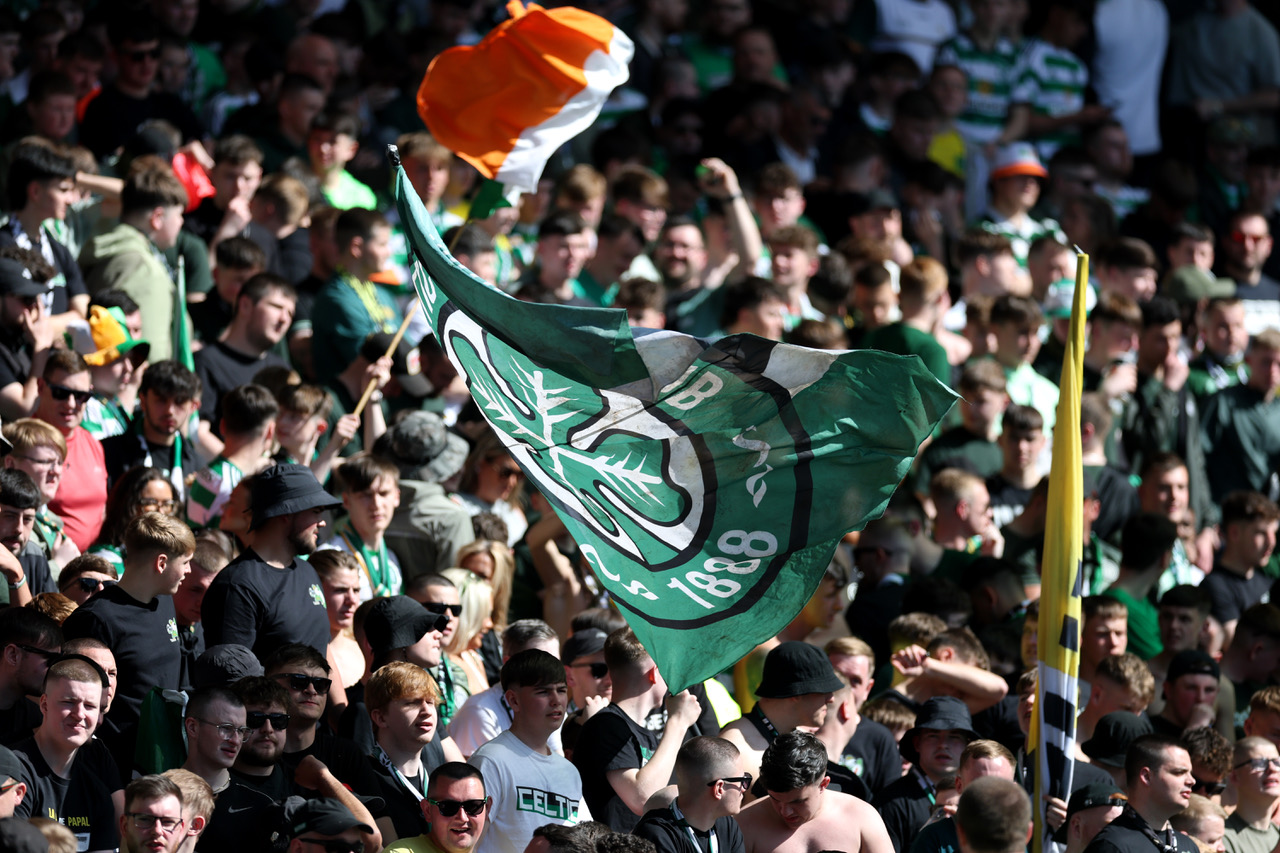
Celtic supporters shows their support at full-time following the team’s victory in the Scottish Cup Semi Final match between St Johnstone and Celtic at Hampden Park on April 20, 2025. (Photo by Ian MacNicol/Getty Images)
And when Michael Nicholson confirmed that the club was examining how Fan Advisory Boards operate at West Ham and Manchester United, that too represented progress. If done properly, with democratic selection, genuine consultation, and transparency, a Fan Advisory Board could become the single most important conduit between the club and its supporters going forward.
Of course, the football side of things remains another story. There’s still a worrying sense from within the club that the Collective’s formation was just a reaction to one bad transfer window. But supporters know that’s far from the truth.
This isn’t about one summer’s disappointment, it’s about years of frustration, about a club that too often feels insulated, about ambition questioned and trust eroded. The Collective is the voice of that discontent, and, crucially, of the determination to channel it constructively.
It’s worth remembering something else too, most of us live and breathe Celtic. We consume everything, be it written fan media, podcasts, message boards, debates. The club’s executives, by contrast, live in a different world. They’ll receive PR briefings, maybe summaries of the noise, but they rarely experience the passion and concern of supporters directly. Until now.
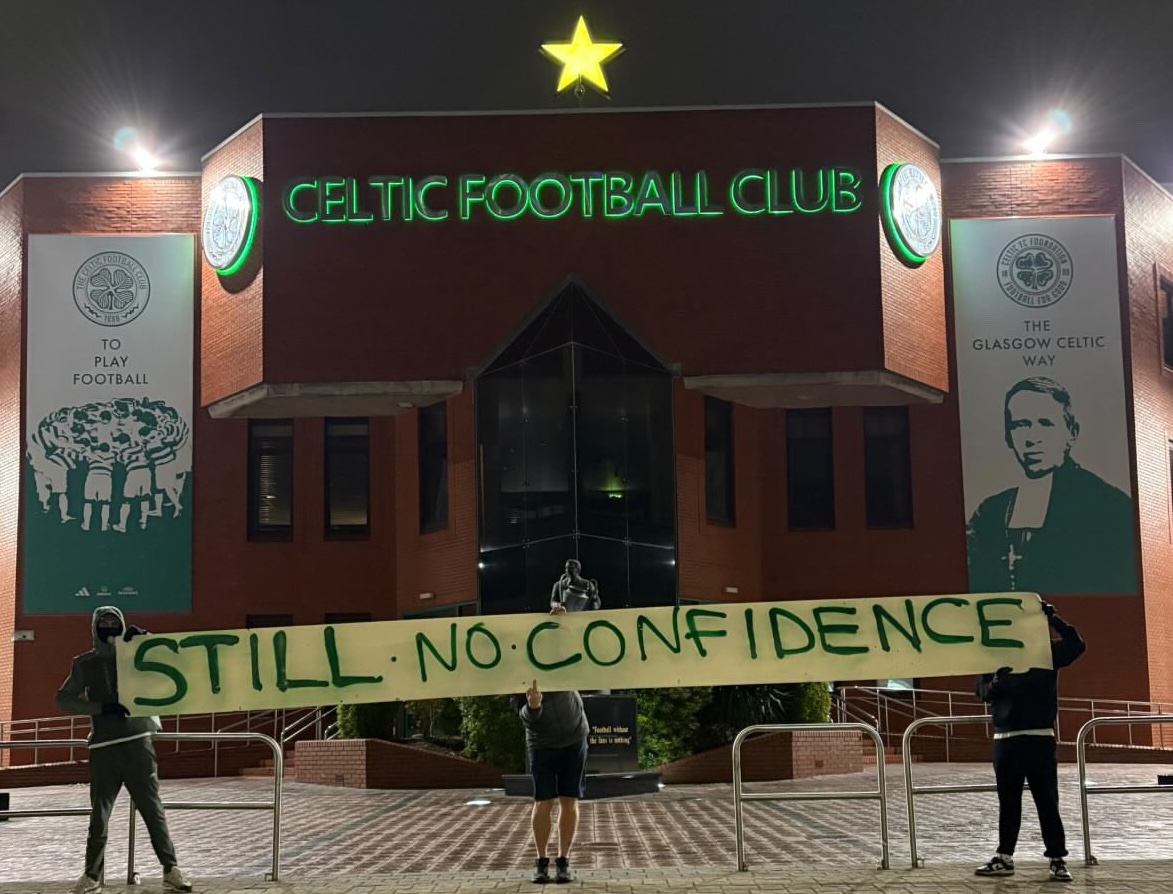
That’s why last Monday’s meeting was so important. For perhaps the first time, the people running Celtic had to sit in a room and hear, face to face, that the frustrations run deep and are widely shared.
The anger and disillusionment isn’t confined to a vocal minority or social media. They belong to the heart of the Celtic support. That, in itself, is a turning point.
Some who attended the meeting may still feel deflated, and understandably so. They travelled long distances, from across Scotland and Ireland, to make sure supporters’ voices were heard. They expected engagement, maybe even change. What they got instead, at times, was aloofness. But they also got something new, a seat at the table, a conversation on the record, and the beginnings of accountability.
Five weeks ago, Celtic thought a short statement could calm things down. Now, the club has engaged PR consultants, sat through a formal meeting with supporters, and, for the first time in years, has had to face a united voice demanding better. That’s real progress, even if it doesn’t feel like it yet.
Celtic v Motherwell Scottish Premiership Celtic Park on 5 October 2025. Photo Raymond Davies PSI
Yes, the arrogance is still there. The distance remains. But the conversation has started. And progress, in football politics as in life, rarely happens all at once. It happens inch by inch, meeting by meeting, voice by voice.
So, to those who attended that meeting, you let no one down.
You gave shape to the frustrations of thousands. You made the board listen. You proved that organised, collective pressure works. And you’ve started something that will grow stronger in the months ahead.
Because this is just the start. The Celtic Fans Collective has achieved in five weeks what others couldn’t in five years, it got Celtic to the table, on the record, facing questions from those they’d long dismissed as online noise. The club now knows this movement isn’t going away. It’s organised, it’s united, and it’s driven by people who care deeply about the club’s future.
And if this is what can be achieved in five weeks, imagine what five months or a year could bring.
There will always be differences of opinion, and there will always be voices trying to divide or dilute the message. But the direction of travel is clearly forward. The Celtic Fans Collective is strong, growing, and here to stay. It’s a force of nature, fuelled by passion, expertise, and unity.
Those who attended that meeting, and those who’ve stood with them, should be proud. They’ve reminded the club that the support isn’t a brand to manage or a nuisance to pacify.
The arrogance may remain for now. But so does the momentum. And change, however slowly, is inevitable.
The conversation has started. And that, more than anything, matters.
Niall J

Readers of The Celtic Star and indeed all Celtic supporters joining the Celtic Pools Weekly Lottery and paying by direct debit will be able to claim a free stadium tour worth £18.50. This promotion will run from now until the 20th October 2025. Click on image to join.