
Celtic’s search for a new manager, as with everything at Celtic, is being carried out in the usual culture of silence…
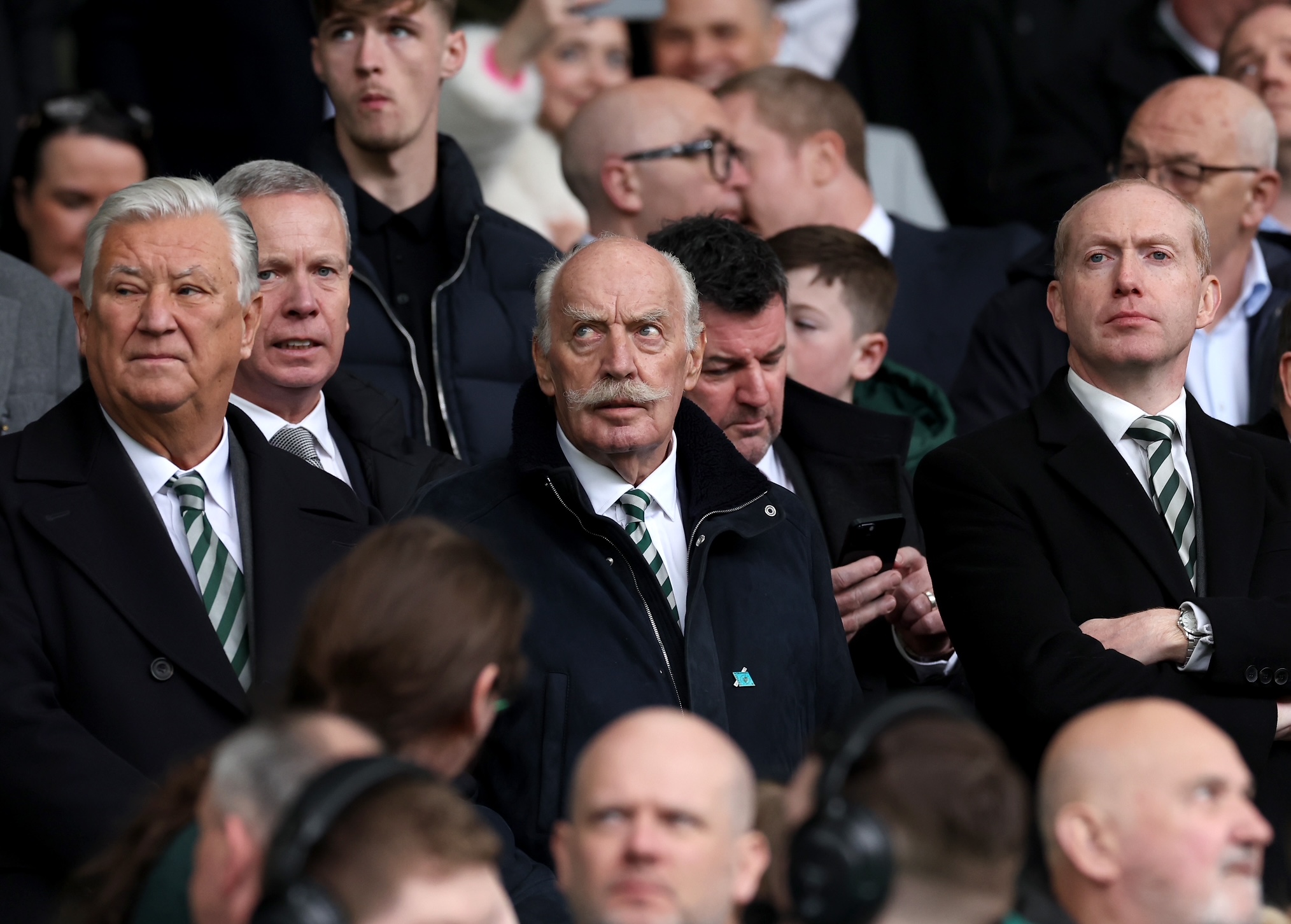
Peter Lawwell, Chairman of Celtic, Dermot Desmond, Non-Executive Director of Celtic, and Michael Nicholson, CEO of Celtic, are seen in attendance prior to the Scottish Premiership match between Celtic and theRangers at Celtic Park on March 16, 2025. (Photo by Ian MacNicol/Getty Images)
Back in the day, Dermot Desmond told us he and Peter Lawwell each kept their own shortlists of potential candidates. They’d compare notes, interview a few, and reach a decision. Not exactly the modern, data-driven approach of a forward-thinking football club, but at least it was a process of sorts.
How are things being done this time? Well, your guess is as good as mine.
To be fair, managerial appointments aren’t something Celtic have consistently botched. Over the past decade, it’s been one of the few areas of the club’s operations that has delivered results. Rodgers (twice), Lennon (initially), and Postecoglou all brought success. Even those who got close to the job — Eddie Howe, Enzo Maresca — have since proven their quality elsewhere.
The problem isn’t who Celtic hire, it’s what happens after they arrive.
Celtic’s knack for finding good managers has often disguised the fact that the club still lacks a coherent footballing philosophy or a proper structure behind the scenes. Each manager comes in, breathes new life into the club, delivers success, and then, almost inevitably, within two years the pattern repeats.
Promises fade, processes stall, and the “manager is God” approach begins to crumble under the same familiar weight, slow decision-making, poor preparation, and an inability to plan beyond the next transfer window.
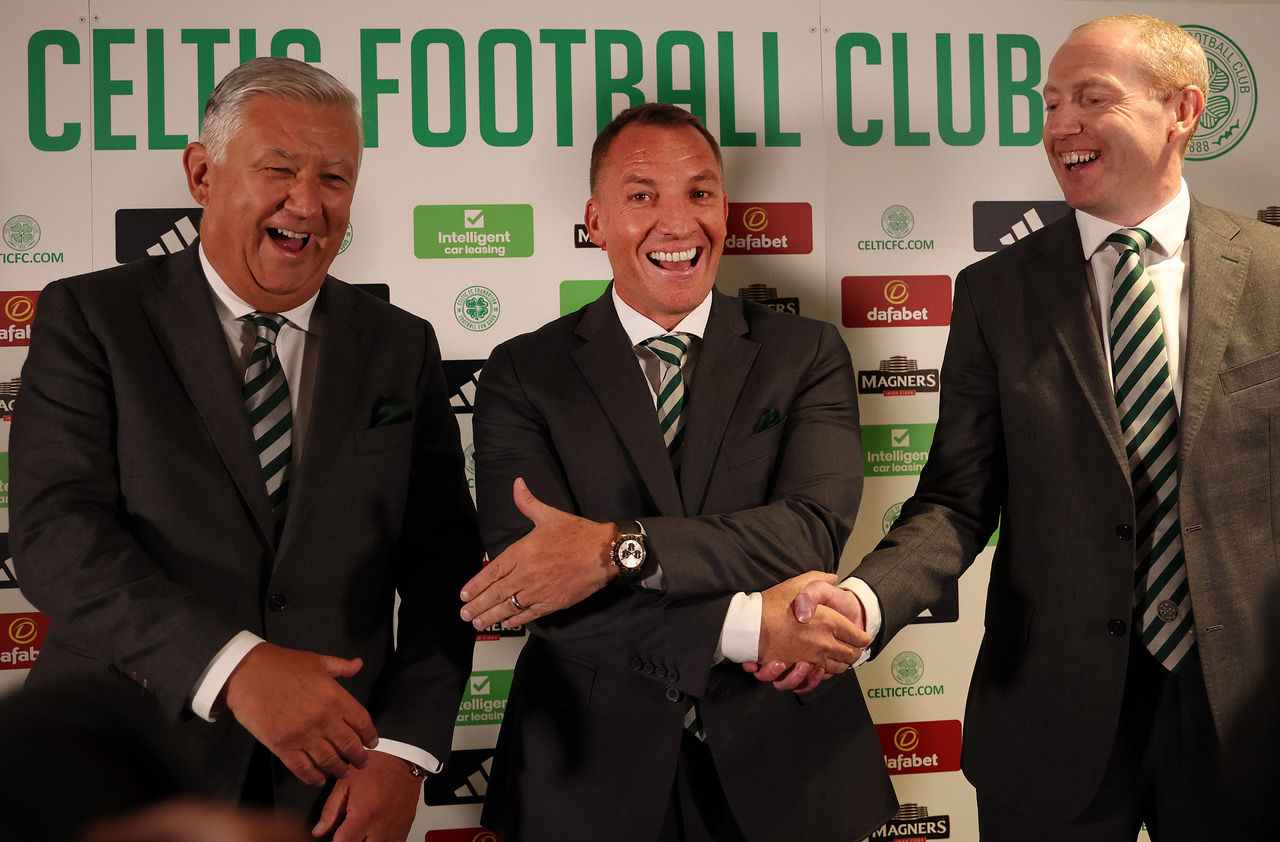
Peter Lawwell, Brendan Rodgers and Michael Nicholson (Photo by Ian MacNicol/Getty Images)
We’ve seen it with Rodgers (on both occasions), Lennon’s second spell, and the tail end of Postecoglou’s tenure before his exit. The issues are structural, not personal. Celtic’s managers don’t fail, the environment fails them.
From what’s known, Dermot Desmond was the driving force behind both Rodgers appointments, while Lawwell, senior and/or junior was central to Postecoglou’s arrival via the City Group connection after the Howe deal collapsed.
Desmond, for all his distance, clearly has an eye for a manager. And given his recent re-emergence in the public spotlight, it’s hard to imagine he isn’t leading the process again.
As for Peter Lawwell, officially “just the chairman” these days, recent governance embarrassments may have nudged him out of the front line.
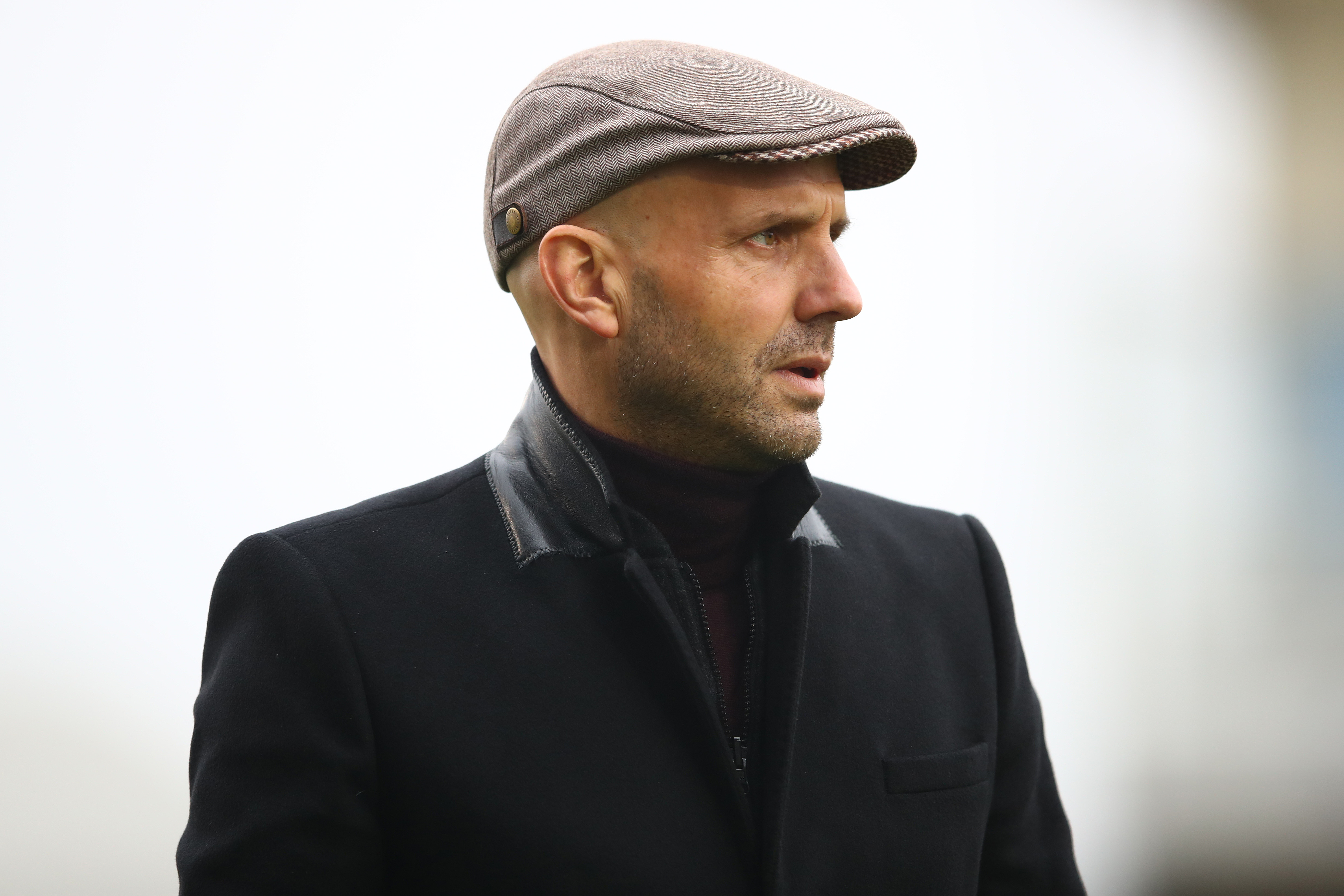
Paul Tisdale the manager of Bristol Rovers looks on during the Emirates FA Cup Second Round match between Bristol Rovers and Darlington FC at the Memorial Stadium on November 29, 2020 (Photo by Michael Steele/Getty Images)
Instead, rumours suggest Head of Football Operations Paul Tisdale is now heavily involved. On paper, that’s progress, football people making football decisions.
But, truthfully, we know very little about Tisdale’s actual influence. He’s said next to nothing publicly, there’s been no visible shift in academy output, and this summer’s transfer business seemed driven more by opportunistic deal-making than strategic talent identification, the Go Ahead Eagles debacle being a case in point.
So perhaps, as before, there are two lists in circulation, one belonging to Desmond, the other to Tisdale. And somewhere in between, the next Celtic manager will be chosen.
As we noted earlier on The Celtic Star, ITK reporter reckons Celtic appointment imminent journalist David Friel has pieced together a convincing case that Wilfried Nancy is on Celtic’s shortlist. The connection makes sense, Tisdale once worked with Nancy’s assistant, Kwame Ampadu, at Exeter City.

Wilfried Nancy, Head Coach of Columbus Crew SC, looks on during the MLS match between New England Revolution and Columbus Crew at Gillette Stadium on March 01, 2025 in Foxborough, Massachusetts. (Photo by Maddie Meyer/Getty Images)
At first glance, it all feels a bit “jobs for the boys.” But having looked into Nancy’s methods, there’s plenty to like. His football is possession-based, but not passive, built around quick tempo and positional discipline. He’s flexible, not wedded to one shape, though his preferred 3-4-2-1 would certainly add intrigue.
It’s intelligent, progressive football, the kind that could work at Celtic. But, as ever, it’s not just about the manager.
Celtic’s structural deficiencies have long undermined their managers. With no director of football, the burden on the manager is total. Every issue, on or off the park, ends up on his desk.
The recent Green Brigade ban is a perfect illustration. The club issued a statement, but when the follow-up questions come, such incidents, as they did with Rodgers, would fall to the manager to field them.
For someone like Nancy, used to working in a proper head-coach environment, this could be a jarring shift. At Celtic, the “manager is God” model still rules, and that model routinely burns out its chosen saviours after about two years.
Unless something changes, it will happen again.
There are whispers of a Director of Football announcement before the AGM. If true, and if that appointment comes before the new manager, it could finally signal a structural reset. In that scenario, someone like Nancy might thrive, operating within a modern system rather than trying to hold one together alone.
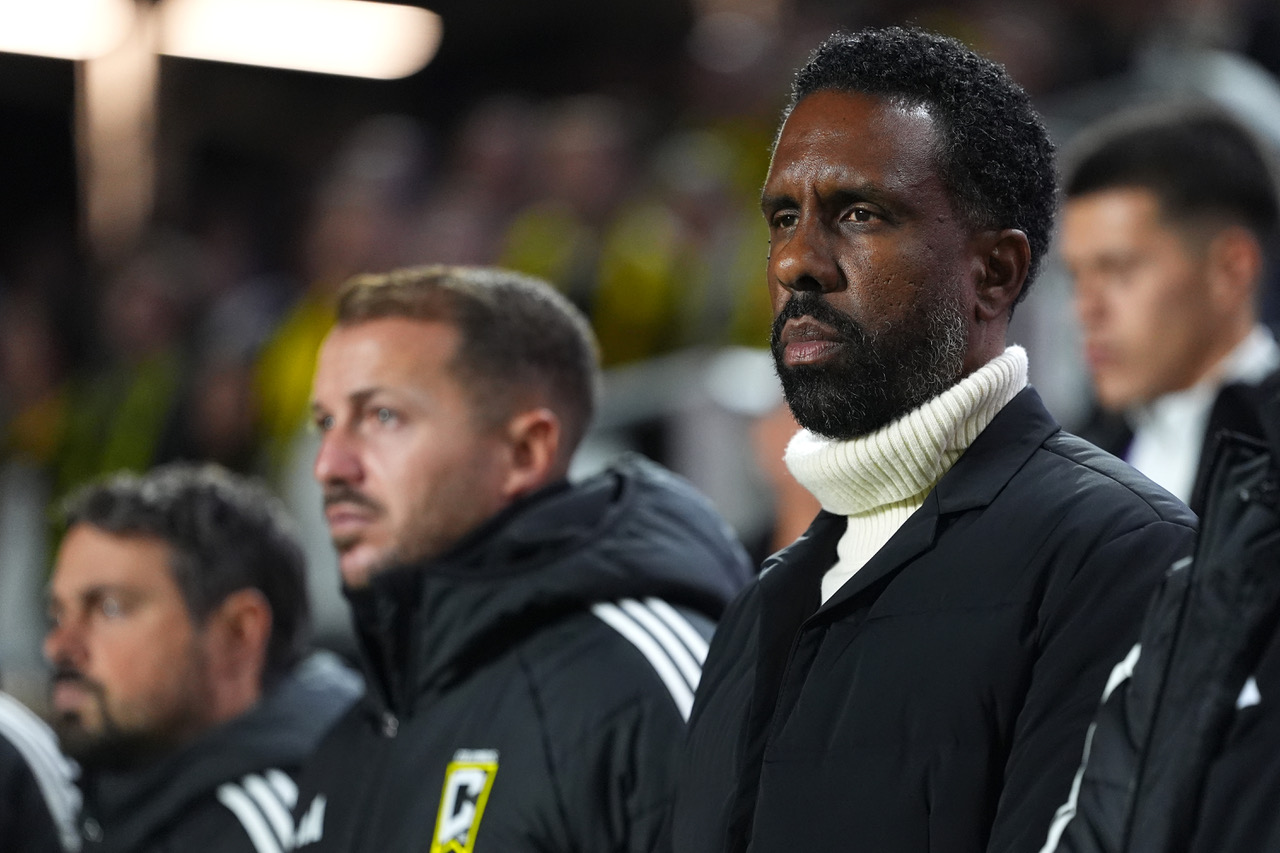
Wilfried Nancy head coach of the Columbus Crew looks on before the 2025 MLS Cup Playoff match against FC Cincinnati at Lower.com Field on November 02, 2025 in Columbus, Ohio. (Photo by Jason Mowry/Getty Images)
If not, and we won’t be holding our breath, history will repeat. We’ll appoint another talented, ambitious manager, hand him the same fragmented setup, and ask him to fix what the board refuses to modernise.
Because at Celtic, this is the cycle, a good appointment, a good start, and then the slow decay as the same old problems resurface.
Desmond still seems to believe a five-year dynasty manager is possible. The evidence suggests otherwise. Until the club’s football operations are professionalised and protected from boardroom interference, that two-year breaking point will always come, no matter who sits in the dugout.
Ideally, Celtic would build a proper structure first, appoint a sporting director, define a football philosophy, and then hire a head coach to fit it. That’s how successful modern clubs operate.
But this is Celtic. Hope and expectation rarely align. And as long as the people at the top refuse to acknowledge that the system itself is broken, we’ll keep relying on another manager to mask the cracks.
The names change, the cycle doesn’t. Two years of promise, then the walls close in.
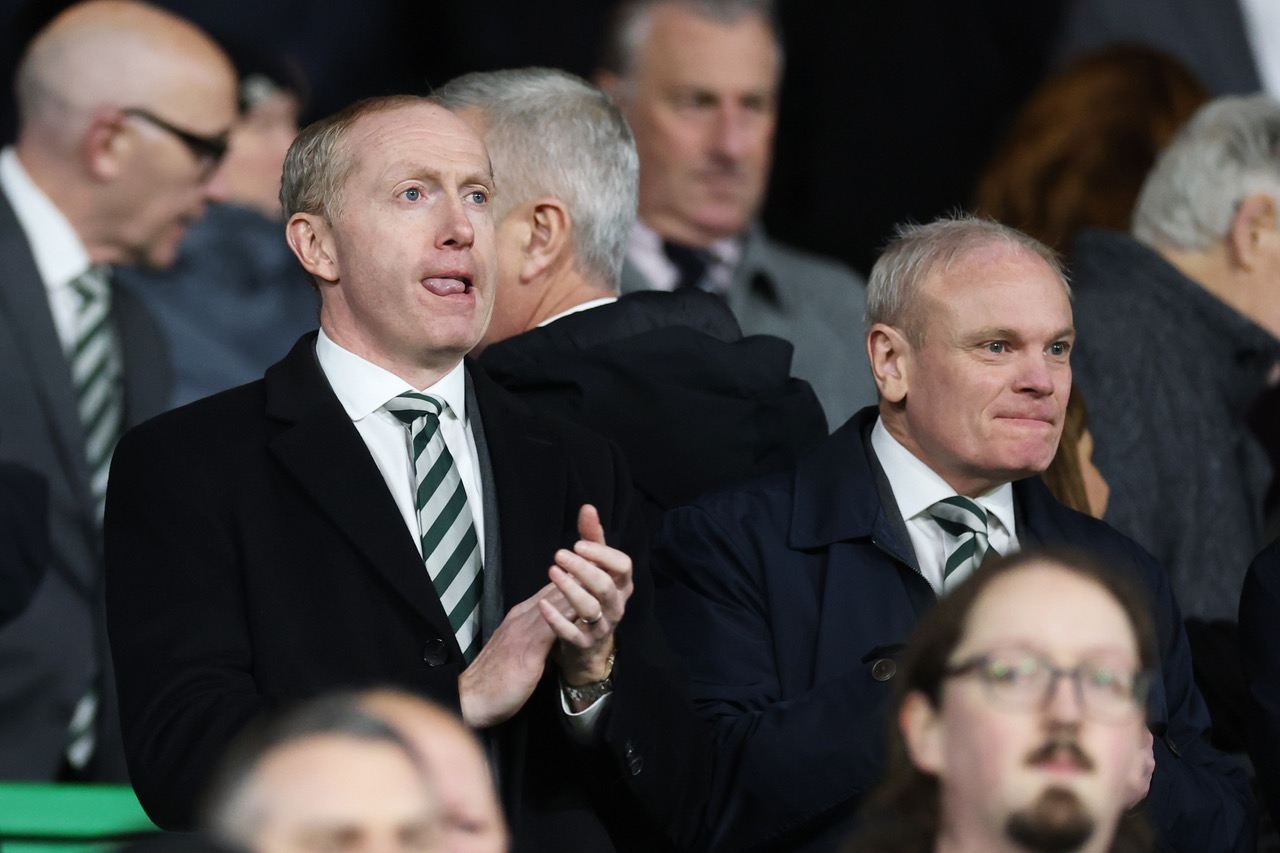
Michael Nicholson, Celtic CEO and Chris McKay, Celtic CFO, look on from the stands during the UEFA Europa League 2025/26 League Phase MD3 match between Celtic FC and SK Sturm Graz at Celtic Park on October 23, 2025. (Photo by Ian MacNicol/Getty Images)
That’s really the crux of it. What Celtic need isn’t just another good manager, it’s a structure so strong that it doesn’t matter if he’s poached or doesn’t work out.
The philosophy, the footballing identity, the recruitment model, all of it should be so well built and clearly communicated that the next coach can slot straight in and continue the work.
Until that exists, we’re just fiddling with the roof tiles while the foundations last barely two years before collapsing under the same, entirely predictable frustrations.
Niall J
Celtic in the Eighties by David Potter
David Potter, Celtic Historian and Author.
Celtic in the Eighties by David Potter was published in September 2025 by Celtic Star Books. David’s widow Rosemary has written a special message of thanks to the Celtic support and Danny McGrain has contributed his own piece to the book which is a great read. And Danny has gone further by signing all remaining copies of the book which is available now from our bookstore – celticstarbooks.com
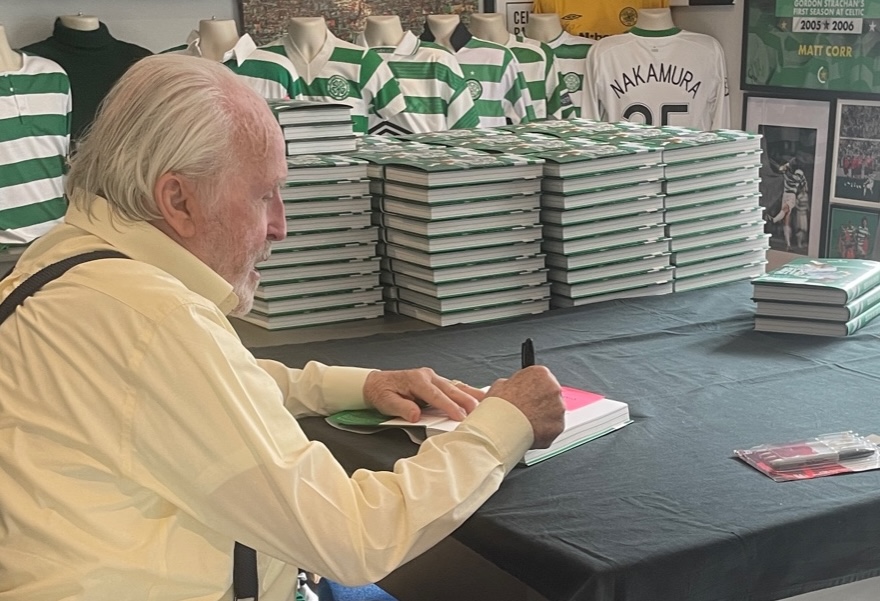
Danny McGrain signing copies of Celtic in the Eighties by David Potter. Photo: Celtic Star Books
Please note that as we celebrate the life and the Celtic writing of David Potter we are happy to include a free copy of David’s wonderful Willie Fernie biography that only could be titled ‘Putting on the Style’ a release that helped bring that old Celtic song back into the current songbook.

Celtic in the Eighties by David Potter. Order now and you’ll receive a copy personally signed by Danny McGrain PLUS a free gift! Click on image to order now.






Sorry niall, but think you are looking for something that can’t be delivered imo?
All for structural changes within our footballing department, but the massive stumbling factor, remains the impact of the 8 homegrown quota rule, has upon ourselves for European competitions imo?
Our last European game, had Calmac, Ralston, Tierney and forrest within our starting line-up. Plenty of experience within the 4, yet struggling badly to make any impact within the game whatsoever.
4 also who could be considered as our strongest available for a European campaign?
So looking at what is underneath those 4.
McCowan still struggling to find game time within our bigger games.
Murray is looking a long way away from even getting game time in the SPFL at present, so to be considered for a European campaign is even further away.
Doohan, is he even under consideration to ever becoming a no2 keeper for ourselves, possibly a very long shot to making the no1 Jersey his.
Kenny even if he qualifies as a homegrown player, still a long way to go, before becoming a European certainty player imo?
Donovan, another potential prospect with high hopes upon him already, even if he possibly qualifies as a B list player for the next couple of seasons?
So when we look at structure, within our footballing department, we are looking at a situation where a third of our squad, regarding the homegrown element required within it, could be a mixture of well past there best, little signs of getting beyond squad players at SPFL, and even at that, very reduced playing time involved?
Yet, I still believe that the homegrown quota is going to be the backbone of our squad, especially regarding the stability and quality factors involved imo.
But it isn’t, and very little signs of ever becoming so.
In turn, places far more pressure upon international players, to try and make up the shortfall.
Hardly helps with the same mixture of past there best, and struggling to even finding the quality factor required in the SPFL, so going to European levels will be some time away also.
So yes niall, the overall structure is not sufficient, especially with ourselves as nothing more than a development club upon the CL stage, but without the sufficient development in place for ourselves, and not getting better, especially when stronger claims could be made to say it’s actually getting worse imo?
I get your views niall of looking at the top and working down within the overall footballing department.
Personally believe that starting at the bottom and trying to work upwards, might be more beneficial to ourselves in the longer run imo?
How that can be actually achieved, with the overall structure of Scottish football in place, I’m struggling to find an answer to in fairness, especially with the Scottish game becoming a far harder sell, for the quality of international players we are hoping for within the transfer market and the price bracket we are operating within?
As for a board quite intent on keeping the footballing department, self sufficient, with a strong player trading model in place, which only benefits the PLC upon profits gained. I don’t see the likes of that changing no matter who is within the boardroom imo?
Not an easy fix exists, and struggling to see, if it can even be achieved properly with the amount of obstacles involved.
Admittedly improvement can and should be made in the recruitment, development and coaching departments.
Even at that trying to form stability, within a playing squad capable of challenging properly upon the European stage, especially at CL level, remains a big ask, with getting a sufficient structure in place for the footballing department, and such a hit and miss approach within the transfer market imo?