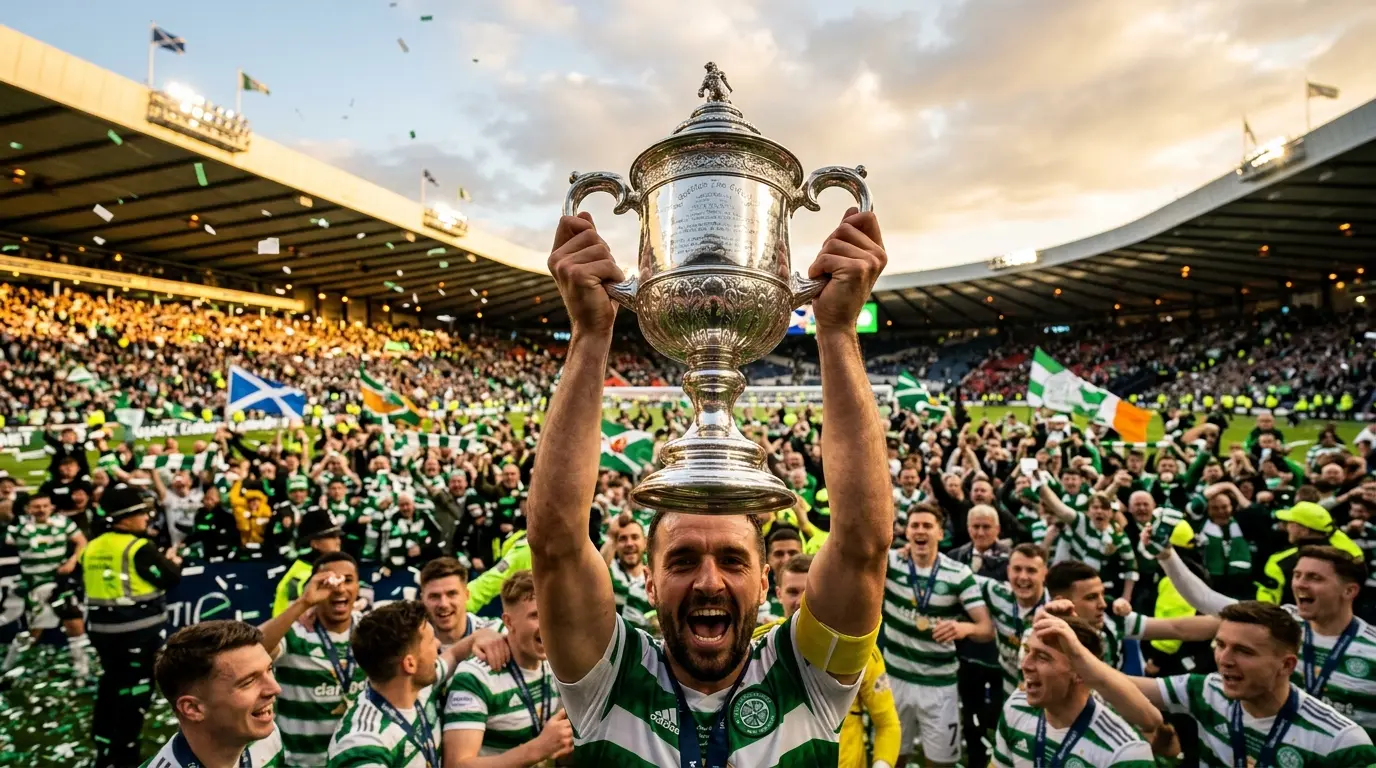
Martin O’Neill’s Celtic are Scottish Cup winners – a 3-1 victory over Dunfermline at Hampden on 23 May sealing a historic 14th domestic double and the club’s record-extending 43rd cup triumph…
Celtic are Scottish Cup winners. Again. A 3-1 victory over Dunfermline Athletic at Hampden Park on 23 May 2026 sealed the domestic double in the most emphatic fashion – a record-breaking 43rd Scottish Cup triumph to go alongside the Premiership title already secured, and a 14th domestic double that no other club in this country’s history can match.
This was Celtic’s competition. Celtic’s day. And by the end of it, Celtic’s history – extended again, just as it always seems to be.
Maeda, Engels, Iheanacho – the goals that made it history
Dunfermline deserve enormous credit for reaching Hampden as a Championship side – toppling top-flight opposition on the way is no small thing, and they hadn’t lifted this cup since 1968. But on the afternoon, the gulf in class told exactly as you’d expect it to.
Daizen Maeda broke the deadlock on 19 minutes, latching onto a cutting ball through the Dunfermline defence with the kind of predatory instinct that has defined his Celtic career – sharp, direct, inevitable. The second arrived just before the break, and it was a beauty. Arne Engels – one of the standout signings of this rebuild – arrived late into the box and struck with precision on 36 minutes, leaving the keeper with absolutely no chance and Celtic firmly in command going in at the interval.
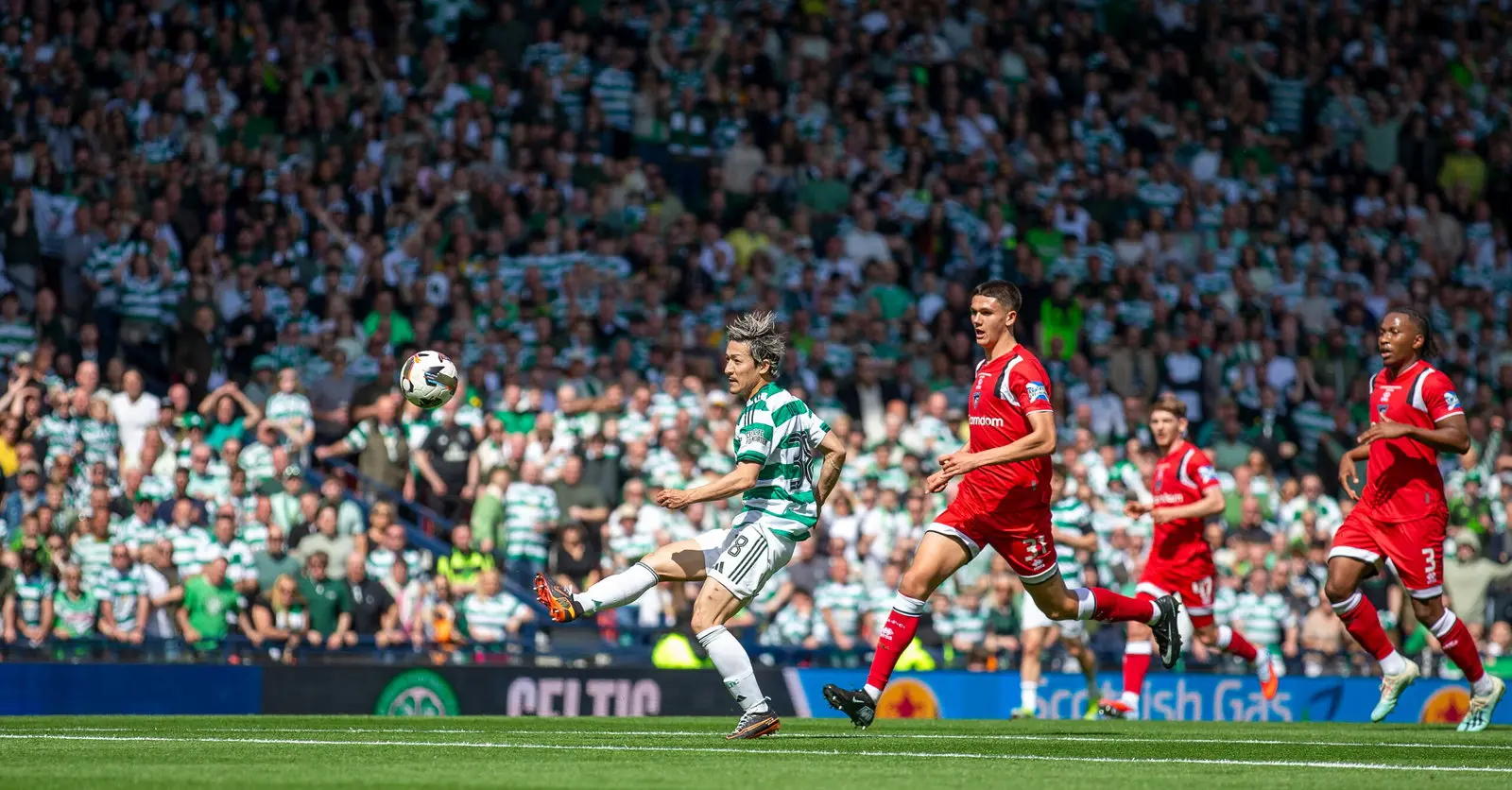
Dunfermline did pull one back through Cooper on 80 minutes – a late consolation that briefly stirred some nerves among the green-and-white end of Hampden – but Kelechi Iheanacho had already wrapped it up seven minutes earlier with a composed finish that killed the contest stone dead. 3-1. The double was done.
As BBC Sport noted, Celtic had “eased past second-tier Dunfermline” in what was framed as a professional, controlled performance – the commentary track all evening seemingly stuck on one refrain: “It’s Celtic’s double. Celtic’s Scottish Cup again.” Inevitable, dominant, relentless.
O’Neill’s fingerprints are all over this
Martin O’Neill, in his second spell at the club, will take enormous satisfaction from the way this season’s end unfolded. Nine consecutive wins in all competitions to close the campaign – the kind of run that overwhelmed Hearts in the title race and then carried seamlessly into cup glory at Hampden. That is not a coincidence. That is a manager who galvanised a squad and demanded more.
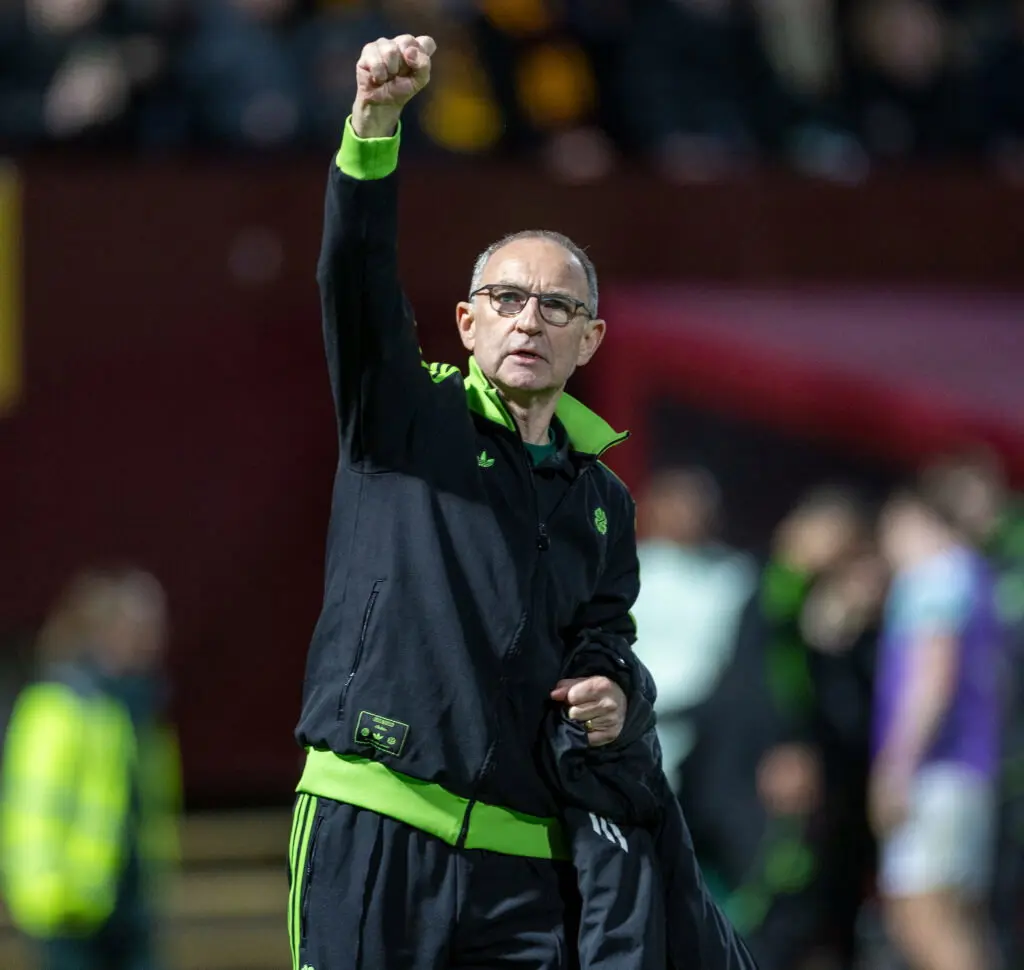
The contributions of Maeda and Iheanacho were highlighted by ESPN as central to Celtic overhauling Hearts down the stretch – and both delivered again at Hampden when it mattered most. The goals, the belief, the relentless forward momentum: all of it bears O’Neill’s stamp.
43 cups. 14 doubles. Scotland’s club.
Before a ball was kicked, there were warnings not to underestimate Dunfermline – and rightly so. But Celtic, when they are properly set, are a different level entirely. This was the proof of that, written in goals and silverware on a sunny day in Glasgow’s south side.
The 43rd Scottish Cup. The 14th domestic double – both Scottish records, both Celtic’s alone. And with Champions League football secured off the back of the Premiership title, the summer conversation turns immediately to how O’Neill and the board build on this for Europe. The captain said this was the best title yet – and with a cup to go alongside it now, it’s hard to argue.
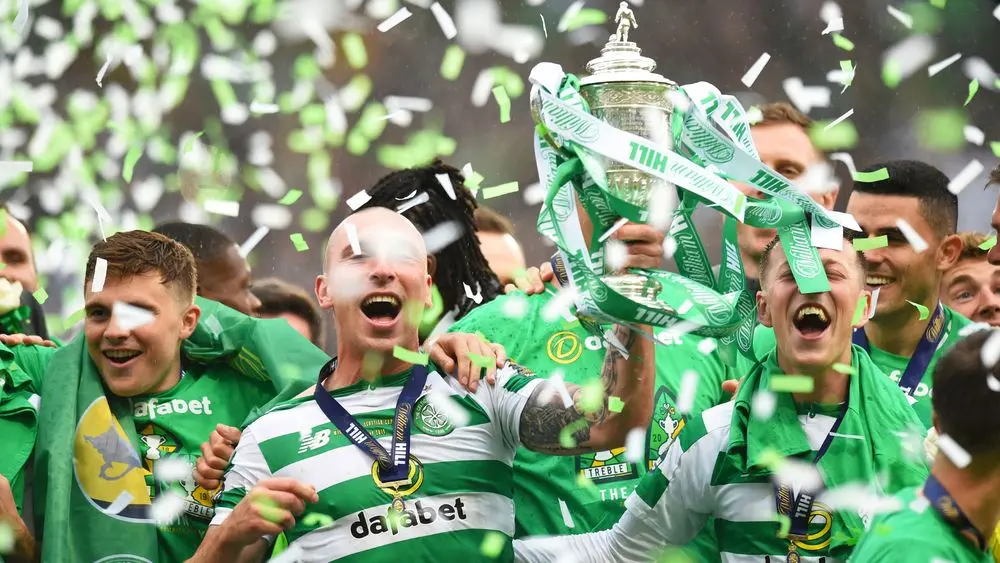
The Hoops. The double. The history. Enjoy every last second of it, Bhoys.
Mon The Hoops.