
Prior to kick-off there was anger, noise and defiance. The Celtic Fans Collective staged a protest outside the main entrance, a loud and visible show of frustration at the chaos we see off the field, directionless leadership, boardroom uncertainty, and a club drifting from its identity.
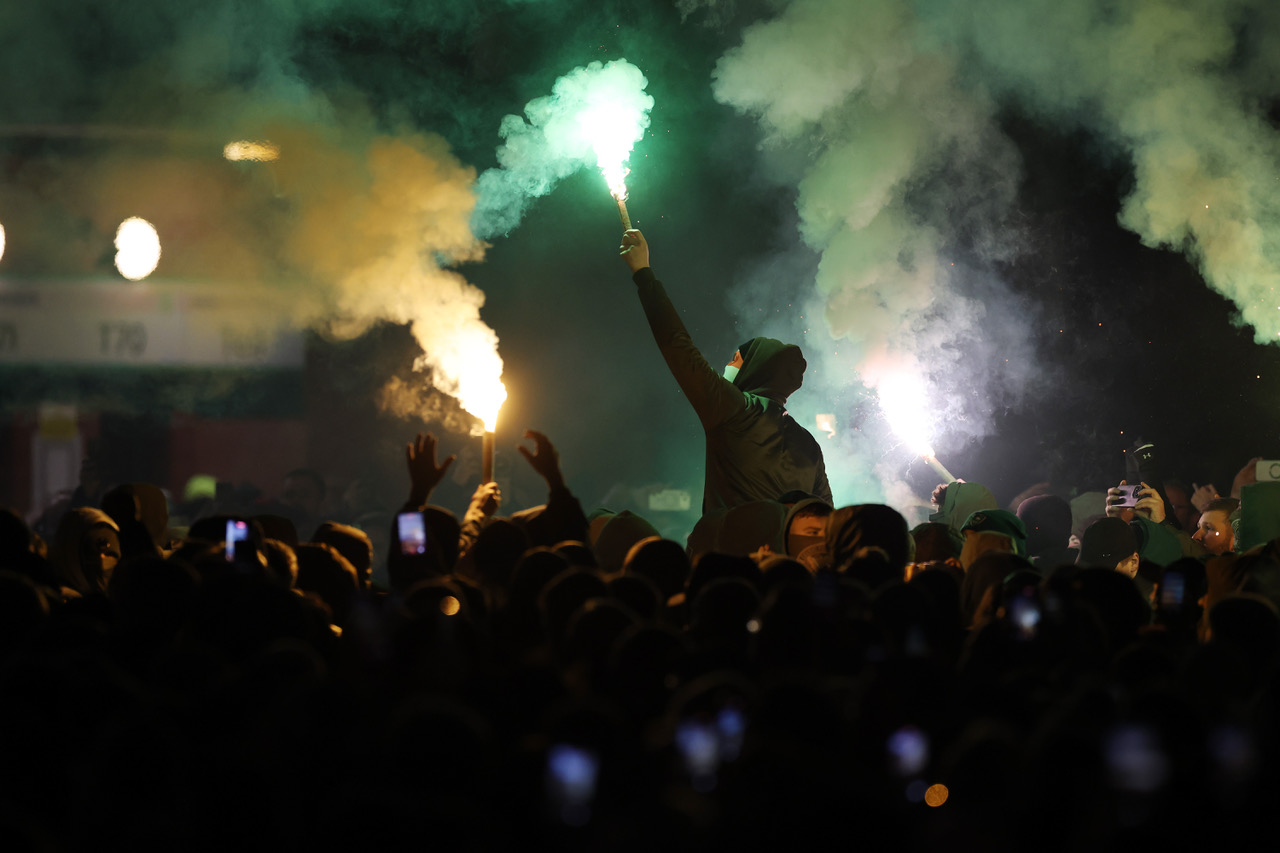
Celtic supporters gather outside the stadium to demand the removal of the board ahead of the Scottish Premiership match between Celtic and Falkirk at Celtic Park on October 29, 2025. (Photo by Ian MacNicol/Getty Images)
Inside Celtic Park a different kind of chaos unfolded, but this time it was welcomed. Martin O’Neill, returning to the dugout 20 years on, offered a version of Celtic that was raw, perhaps even unpolished, but also gloriously liberating.
And how we all needed it.
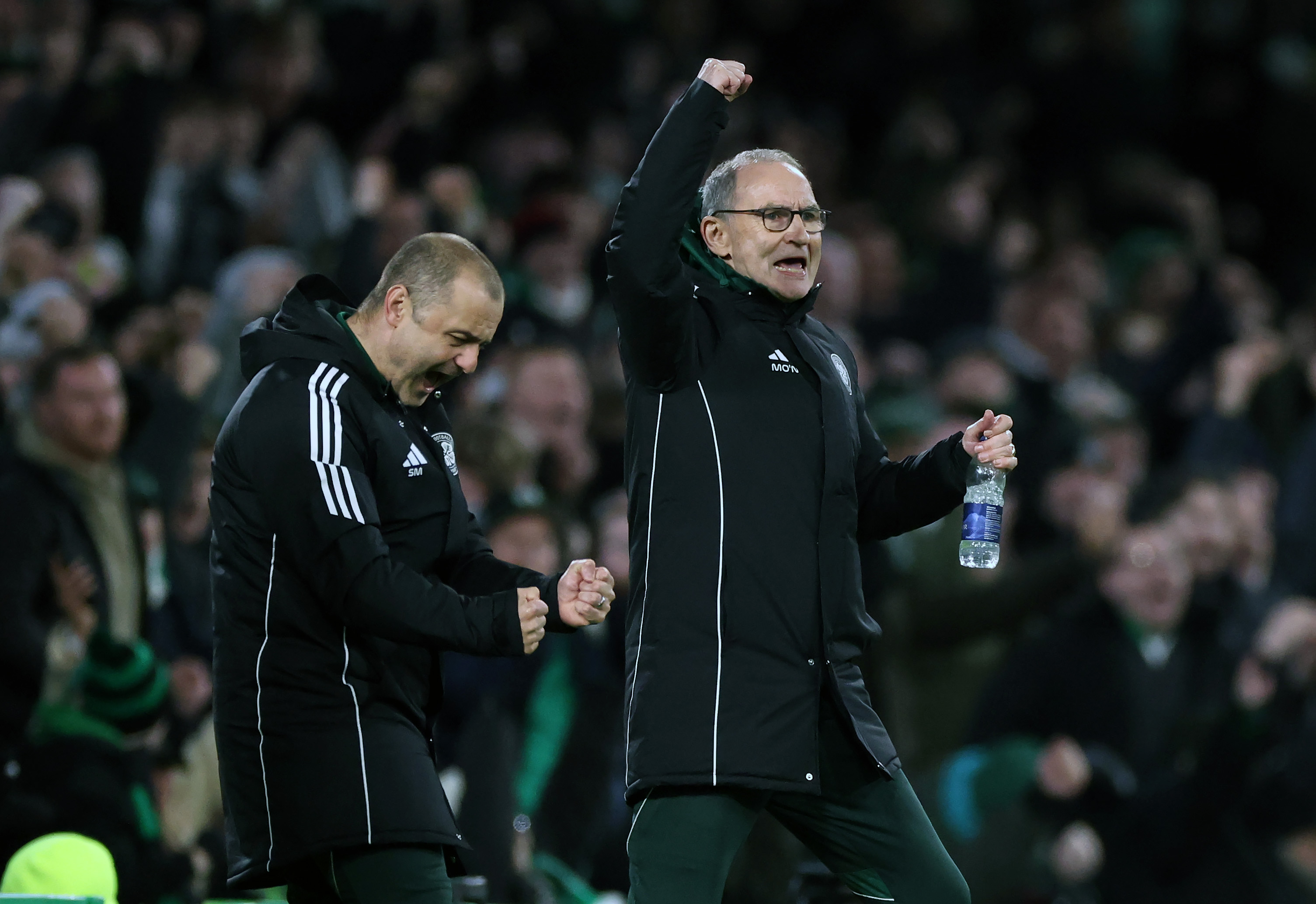
Martin O’Neill celebrates Celtic’s opening goal during the Premier League match between Celtic and Falkirk at Celtic Park on October 29, 2025 (Photo by Ian MacNicol/Getty Images)
A 4–0 win over Falkirk doesn’t erase months of discontent, of course, and we’re all aware we scored four against this opponent under Brendan Rodgers too, but last night felt like a release valve bursting open after weeks of built-up tension. For the first time in what seems an age, Celtic played with joy and aggression, not just protectively recycling the ball, but tearing forward with real purpose.
Where Brendan Rodgers demanded precision and control, O’Neill’s brief has clearly been freedom. In just two days, he gave the team license to play faster, to take risks and to trust instinct as well as instruction. Passes went forward, not sideways. Crosses came in early. Players moved into space rather than waiting for the ball to come to feet. The ball went into space, expecting players to find it, rather than the ball to find the player.
Celtic recorded their second-lowest possession share of the season (60%), yet produced their highest expected goals tally (4.48) in a league game this year. Less of the ball, more of the action, and far more entertainment.
After a cagey opening, Celtic struck through Johnny Kenny, whose sharp reactions turned a Nygren shot that came off the post, via Scott Bain, into the game’s first roar. From there, the mood changed completely. Falkirk’s Trey Samuel-Ogunsuyi nearly found an equaliser, but Kasper Schmeichel stood firm, with a save that may have been overshadowed by subsequent events, but was vital, and Celtic never looked back. Ten minutes after his opening goal, Kenny doubled the lead, another classic striker’s goal, heading home after Nygren’s clever knockdown at the far post.
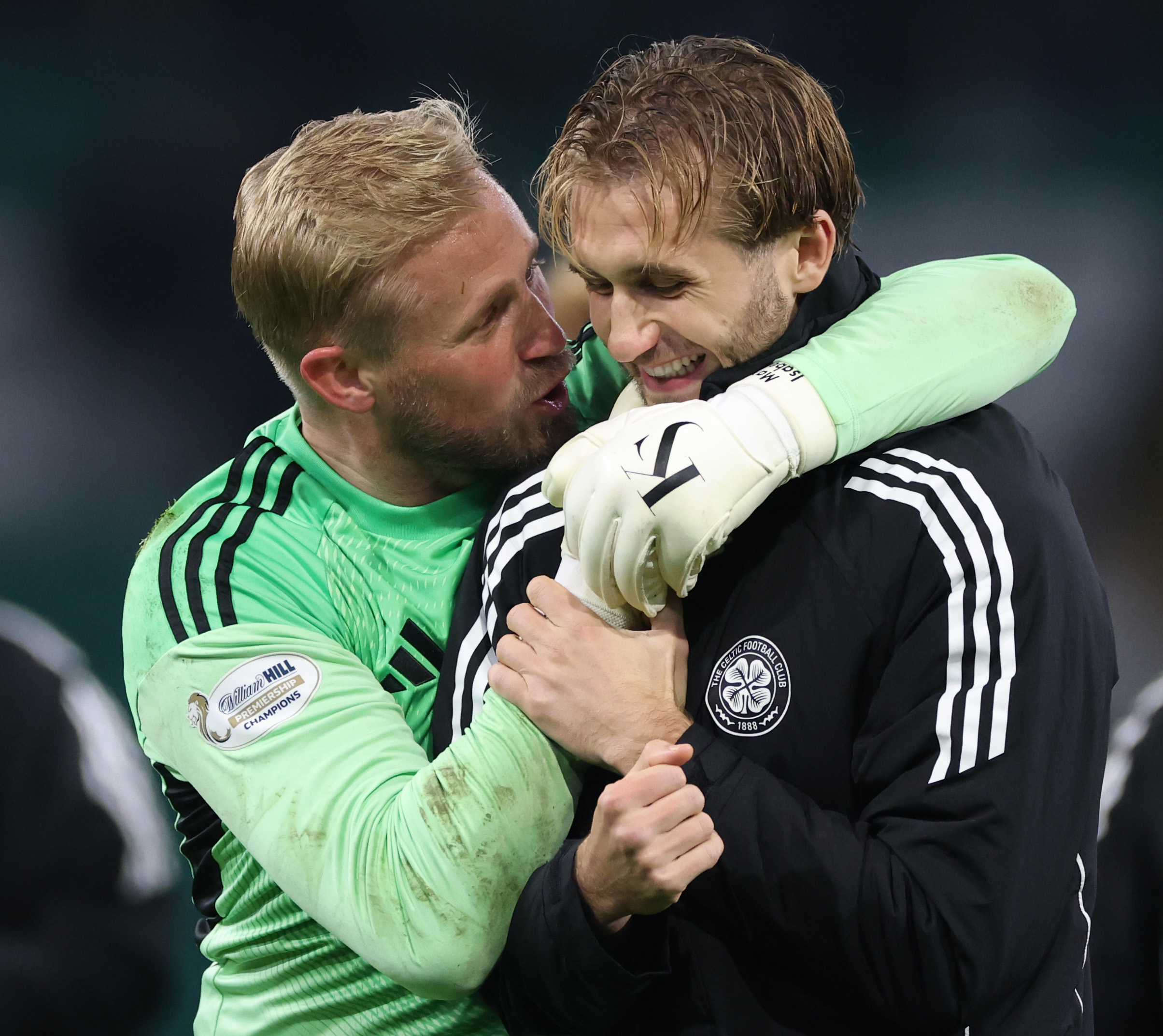
Kasper Schmeichel and Benjamin Nygren of Celtic celebrate during the Premier League match between Celtic and Falkirk at Celtic Park on October 29, 2025. (Photo by Ian MacNicol/Getty Images)
Nygren then got the goal his relentless movement deserved just before the hour, pouncing on Bain’s spilled save, before Tounekti capped the night with a driving run and composed finish, whilst somehow also avoiding an attempt to cut him in half, at the edge of the box, for 4–0.
Saracchi and Tounekti’s understanding down the left was one of the night’s highlights, pace, bravery, and a willingness to take on defenders that’s been missing for too long. Trusty looked commanding at the back, while Engels anchored midfield protectively and superbly beside McGregor, freeing Nygren, who looked all the better for playing on his stronger side, to push on.
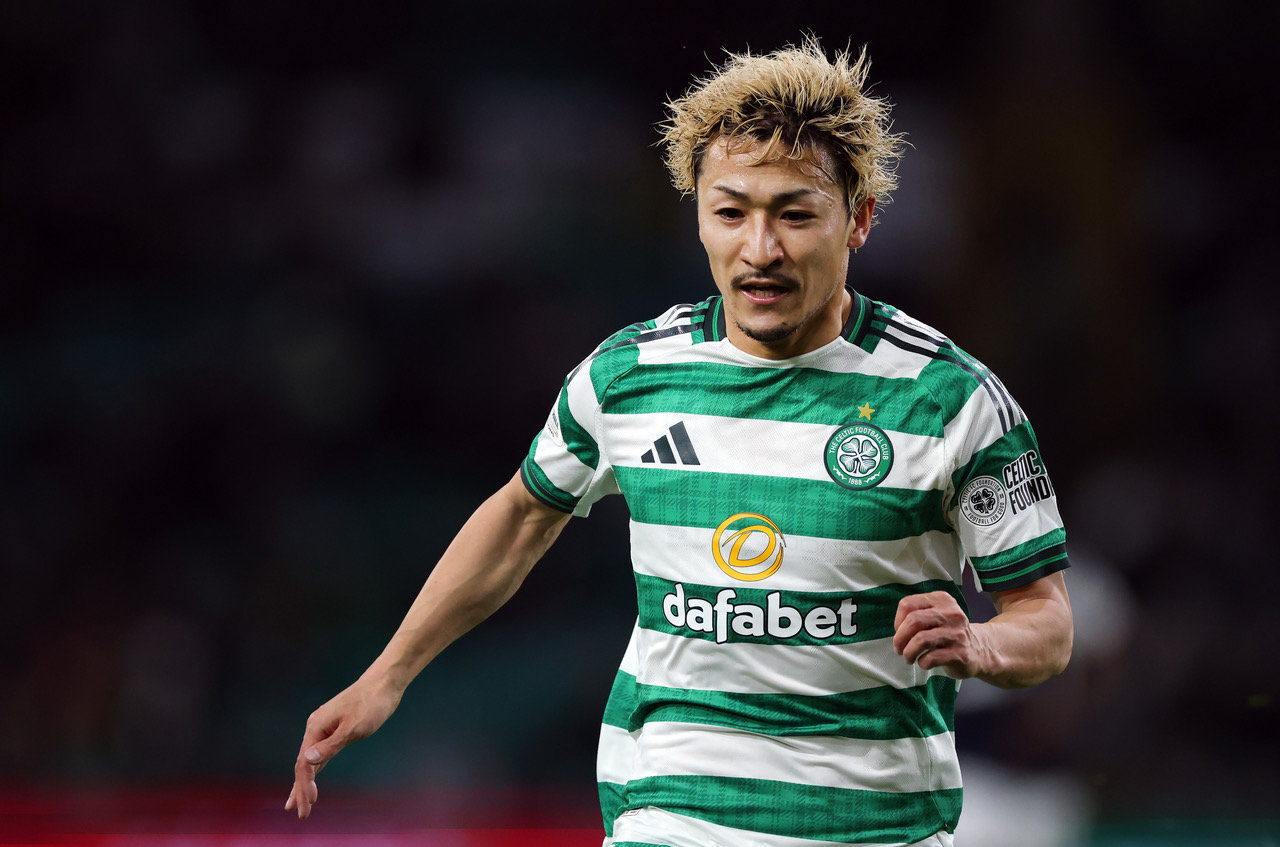
Daizen Maeda of Celtic is seen during the Premier League match between Celtic and Falkirk at Celtic Park on October 29, 2025. (Photo by Ian MacNicol/Getty Images)
There was even a vintage performance from James Forrest, working tirelessly on the right, and a warm, welcoming ovation for Daizen Maeda on his return from injury.
For all the talk of tactics, the biggest change was maybe emotional. The players just looked like they wanted to be out there, and they played for each other, perhaps best exemplified when half the team piled in to defend a teammate after a tangle with Scott Arfield.
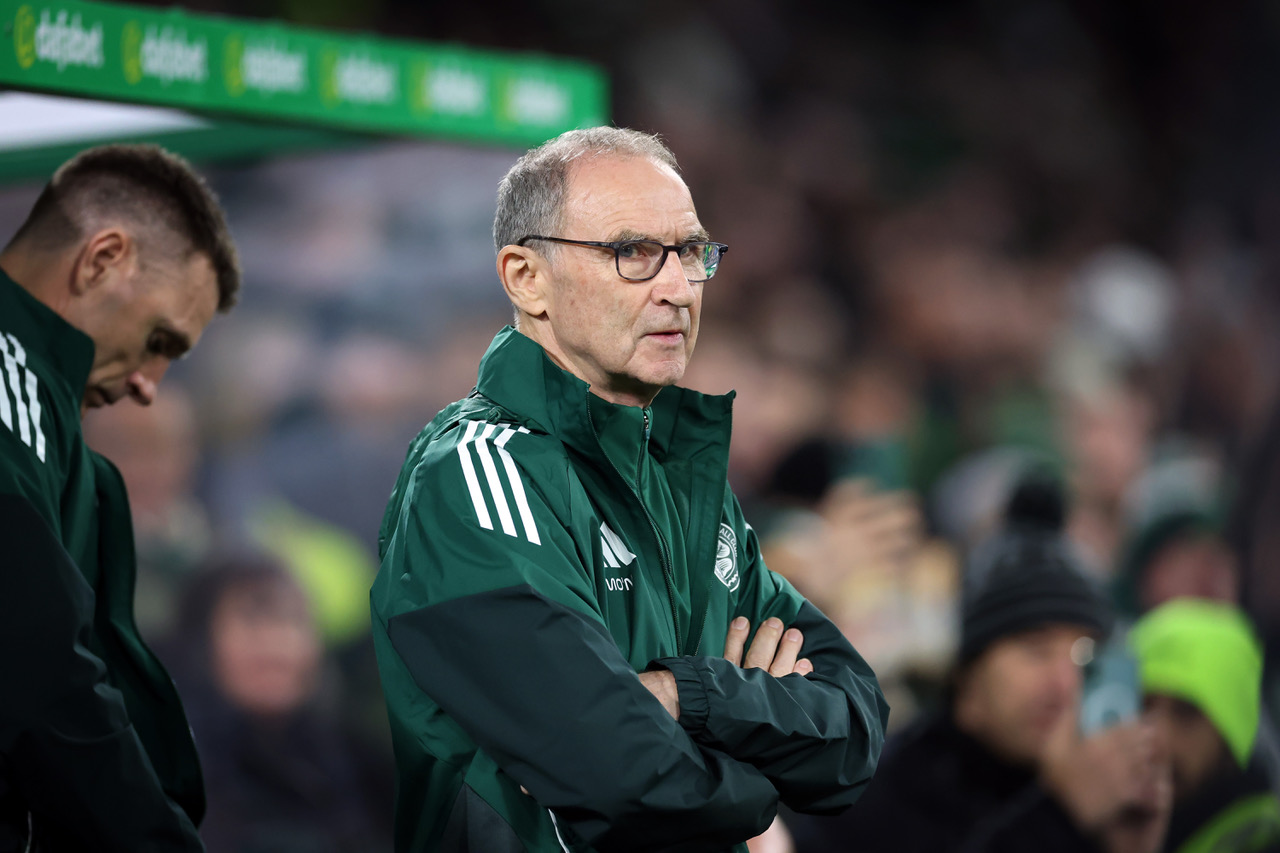
Celtic interim manager Martin O’Neill during the Premier League match between Celtic and Falkirk at Celtic Park on October 29, 2025. (Photo by Ian MacNicol/Getty Images)
Speaking post-match, Martin O’Neill praised his players’ response.
“I just wanted them to enjoy playing football again. The fans needed that. The players needed that. There’s a long way to go, but that was a good start.”
It was a performance full of risk, energy, and, yes, some imperfection too, but also of release. After months of focus on structure, this was Celtic unleashed.
The protests outside showed that deeper issues remain unsolved, there’s no escaping that. The presence of Dermot Desmond in the main stand, after a week of recriminations and finger-pointing, underlined that tensions run far beyond the pitch. Yet for 90 minutes, we got to escape for a while.
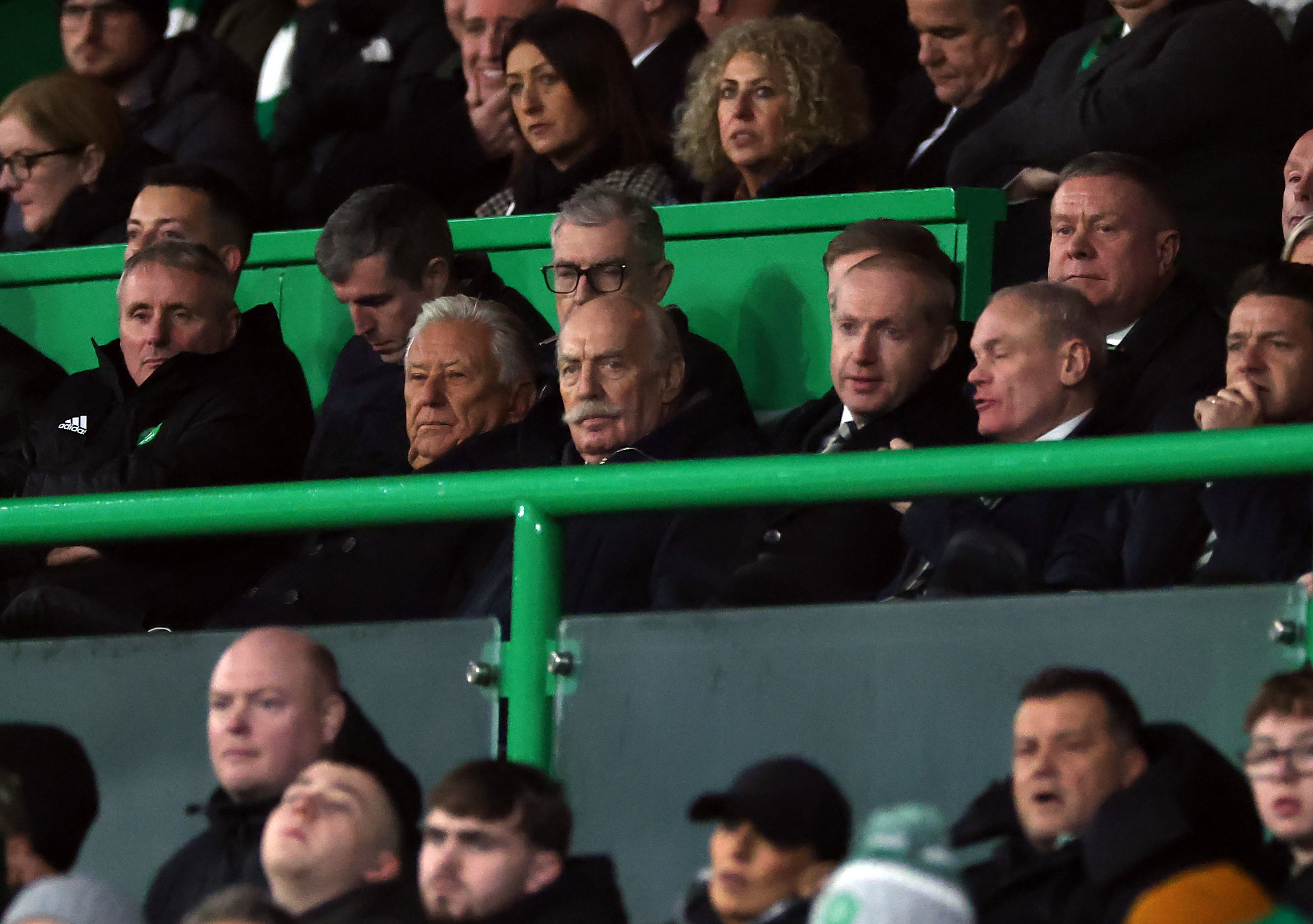
Celtic Chairman Peter Lawwell, Dermot Desmond, largest shareholder and Michael Nicholson CEO are seen during the Scottish Premiership match between Celtic and Falkirk at Celtic Park on October 29, 2025. (Photo by Ian MacNicol/Getty Images)
As news filtered through that Hearts had dropped points, Celtic’s night of catharsis was complete. The gap narrowed slightly, and the mood lifted considerably. With a League Cup semi-final against theRangers looming on Sunday, O’Neill’s challenge is to channel that chaos into consistency.
It’s only one game, but what a difference one game can make. For a club engulfed in turmoil, this was proof that a little on-field madness might be exactly what Celtic need to find their mojo again.
Niall J
Celtic in the Eighties by David Potter, signed copies by Danny McGrain available from celticstarbooks.com
Don’t miss the chance to purchase the late, great Celtic historian David Potter’s final book. All remaining copies have been signed by the legendary Celtic captain Danny McGrain PLUS you’ll also receive a FREE copy of David Potter’s Willie Fernie biography – Putting on the Style, and you’ll only be charged for postage on one book. Order from Celtic Star Books HERE.
Celtic 4-0 Falkirk – St Martin of Parkhead as Hearts Start to Falter. The ongoing internal war was far removed from the mind of the venerated Irishman as he brought joy back to the faithful on a night where it could have all gone wrong…Story in comments below👇🍀 pic.twitter.com/NyhS4AP7tH
— The Celtic Star News Feed (@CelticStarMag) October 30, 2025
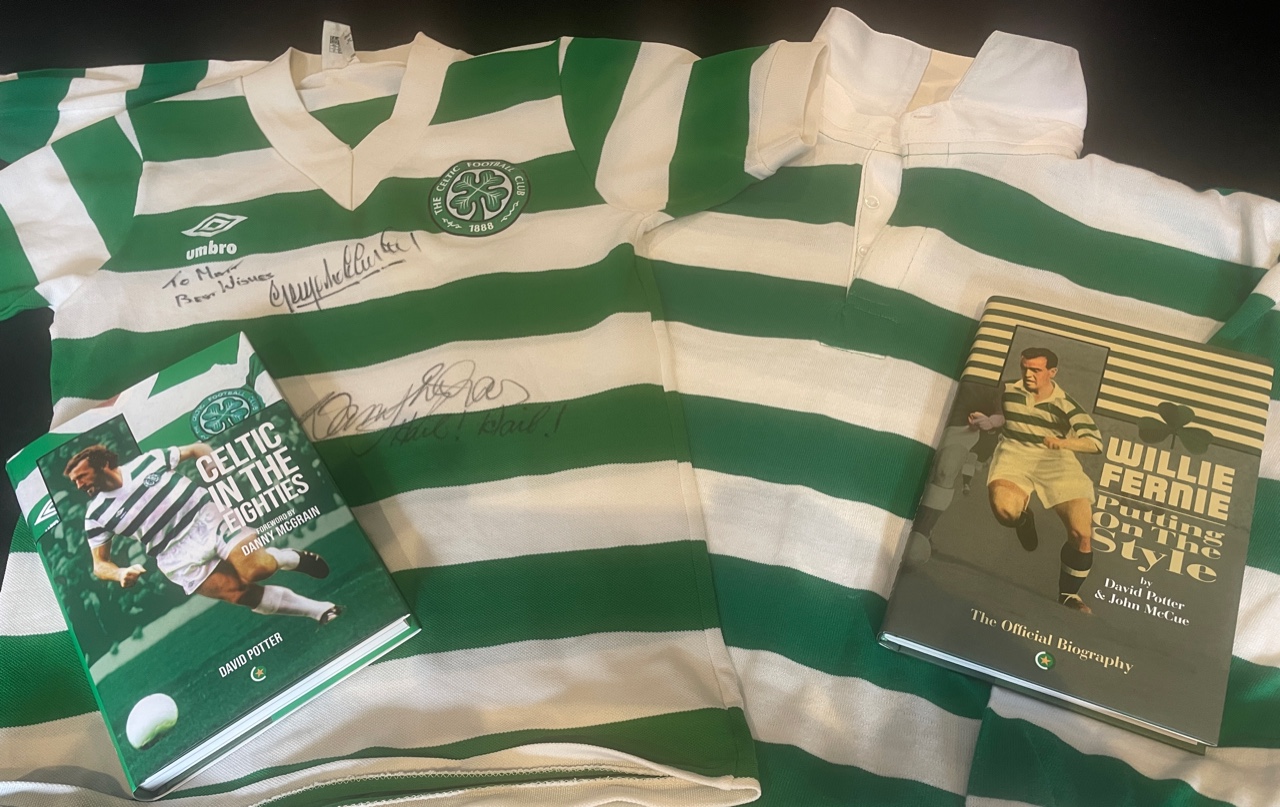
Celtic in the Eighties and Willie Fernie – Putting on the Style both by David Potter. Photo The Celtic Star
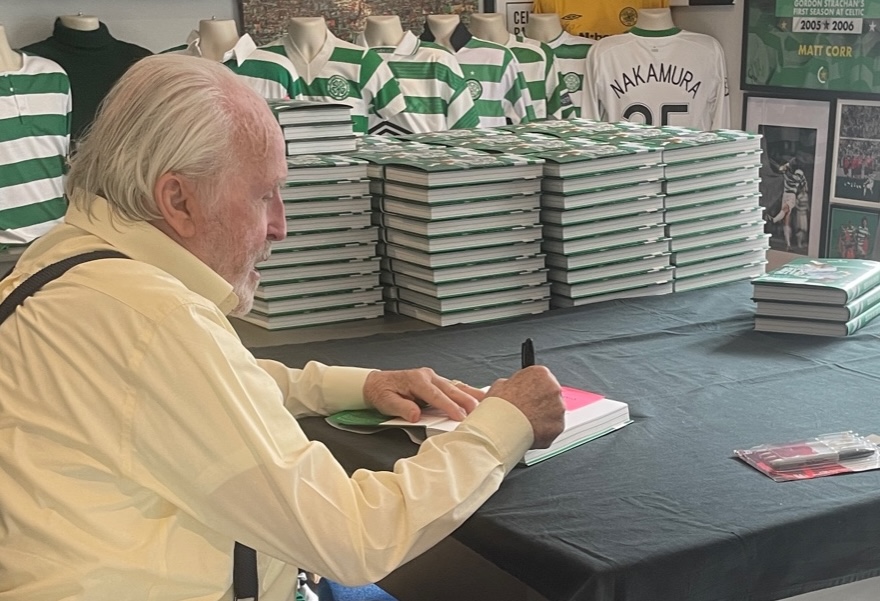
Danny McGrain signing copies of Celtic in the Eighties by David Potter. Photo: Celtic Star Books


Not seen this Johnny Kenny before – the Kenny of the Irish Rovers not his barren Queens Park spell.
If you ever needed evidence of just how much Rodgers was intent on trying to destroy our footballing department of our club, then it was on full show last night imo.
This was a team missing 3 out of it’s back 4, along with both preferred strikers missing and not starting.
So just how much were they all actually missed last night?
Rodgers was strangling the life out of our team, helped by woeful footballing decisions, and undermining our players in the whole process imo.
Or was it a case of our players just weren’t buying into this sideways and backwards possession game of trying to bore opposition into submissions?
How often was calmac collecting the ball playing between the two CBs, allowing every team to set up so easily in there defensive structure?
Rodgers even called out our support last season, when trying to claim Swansea supporters had better knowledge of applauding this continuing backwards nonsense, when the displeasure was shown towards Taylor?
He never was prepared to change his approach to the game, and players and supporters alike had to suffer as a result.
It was so evident in the second half of last season, which continued into this.
Yet the blame was placed upon the summer window, in which he was happy enough to promote?
Where was the evidence of our squad so poor that it wasn’t capable of producing fast attacking football?
We may have started slowly enough, with some wayward forward passing, but could put that down to players being in shock of allowed to do the likes, but the intent was right.
Personally was very surprised to see nygren as the link player on the left side of our midfield, but was it the best our left side looked in an attacking sence all season?
The right hand side was functioning much better also, along with better support added to our central areas for attacking.
It’s no secret that our performance levels are set by our tempo in attacking. Rodgers talked of the likes happening, but was missing on to regular of an occurrence.
Just how does that change with so little time of a new management and coaching set up in operation, with so little work actually done with the players, yet able to produce?
Course the bigger test will come on Sunday. But we were heading into that game, low on confidence, lack of belief within the instructions been given to our players, and a total lack of direction on show, from our team who had become so lost within themselves.
Is that really the case now?
Don’t think so myself now imo.